

Uzbekistan considers video-monitored university final exams from 2026/27
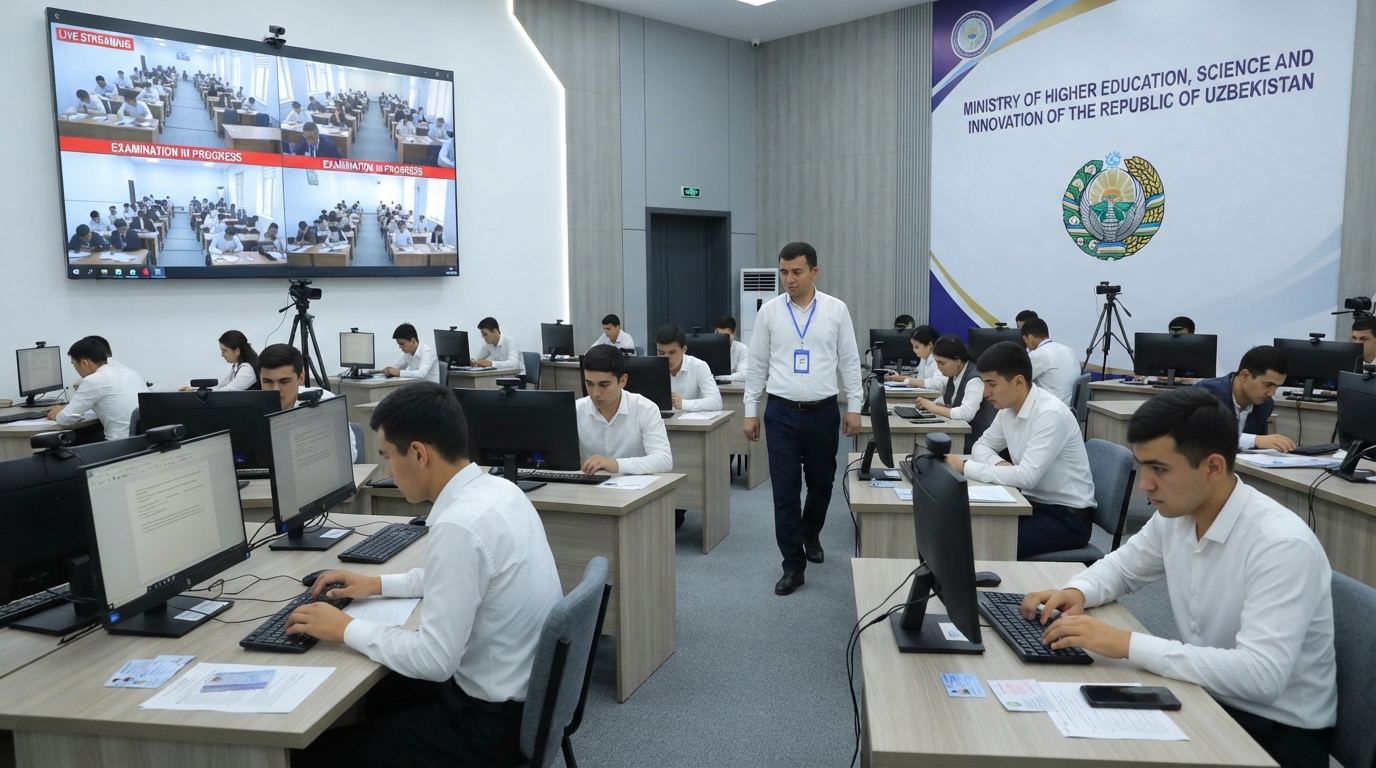
Uzbekistan is contemplating the implementation of video-monitored final examinations at its universities, commencing with the 2026/27 academic year. A proposed government resolution suggests that these exams could be viewable online by the public.
The draft resolution, currently open for public comment until August 12, aims to enhance transparency in student evaluations, mitigate corruption risks, and ensure objective and equitable assessment of academic performance.
Under the proposed framework, final examinations would be broadcast live via links published on the official websites of universities.
The Ministry of Higher Education, Science and Innovation would be tasked with developing dedicated platforms within three months to facilitate live monitoring and computer-based final examinations. Universities would also be integrated into these new systems.
Final assessments would primarily take the form of written examinations, comprising three to five tasks designed to gauge students' independent and analytical thinking. Universities would retain the flexibility to utilize alternative assessment formats depending on the subject matter.
Written and test-based final examinations would be conducted on computers in specially equipped classrooms. Students would be given the opportunity to familiarize themselves with the examination software and its interface prior to the tests.
Video recordings of all final examinations and assessment procedures would be retained for a minimum of one year.
Written examinations would have a maximum word limit of 2,000 words. Test-based examinations would consist of 25 to 50 questions, varying based on the field of study.
Students would be required to present a passport, ID card, student identification card, or driving license for admission to a final examination.
Leaving examination rooms without a valid reason would be prohibited, and those who do so without permission would forfeit the opportunity to retake the examination. Students arriving after the official start time would not be permitted to participate.
Mobile phones, wireless earpieces, computers, and other devices that could facilitate cheating would be banned during examinations. Students found using prohibited equipment could be removed from the examination. If violations are identified post-examination through video recordings, the student's result could be nullified.
**Independent Assessment and Grading**
Under the proposed regulations, final examinations would be assessed by instructors who did not teach the relevant course to the student or group being evaluated. The instructor who taught the course would be barred from participating in the final assessment process. Universities could also invite relevant lecturers from other higher education institutions to conduct or assess final examinations.
For written examinations, assessors would be required to provide feedback of at least two or three sentences for each question, explaining the rationale for the grade and identifying the student’s primary strengths and weaknesses.
The draft also outlines procedures for correcting incorrectly assigned grades. Such changes would necessitate written justification from the instructor and approval from the university’s academic leadership.
Students would have 48 hours after the assessment period concludes to submit appeals regarding identified grading errors. Any approved corrections would need to be completed within a maximum of 10 working days.
Previously, Uzbekistan proposed modifications to the system for allocating teaching hours in schools, reducing the number of priority criteria from 19 to 10. The revised approach would place greater emphasis on teachers’ professional qualifications, performance, and national or international certificates.