

Uzbekistan Breaks Summer Electricity Consumption Record
Uzbekistan has set a new summer daily electricity consumption record of 278.6 million kWh amid abnormally high temperatures across the country.
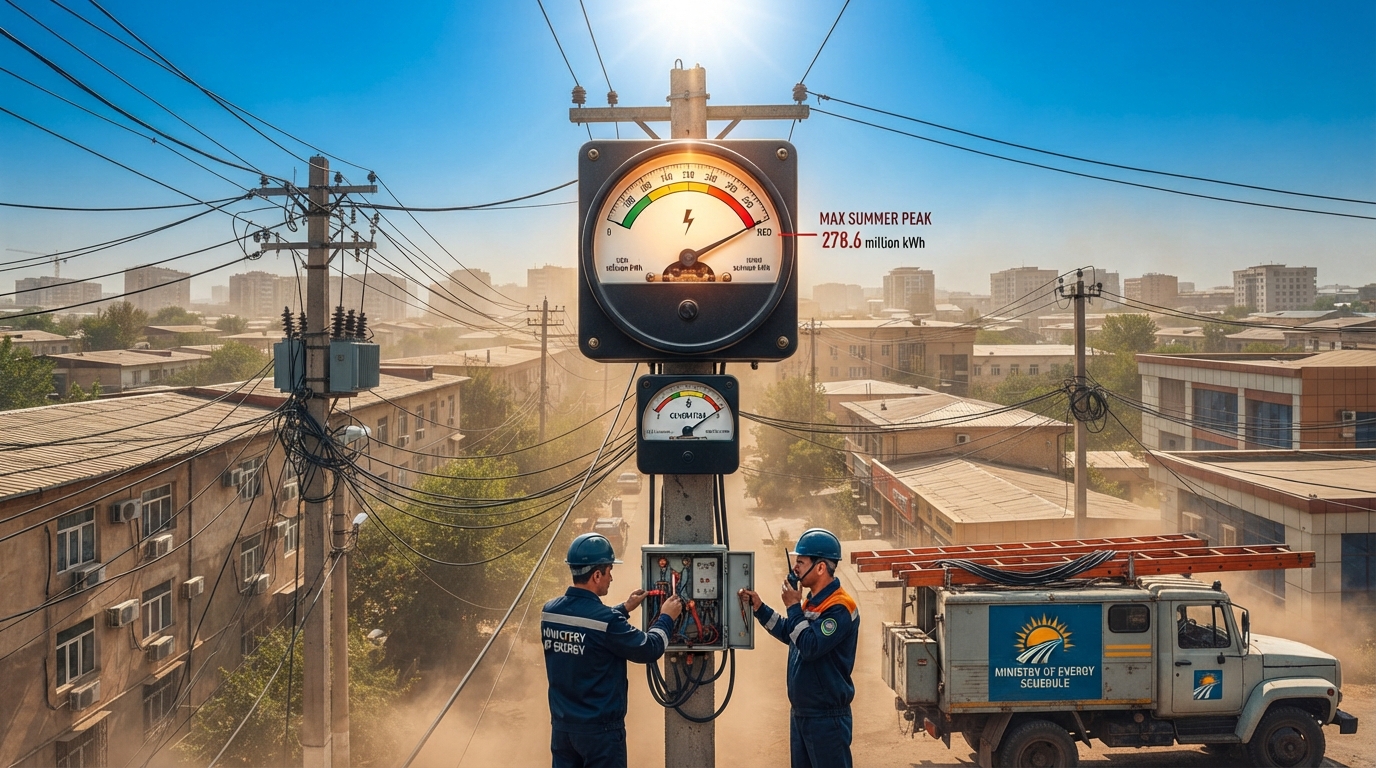
Uzbekistan Sets New Summer Electricity Consumption Record
Tashkent, Uzbekistan (UzDaily.uz) — On July 13, 2026, Uzbekistan established a new record for daily electricity consumption during the summer. The Ministry of Energy reported that consumers utilized 278.6 million kWh within a 24-hour timeframe, surpassing the previous record by 6 million kWh, or 2.2 percent.
In terms of electricity generation, the daily output reached 281.5 million kWh, successfully meeting the current demand.
The former summer record was noted on July 18, 2025, when consumption hit 272.6 million kWh. During that period, temperatures in the central regions soared to +40 degrees Celsius, while desert areas experienced highs of +42 to +44 degrees Celsius. Similar weather patterns were observed on July 13 of this year.
Meteorologists have indicated that the unusually high temperatures are expected to continue in the upcoming days. The Ministry of Energy anticipates a potential rise in the load on the power grid, which could lead to new consumption records.
To maintain a stable power supply, energy companies have been placed on an enhanced operational schedule. Emergency repair teams are on standby around the clock across all regions to address any potential issues in the power grids swiftly.
The ministry has cautioned that some regions may experience temporary power supply interruptions due to technical equipment failures.
Additionally, the Ministry of Energy has urged the public to use electricity wisely, particularly during peak load times, and recommended turning off any unused electrical devices.
In October of the previous year, Minister of Energy Jurabek Mirzamakhmudov mentioned that Uzbekistan possesses adequate generating capacity to fulfill the country's electricity demands. He noted, however, that the primary challenge in the sector is the significant wear and tear of distribution networks, with approximately 35 percent of them being over 40 years old, which heightens the risk of emergency power outages.