

Uzbekistan aims to expand drinking water coverage to 90% by 2030
President Shavkat Mirziyoyev has signed a decree launching a large-scale reform of Uzbekistan's drinking water supply and sewerage sector, with the goal of expanding access to safe water, digitalizing infrastructure management and improving the efficiency of utility services.
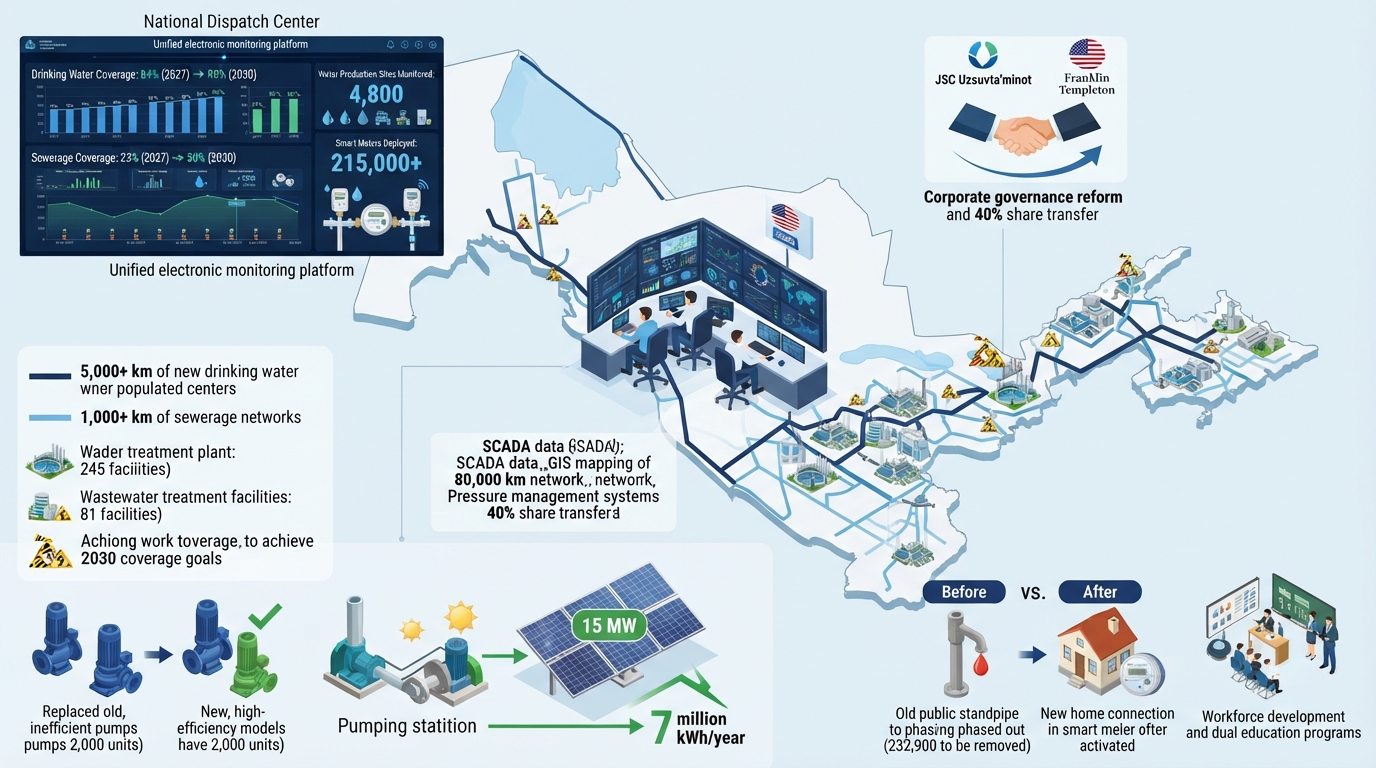
Uzbekistan aims to achieve 90% drinking water coverage by 2030.
Between 2026 and 2027, the nation intends to construct over 5,000 kilometers of drinking water pipelines, 245 water supply facilities, more than 1,000 kilometers of sewerage networks, and 81 wastewater infrastructure facilities. These efforts are projected to elevate centralized drinking water access to 84% and sewerage service coverage to 23%.
To mitigate water losses and enhance metering transparency, the government plans to install 4,800 contemporary meters at drinking water production sites and trunk pipeline connection points. Additionally, 7,577 water supply facilities will receive smart meters capable of remote data transmission. Consumer metering is set to reach 91% with the deployment of 215,000 new meters.
A significant digital transformation is also underway. Effective September 1, 2026, all drinking water and sewerage projects transferred to JSC Uzsuvta'minot for operation will be managed via a unified electronic monitoring platform. This system will integrate data on groundwater resources and projects funded from various sources.
Leveraging existing SCADA systems, authorities will establish a single digital management platform that combines water supply monitoring, water quality control, emergency response coordination, and pressure management. A national dispatch center and 14 regional centers will be created to provide real-time oversight from water production to delivery. The reform also includes GIS mapping of 80,000 kilometers of networks and the installation of metering equipment at 5,000 major infrastructure facilities.
The decree introduces changes to the sector's corporate governance, with 40% of JSC Uzsuvta'minot's shares transferred to the trust management of the U.S.-based investment company Franklin Templeton. The functions of drinking water production and transportation will also be separated.
By April 1, 2027, a new entity, JSC Magistral Suv Ta'minoti, is slated for establishment to manage the country's trunk pipelines and primary water supply facilities.
The reform package also prioritizes energy efficiency. Approximately 2,000 energy-intensive pumps will be replaced, and solar power plants with a combined capacity of 15 MW will be installed, projected to save 7 million kWh of electricity annually.
By the close of 2028, Uzbekistan plans to finalize a nationwide program directly connecting households to centralized drinking water networks. Over 232,900 public water standpipes will be phased out as water is supplied directly to homes, each equipped with a modern water meter.
Institutional reforms are also part of the decree. From January 1, 2027, the Interdepartmental Tariff Commission under the Cabinet of Ministers will assume responsibility for approving drinking water and sewerage tariffs. Furthermore, March will be designated annually as a national month dedicated to water conservation.
To bolster the sector's workforce, a specialized faculty offering dual education programs will commence operations in the new academic year. Each student group will be assigned mentors from industry enterprises.
A new deputy chairman for digitalization and artificial intelligence will also be appointed at JSC Uzsuvta'minot to oversee process automation and the integration of advanced digital technologies.
By the end of this year, the Ministry of Construction and Housing and Communal Services, in collaboration with the Ministry of Economy and Finance and JSC Uzsuvta'minot, is expected to prepare a development strategy for Uzbekistan's drinking water supply and sewerage system through 2030.
This strategy targets nationwide drinking water coverage of 90% and sewerage service coverage of 30% by 2030, alongside increased investment, deeper digitalization, and more efficient sector management.