

Uzbekistan Adopts New International Environmental Review Rules
Uzbekistan is introducing international standards for environmental impact assessment, including digital procedures, public participation and new risk assessment mechanisms.
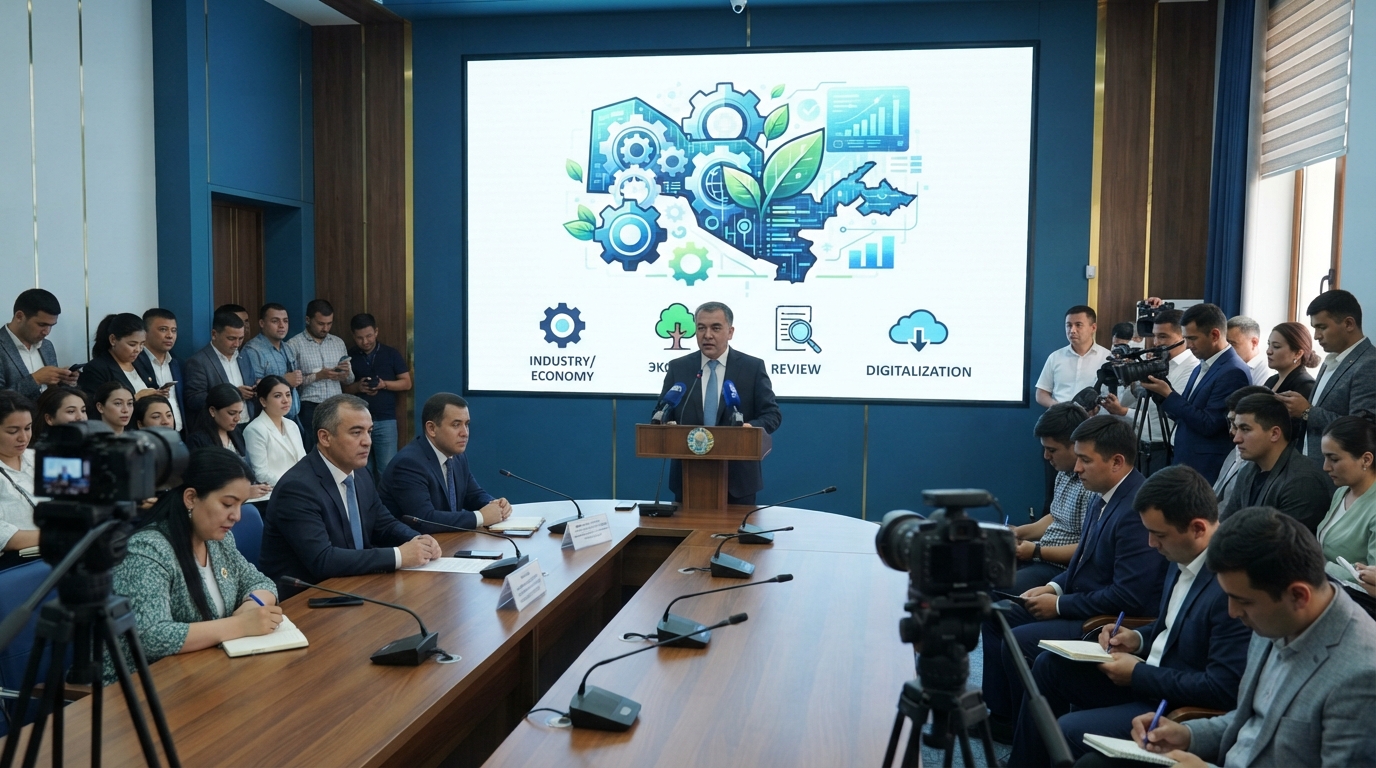
Uzbekistan has adopted new international environmental review regulations, as announced at a press conference held by the State Center for Environmental Expertise, part of the National Committee on Ecology and Climate Change. The event, which took place at the Media Content Center under the Presidential Administration, focused on explaining the practical implications of Cabinet of Ministers Resolution No. 234, "On Measures to Introduce New Environmental Impact Assessment Mechanisms," enacted on May 11, 2026.
Attendees included representatives from government bodies, media outlets, bloggers, environmental specialists, project organizations, the business community, and experts.
**Environmental Review System Enters a New Phase**
During the press conference's opening, National Committee representatives highlighted that under the President's leadership, ensuring environmental security, promoting sustainable natural resource use, and mitigating environmental impacts have become central to state policy in recent years.
They noted that the establishment of the National Committee on Ecology and Climate Change and the passage of the Law "On Environmental Expertise, Environmental Impact Assessment and Strategic Environmental Assessment" were significant milestones in the nation's environmental reforms. Resolution No. 234 was adopted to implement this law and establish a contemporary environmental regulatory framework aligned with international standards.
Officials stated that the new framework was developed by examining the practices of Japan, Germany, the Republic of Korea, the European Union, Canada, the United States, Türkiye, Georgia, Singapore, Russia, and Kazakhstan. Experts from the World Bank, the United Nations Economic Commission for Europe, the Organization for Security and Co-operation in Europe (OSCE), and the Korea Environment Institute also contributed to the development of these new mechanisms.
**Anticipated Changes**
The resolution introduces a comprehensive modernization of the state environmental review and environmental impact assessment (EIA) system.
Projects will now be evaluated based on their potential environmental impact. For the first time, the national system will incorporate international screening and scoping procedures to determine early on whether an environmental impact assessment is necessary and the extent of environmental studies required.
The reform also introduces:
* A public environmental review mechanism.
* Qualification requirements for experts and organizations involved in preparing environmental documentation.
* A rating system to evaluate the performance of these experts and organizations.
* An improved public hearing process.
The resolution also enhances the accountability of both project developers and the organizations responsible for preparing environmental documentation.
**Full Digitalization of Procedures**
A key reform is the complete transition of the state environmental review process to an electronic format.
Documents will now be submitted via the Unified Portal of Interactive Public Services, which is expected to shorten review times, reduce human error, and increase transparency throughout the process.
The classification of projects by environmental impact has also been streamlined, reducing the number of categories from four to three, making the system more accessible for businesses.
**New Opportunities for Businesses**
The resolution particularly emphasizes creating more favorable conditions for entrepreneurs and investors.
The updated system provides for:
* Reduced administrative barriers.
* Increased transparency.
* Predictability in environmental decision-making.
Officials stated that the primary goal of the reform is not to create additional obstacles for businesses but to implement modern mechanisms for preventing environmental risks and improving the quality of investment decisions.
**Center Chief's Remarks**
Gairat Mukhamedov, Director General of the State Center for Environmental Expertise, addressed the participants, stating that the adoption of Resolution No. 234 marks a new phase in the evolution of Uzbekistan's environmental review system.
Mukhamedov commented, "Today, environmental expertise is no longer merely a permitting procedure. We are building a modern environmental risk management system based on international standards, digital technologies and the principles of transparency. The new mechanisms make it possible to identify potential environmental consequences at the project planning stage, which is critically important both for environmental protection and for ensuring the country's sustainable economic development."
He further explained that the reform introduces screening and scoping procedures for the first time, enhances the public hearing process, establishes a public environmental review mechanism, sets qualification requirements for experts and organizations preparing environmental documentation, and creates a rating system to assess their performance.
Mukhamedov concluded, "All of this will significantly improve the quality of environmental documentation, ensure the objectivity of expert conclusions, reduce administrative procedures and create maximum transparency for both investors and society."
**Balancing Economic Growth and Environmental Protection**
Officials affirmed that the new mechanisms are designed to strike a balance between economic development, investment attractiveness, and environmental protection.
According to the press conference organizers, the reform will strengthen the implementation of environmental policy, improve the quality of public services, enhance oversight of compliance with environmental review requirements, and align Uzbekistan's environmental impact assessment system with international best practices.
They concluded that the environmental review system is evolving from a regulatory tool into a modern environmental risk management mechanism that supports sustainable development, protects public interests, and contributes to a favorable investment climate.