

UN rights chief alarmed by rise in Iran executions since March
Volker Türk says 56 people have been executed on national security-related charges, including 27 in cases linked to January's protests.
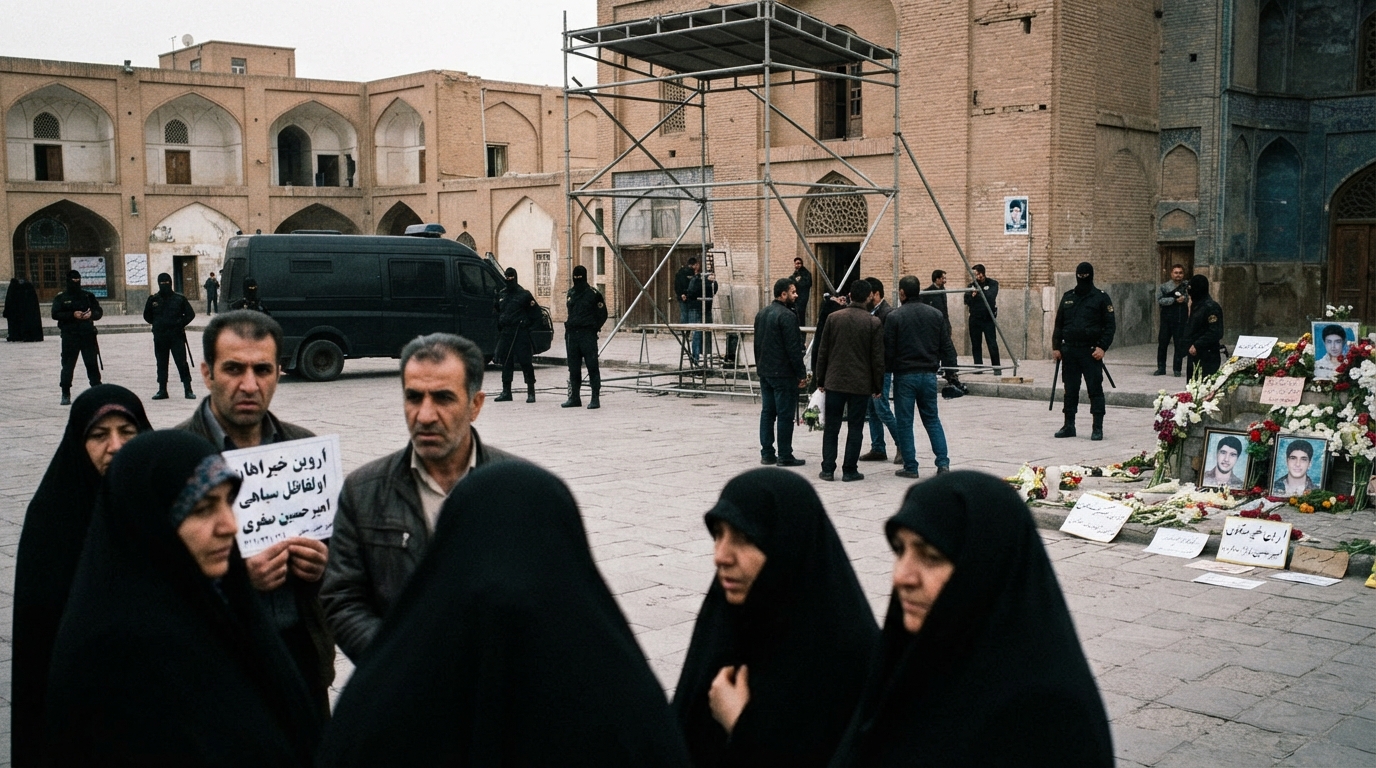
The UN human rights chief has voiced alarm over the escalating number of executions in Iran since March, asserting that capital punishment is being employed "to instil fear among the population and suppress dissent."
Volker Türk reported that at least 56 individuals have been executed on national security-related charges since March 19, with 27 of these cases linked to the nationwide anti-government protests in January. He added that over 100 others face the risk of execution on similar charges, while executions for drug-related offenses are also continuing at a concerning rate.
Iran is believed to be the world's second-most frequent executioner, trailing only China. Amnesty International reported that Iran executed at least 2,159 people last year, marking the highest figure since 1981. This total included 45 executions of suspected dissidents on national security-related charges.
Activists have cautioned that Iranian authorities may intensify the use of executions against opponents following the January protests, which resulted in thousands of deaths and tens of thousands of detentions, and the US-Israeli war with Iran on February 28.
In a statement, Türk implored Iranian authorities to halt all executions and progress towards abolishing the death penalty, stating that "such punishment has no place in our world."
Beyond the rise in executions, Türk expressed deep concern over the persistent absence of fair trial and due process guarantees, citing allegations of confessions obtained through torture and other ill-treatment. He noted that "several executions have reportedly been carried out in public. Some have reportedly been carried out only weeks after arrest," and that "Twelve defendants were reportedly sentenced to death following a single three-hour closed-door hearing."
The Iranian government has not yet commented on these remarks but has previously defended its use of the death penalty, asserting it is reserved for "the most severe crimes."
On Monday, Iran's judiciary announced the execution of two men convicted of spying for Israel. Omid Behzad and Pouria Safvat were accused of transmitting coordinates, images, and other sensitive information regarding military, law enforcement, and security sites to Israel's Mossad foreign intelligence service during the current war and the 12-day conflict in June 2025, according to the judiciary's Mizan news agency.
Last week, 19-year-old Arvin Kheirkhahan was executed after being convicted of the security-related charge of "enmity against God" for his alleged involvement in the January unrest, as reported by Iran's Human Rights Activists News Agency (HRANA), citing a source close to his family.
HRANA also reported that Abolfazl Sepahi Badjani and Amirhossein Safari Hosseinabadi, two other men arrested during the protests, were publicly executed in a square in Isfahan. They were among 12 individuals convicted of various charges, including "enmity against God" and "corruption on Earth," in connection with the killing of four law enforcement officers on January 8. Two of their co-defendants, Erfan Esfandiari and Gol Mohammad Mohammadi, were executed on July 19.
UN human rights experts stated that the 12 were sentenced to death "in one hearing, in a closed courtroom and without clarity as to each defendant's individual responsibility," which they deemed a violation of established fair trial standards.