

UN-backed cyber resilience programme reaches 100,000 people in Uzbekistan
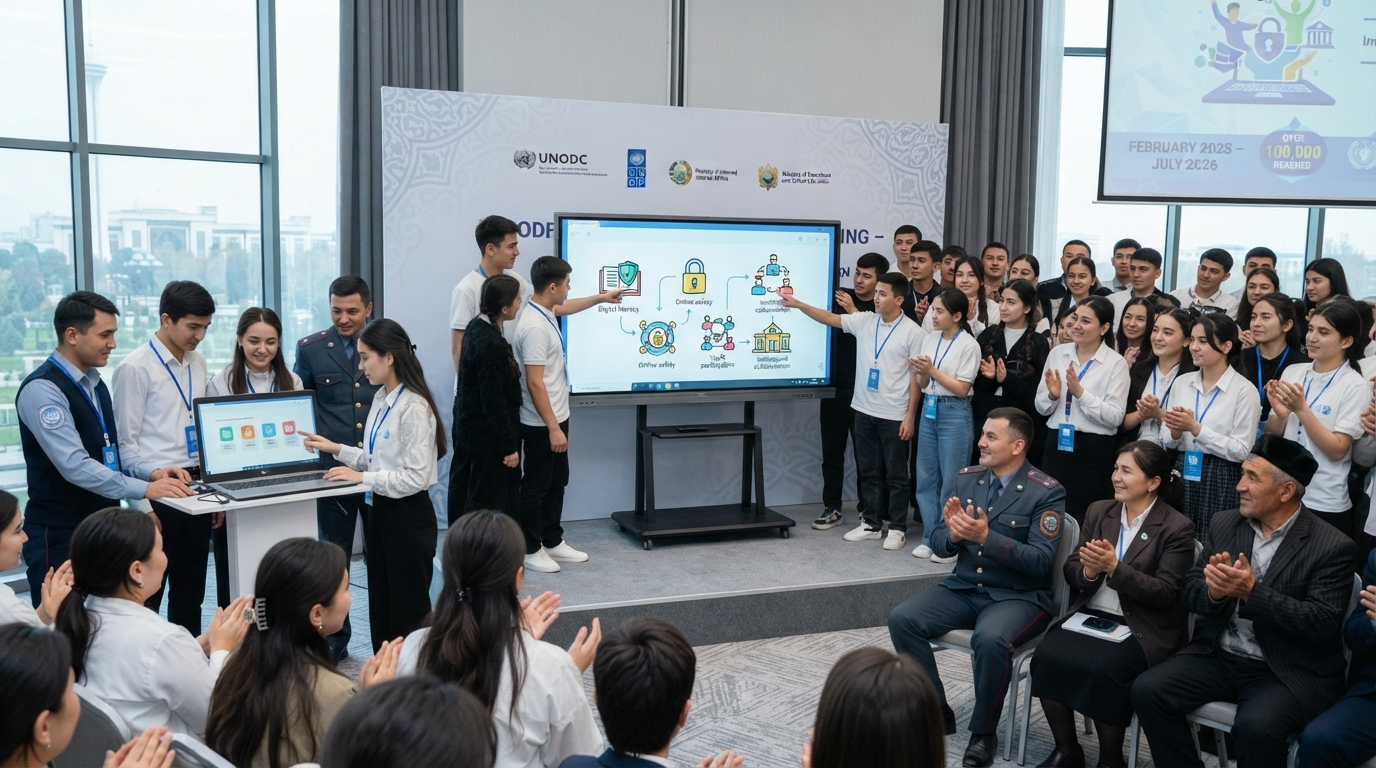
A United Nations-backed initiative in Uzbekistan, designed to bolster young people's resilience against cybercrime and digital violence, has concluded after reaching over 100,000 individuals. The program supported national endeavors to enhance prevention, digital education, institutional collaboration, and community involvement.
Titled "Strengthening Resilience of Youth to Cybercrime and Digital Violence in Uzbekistan," the program ran from February 2025 to July 2026. It was jointly implemented by the United Nations Office on Drugs and Crime (UNODC) and the United Nations Development Programme (UNDP). Key partners included Uzbekistan's Department for Combatting Cybercrime, operating under the Ministry of Internal Affairs, and the Ministry of Preschool and School Education. Financial backing was provided by the United Nations Trust Fund for Human Security (UNTFHS).
The initiative was launched in response to the increasing adoption of digital technologies and online services across Uzbekistan. While these advancements have expanded access to education, communication, and economic opportunities, they have also heightened exposure to cybercrime, online fraud, cyberbullying, and technology-facilitated gender-based violence. Employing a Human Security Approach, the program united government bodies, educators, law enforcement, civil society organizations, volunteers, and young people to fortify prevention and response mechanisms.
According to the program's outcomes, more than 100,000 people directly benefited from its activities. This included young women and men, teachers, law enforcement officers, community representatives, and civil society organizations.
As part of the initiative, two national mechanisms were established to sustain long-term cyber safety efforts: a pilot Youth Cybercrime Prevention Centre in Tashkent and a virtual Resource and Methodological Centre. Additionally, a new e-learning platform was launched, offering six interactive training modules covering 29 topics and seven video lessons on cyber threats and digital violence, tailored for both young people and professionals.
The program also prioritized strengthening institutional capacity. Over 150 specialists, including police officers, teachers, and mahalla representatives, received specialized training on preventing, identifying, and responding to cybercrime and online violence. International guidance materials were translated and adapted into Uzbek and Russian. Furthermore, new research on technology-facilitated gender-based violence was conducted to inform improvements in legislation, victim assistance, and institutional coordination.
Youth participation was another integral component of the program. More than 470 young people engaged in Model United Nations conferences focused on cyber safety and emerging digital threats. In addition, 50 United Nations Volunteers delivered digital literacy activities to vulnerable young people in local communities.
To foster peer-to-peer awareness, the program organized a national competition that resulted in 16 public service announcements created by young people. These videos were broadcast on national television, displayed on digital screens in schools, and disseminated via social media platforms.
The program also established an inter-agency working group, bringing together government institutions, law enforcement agencies, civil society organizations, and development partners. This group aimed to enhance coordination, facilitate expertise exchange, and develop joint responses to cyber threats impacting young people.
Although the program has concluded, its online learning platform, educational resources, trained specialists, research, and institutional partnerships will continue to support ongoing efforts to improve digital literacy, promote safe online behavior, and strengthen protection against cybercrime and digital violence in Uzbekistan.