

The Senate approved special jurisdiction for Enterprise Uzbekistan until 2100.
Uzbek senators approved the constitutional law on the International Center for Digital Technologies (Enterprise Uzbekistan), which provides for the creation of a special jurisdiction in Tashkent for IT companies with elements of English law by 2100. By 2030, the plan is to attract up to 1,000 companies.
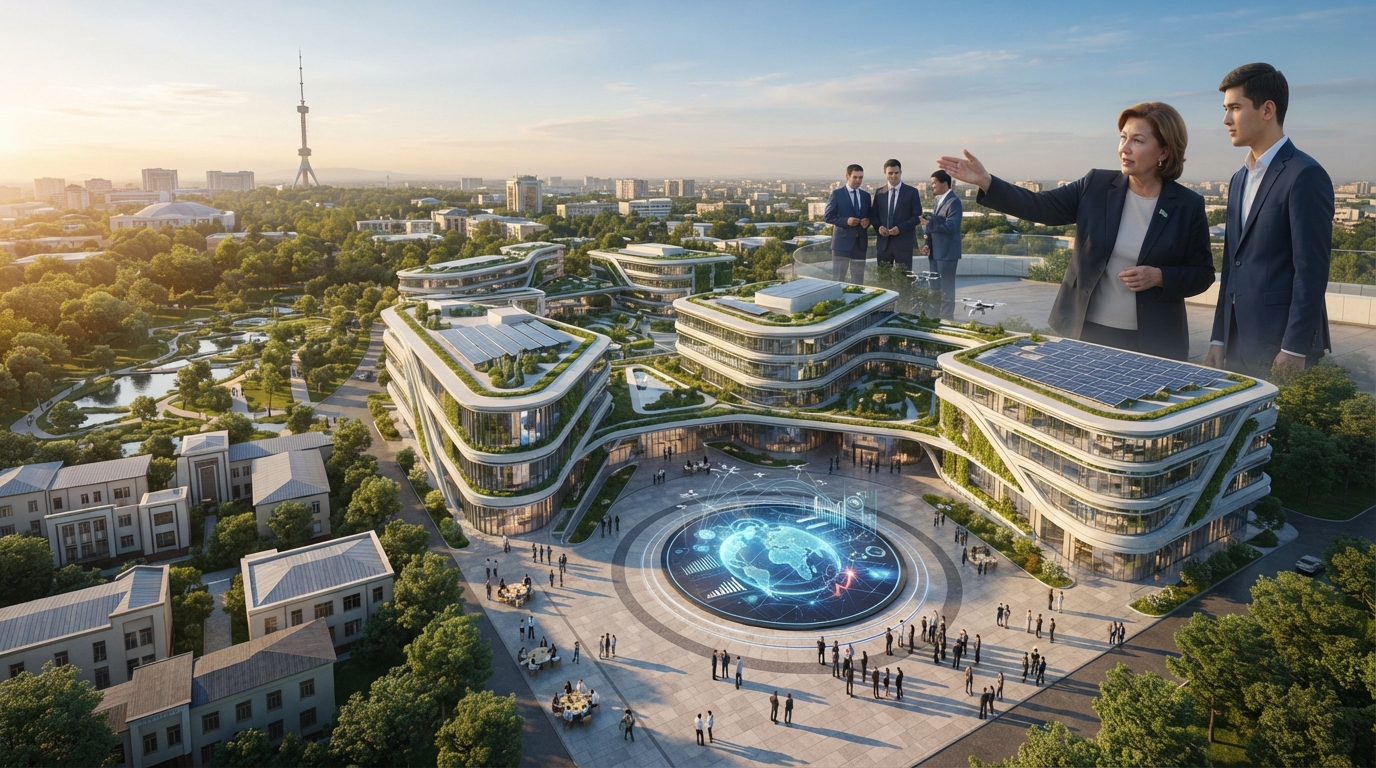
On August 8, at a plenary session, the Senate of the Oliy Majlis of Uzbekistan re-approved the constitutional law "On the International Center for Digital Technologies," which provides special jurisdiction for Enterprise Uzbekistan until 2100.
The Enterprise Uzbekistan center, established in Tashkent by presidential decree, aims to create a unique legal environment for digital technology companies, distinct from Uzbekistan's general legal regime. By 2030, the project sets ambitious goals: attracting up to 1,000 international companies, creating more than 300,000 jobs, and increasing IT services exports to $5 billion.
The constitutional law establishes the center as a special territory with a special legal regime, which will remain in effect until 2100. Within this framework, it is planned to develop, test, and implement digital products, services, and innovations, as well as attract investment and develop exports. The Senate emphasized that such a long period will allow foreign investors to plan large investments 40-50 years in advance.
During the discussion, Senator Malika Kadirkhanova expressed concern about the length of this period, noting the rapid development of digital technologies. She asked representatives of the Ministry of Digital Technologies whether the deadline until 2100 was based on economic calculations or international experience. "The deadline is over 70 years. Therefore, I would like to understand its rationale," she emphasized.
Deputy Minister of Digital Technologies Jamol Makhsudov explained that international experience was studied when determining the deadline. He cited the examples of Qatar and Ireland, where similar regimes have no specific deadlines; Dubai, where a special regime is established for 50 years with the possibility of extension; and Kazakhstan, where it is in effect until 2026. "The deadline until 2100 in Uzbekistan was determined taking into account the country's increasing attractiveness for investment and business, as well as the entry of international companies," Makhsudov stated.
One of the key features of the center will be a separate legal framework. After revision, the law provides for the possibility of applying the principles and norms of English common law and equity in appropriate cases, provided they comply with the Constitution of Uzbekistan, constitutional law, and the central government's regulations.
The decisions of the central government within its jurisdiction will take precedence over other conflicting legal acts, with the exception of the Constitution, the constitutional law governing the central government, and international treaties ratified by Uzbekistan.
The central government also provides for a special procedure for enforcing administrative liability. In certain cases, economic, civil, and other regulatory measures will be applied first, and the list of relevant violations and measures will be determined by the central government's council. The authors of the law believe that this approach is consistent with the practice of international financial centers, will make the legal environment more predictable, and will reduce administrative pressure. They also emphasize that special rules governing the central government's jurisdiction should not limit the powers of law enforcement agencies.
Additional requirements regarding anti-money laundering, combating the financing of terrorism, and the proliferation of weapons of mass destruction may be imposed on the central government's participants.
The law provides for certain regulatory preferences for the center's participants, such as temporary exemptions from certain legal requirements or center decisions, simplified licensing and permitting procedures, and access to infrastructure, research laboratories, and expert consultations.
The center's main areas of focus will be artificial intelligence, digital transformation, R&D, startups, and data centers. By 2030, it is planned to attract up to 1,000 companies, create over 300,000 jobs, and facilitate the export of services worth $5 billion.
The idea of a separate legal regime for IT companies was discussed as early as December 2023. In February 2024, Shavkat Mirziyoyev signed a decree establishing the International Digital Technology Center, or Enterprise Uzbekistan.
This is the second time the constitutional law has been considered in the Senate. The Legislative Chamber had previously adopted the document and sent it to the upper house of parliament. However, at the 17th plenary session, the Senate rejected it, citing the need to align several provisions with current legislation and align them with the legal model of the Tashkent International Financial Center.
To resolve the differences, a conciliation commission was created, comprising deputies, senators, government representatives, ministries, and agencies. Following this, as reported at the session, each provision of the law was re-examined. Specifically, the law's scope of application, the relationship between central legislation and Uzbek law, the application of English law, administrative and criminal jurisdiction issues, and requirements for combating money laundering and terrorist financing were clarified.
The constitutional law "On the Tashkent International Financial Center" had previously undergone a similar procedure. Its initial version was also rejected by the upper house at the 16th plenary session, after which the conciliation commission finalized the document. The Law on the Tashkent International Financial Center provides for a special legal regime, an International Commercial Court, the application of English law, and separate regulation of banking and investment activities, insurance, the securities market, payment systems, Islamic finance, and fintech. During the revision of the law, the mechanisms for applying English law, the jurisdiction of the International Commercial Court, requirements for tax residency and minimum investment, verification of the origin of funds and beneficiaries, as well as rules for the free movement of capital and the repatriation of income were clarified.