

The "Amina" app will be mandatory for migrants in 13 regions of Russia
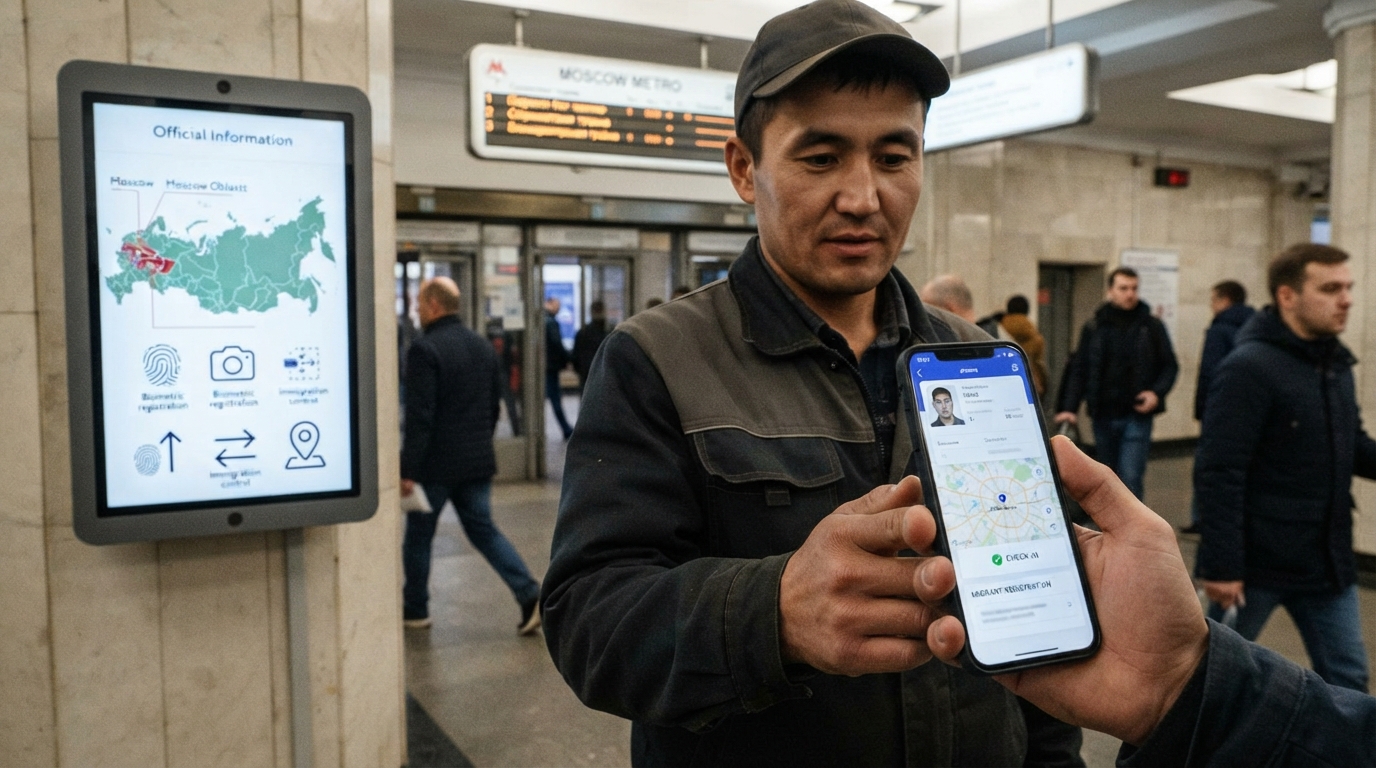
The Amina application will be mandatory for migrants in 13 regions of Russia
In another 11 regions of Russia, the installation of the Amina mobile application will be mandatory for foreign citizens. This application is designed to biometrically control migrants and track their movements. This was announced by Moscow Mayor Sergei Sobyanin in an interview with the TASS agency.
The decision to use the application was made based on the results of a pilot project conducted in Moscow and the Moscow region since September 2025. Thus, taking into account these two regions, the total number of regions where the Amina application will be mandatory will reach 13.
The Amina application was developed to digitally monitor and maintain migration records of foreign citizens coming to Russia from visa-free countries to work. It is mandatory for labor migrants from Uzbekistan, Tajikistan, Kyrgyzstan, Armenia, Kazakhstan, Georgia, Azerbaijan, Moldova and Ukraine.
The application automatically sends geolocation data to the Ministry of Internal Affairs (MIA) and allows you to report your place of residence remotely. It also compares the user's actual location with the declared address.
If the data is not transmitted for more than three business days, the migrant will receive a notification with a request to confirm the address of residence or report its change. Failure to comply with the registration conditions will lead to deregistration and inclusion in the Register of Controlled Persons.
“If this application does not work for him (the migrant), we will consider that the migration regime has been violated and he must be deported. Thus, we will know all his movements, where he works and where he is during the day, where he spends the night and moves,” Sobyanin said.
According to the Moscow mayor, as part of the experiment, a biometric control system was created at the border together with the Federal Security Service (FSB) and the Ministry of Internal Affairs (MIA). When crossing the border, migrants leave fingerprints and a digital photo, which will allow them to be identified later.
“We have received the president’s consent to conduct an experiment in the field of controlling migration flows in Moscow. What does this mean? Control of entry into the country and control of movement within the region. Search for criminals who have committed one or another offense,” Sobyanin said.
He said that the system includes all information about offenders who do not have the right to cross the Russian border or who need to be detained. The technology is being introduced at all major transport hubs, primarily aviation hubs.
Starting from September 1, 2026, the application will be the only way to register at the place of residence in Moscow and the Moscow region not only for labor migrants, but also for other categories of foreigners.
We are talking about those who come to Russia for a period of more than 90 calendar days for purposes not related to the implementation of labor activities. These include family members of Russian citizens or foreign citizens with a residence permit in Russia, family members of citizens of the Eurasian Economic Union (EAEU), as well as students studying at Russian universities and secondary specialized educational institutions.