

Tajikistan imports 661,000 tons of wheat amid falling production
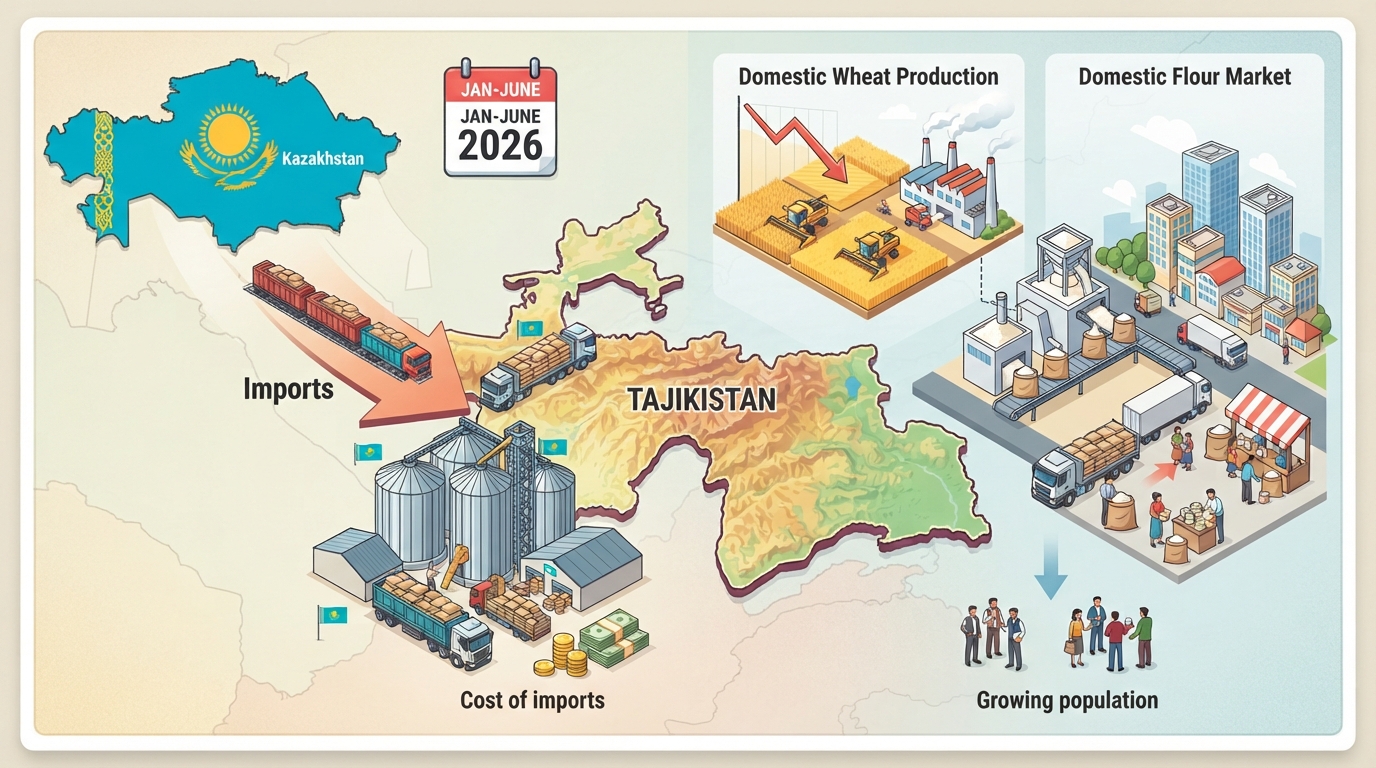
Tajikistan ramped up its wheat imports in the first half of 2026, bringing in 660,800 tons valued at roughly $171 million, as domestic production saw a decline. This information comes from AsiaPlus, which cited the country's Antimonopoly Service.
Compared to the same period in 2025, wheat imports rose by 47,500 tons, an increase of 7.7%. The average cost per ton for imported wheat reached $259, marking a $25 increase from the previous year. Kazakhstan was the sole supplier of all wheat imported by Tajikistan during this timeframe, with approximately 60 companies facilitating these imports.
Concurrently, Tajikistan's internal wheat production decreased, with 510,000 tons produced between January and June, a drop of 78,000 tons or 13.3% year-on-year.
Tajikistan also imported 35,400 tons of flour, costing $11.3 million, in the first half of 2026. The average import price for flour was $320 per ton, and import volumes surged by 11,000 tons, or 45.2%, compared to the same period last year. Kazakhstan supplied about 95% of Tajikistan's flour imports, with Russia contributing 4% and Uzbekistan making up the remaining 1%.
Nineteen companies were involved in flour imports during this period. In contrast to wheat production, domestic flour output experienced a significant increase. Tajik enterprises produced 399,400 tons of flour in the first half of the year, an increase of 95,800 tons or 31.6% compared to the first half of 2025.
The wholesale price for a 50-kilogram sack of first-grade flour from domestic processing plants ranged from TJS 200 to TJS 240 ($21–$25). When including delivery to Dushanbe, these prices climbed to TJS 215–275 ($23–$29). Government agencies sold first-grade flour in consumer markets for TJS 200 to TJS 230 ($21–$24) per sack, though the Antimonopoly Service did not specify the weight of these sacks.
During the first half of 2026, prices for domestically produced first-grade flour rose by 2%, while second-grade flour became 2.9% more expensive.
The increase in wheat and flour imports is attributed to ongoing population growth and a rising domestic demand for essential food products. According to the Agency for Statistics under the President of Tajikistan, the country's population grew from approximately 6.3 million in 2000 to 10.3 million in 2024, representing an increase of nearly 64%. The population expanded at an average annual rate of about 2.1% during this period. As of July 1, 2025, Tajikistan's population stood at 10.604 million.