

Sojitz to Build and Manage New Tashkent Airport
Japan's Sojitz Corporation, alongside an international consortium, has signed a 35-year concession agreement to build and manage a new $2.5 billion international airport in Tashkent by 2030.
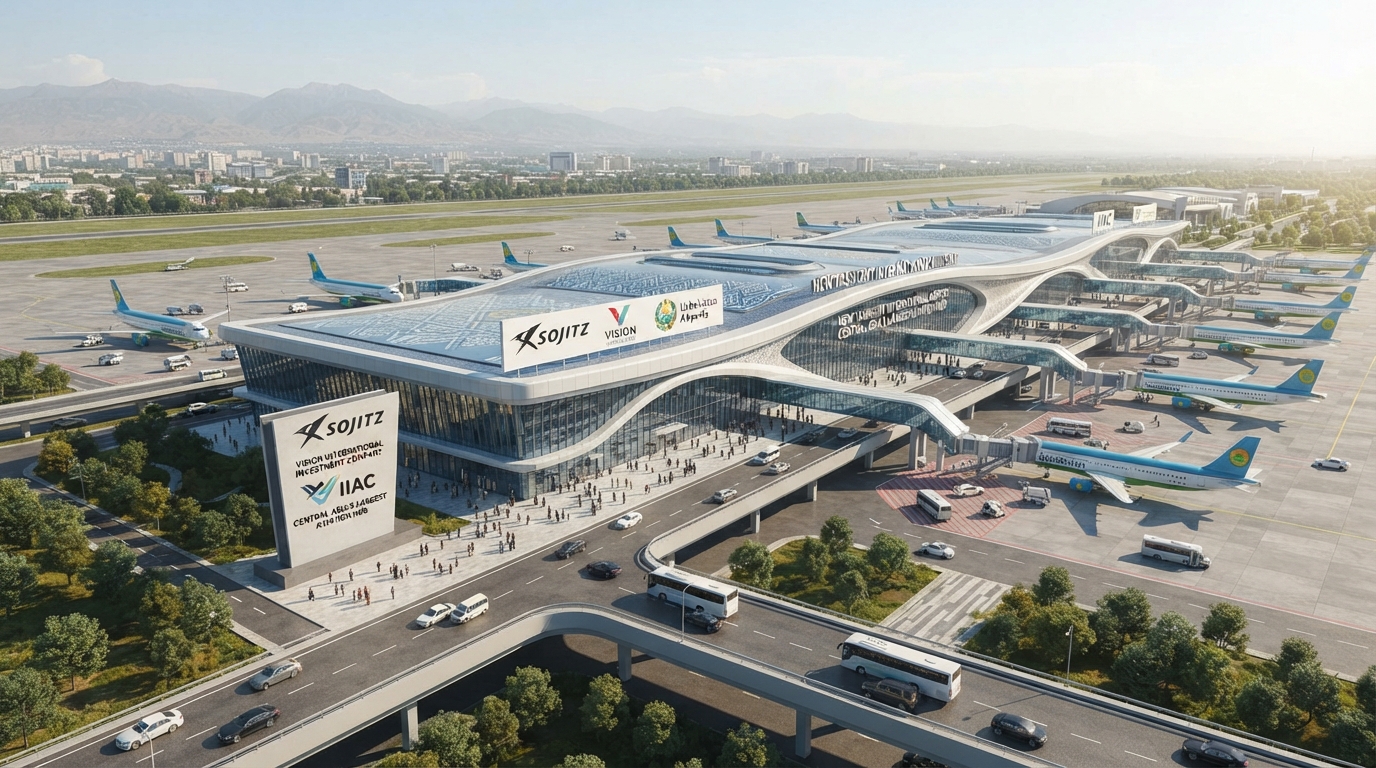
Japanese firm Sojitz, in collaboration with Saudi Arabia's Vision International Investment Company (Vision Invest) and South Korea's Incheon International Airport Corporation (IIAC), has entered into a 35-year concession agreement with Uzbekistan Airports, a state-owned entity. This agreement pertains to the construction and operation of the new Tashkent International Airport, as announced by Sojitz's press service on July 31.
The signing of this agreement took place in June 2026 during the Tashkent International Investment Forum (TIIF-2026).
Sojitz estimates the total investment for this project will exceed 370 billion Japanese yen, equivalent to approximately US$2.5 billion. The new airport is slated to commence operations in 2030.
This initiative aims to establish the largest aviation hub in Central Asia, designed to handle passenger and cargo transportation, alongside logistics operations. The projected annual capacity of the new airport is 20 million passengers, roughly double that of the existing capital airport.
Sojitz indicated that a consortium comprising Sojitz, Vision Invest, IIAC, and Uzbekistan Airports will oversee the airport's development. The partners intend to pool their expertise in airport management to create a modern and secure aviation complex.
The company also plans to leverage its international network to attract new air carriers, broaden the route network, and cultivate related business ventures, including commercial services within terminals and aircraft ground handling.
The corporation highlighted Uzbekistan's status as the largest market in Central Asia, with a population of approximately 37 million people.
According to the company's assessment, several factors create an opportune environment for the project's execution: population growth, an increasing influx of foreign direct investment, and the implementation of the Uzbekistan-2030 strategy, which focuses on infrastructure development and aviation industry reforms through public-private partnership mechanisms.
Sojitz further reported its presence in Uzbekistan since the 1990s, where it is currently involved in several significant infrastructure projects. These include the construction of the 1.6 GW Syrdarya II thermal power plant, a 1 GW wind farm in Navoi Region, and an 800-bed multidisciplinary hospital in Samarkand Region.
The company believes that the realization of the new international airport project will serve as a cornerstone for expanding its investment activities in Uzbekistan and will contribute to the nation's sustainable socio-economic development.