

Senate Approves Constitutional Law on Presidential Administration
Uzbekistan's Senate approved a Constitutional Law defining the legal status, structure and functions of the Presidential Administration.
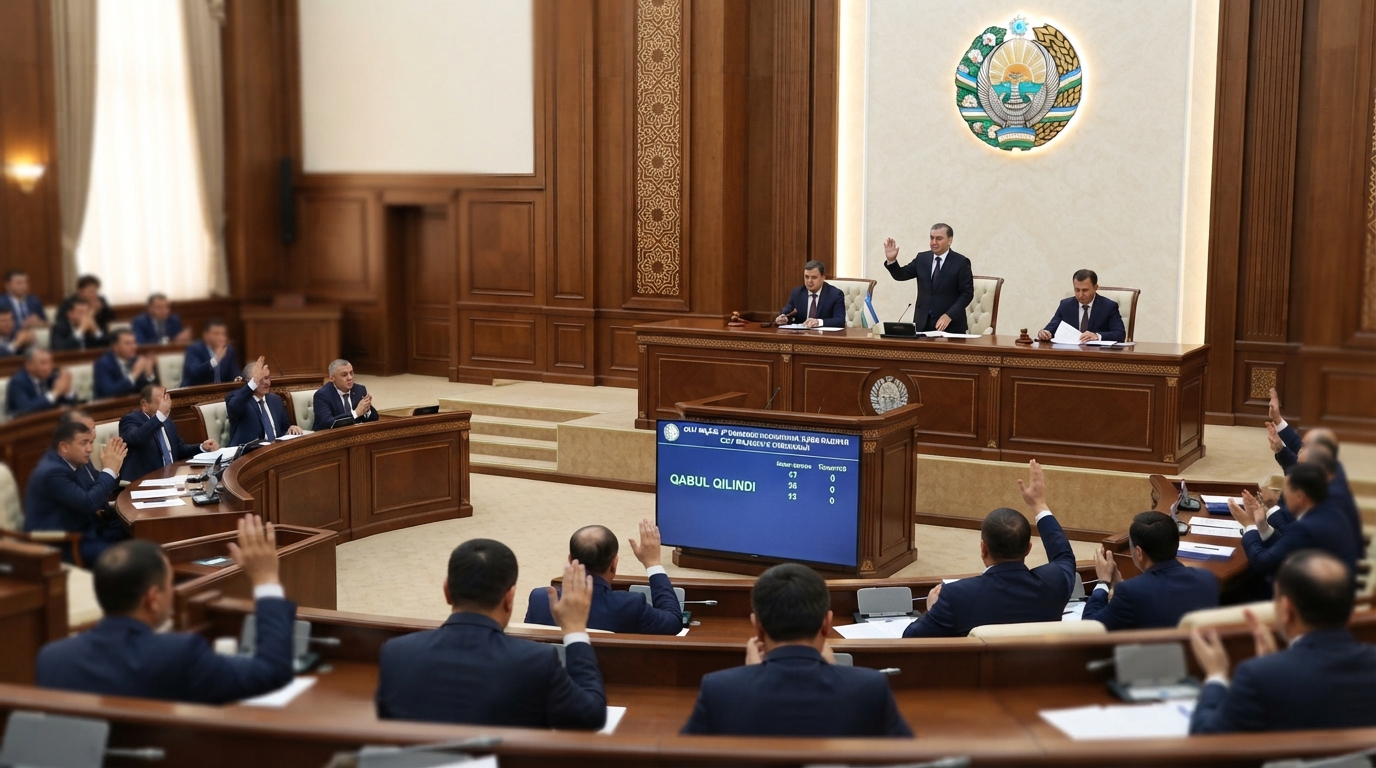
Uzbekistan's Senate has given its approval to the Constitutional Law titled "On the Administration of the President of the Republic of Uzbekistan" during its 18th plenary session. This legislation delineates the legal standing, primary responsibilities, organizational framework, and operational protocols of the Presidential Administration. The decision was announced by the Senate of the Oliy Majlis of Uzbekistan.
During deliberations, senators highlighted that the recently amended Constitution has established an efficient system of state power and governance. This system is rooted in both national and universal values, drawing upon the historical legacy of Uzbek statehood. They pointed out that distinct sections of the Constitution outline the foundational principles governing the activities of the Oliy Majlis, the President, the Cabinet of Ministers, and local government bodies.
Senators further recalled that Chapter XIX of the Constitution specifically addresses the President of the Republic of Uzbekistan, who functions as the head of state and is responsible for ensuring the harmonious operation and interaction of state authorities. The Constitution also stipulates that the President is to establish the Presidential Administration and appoint its head. The purpose of this administration is to provide organizational, legal, and analytical support for the execution of presidential duties, with its legal status to be defined by law.
In accordance with the Constitution, the new Constitutional Law defines the status of the Presidential Administration, the core principles guiding its operations, its organizational structure, its procedural guidelines, the mechanisms for its collaboration with state bodies and organizations, and safeguards for the activities of its leadership, officials, and employees.
The document additionally establishes the legal framework for the cooperative relationship between the Presidential Administration and various state bodies and organizations.
During the drafting phase, the creators of the law conducted a thorough review and analysis of practices in several foreign nations, including the United States, Finland, the Czech Republic, Slovakia, Romania, Latvia, and Kazakhstan, among others.
Senators expressed their view that the enactment of this Constitutional Law will contribute to refining the legal mechanisms that support the President's activities in organizational, legal, and analytical capacities. They also believe it will foster stronger collaboration among state institutions and boost the overall effectiveness of public administration.
Following the debate, the Senate officially adopted the Constitutional Law.