

Prisoners riot in Sri Lanka: there are casualties and injuries
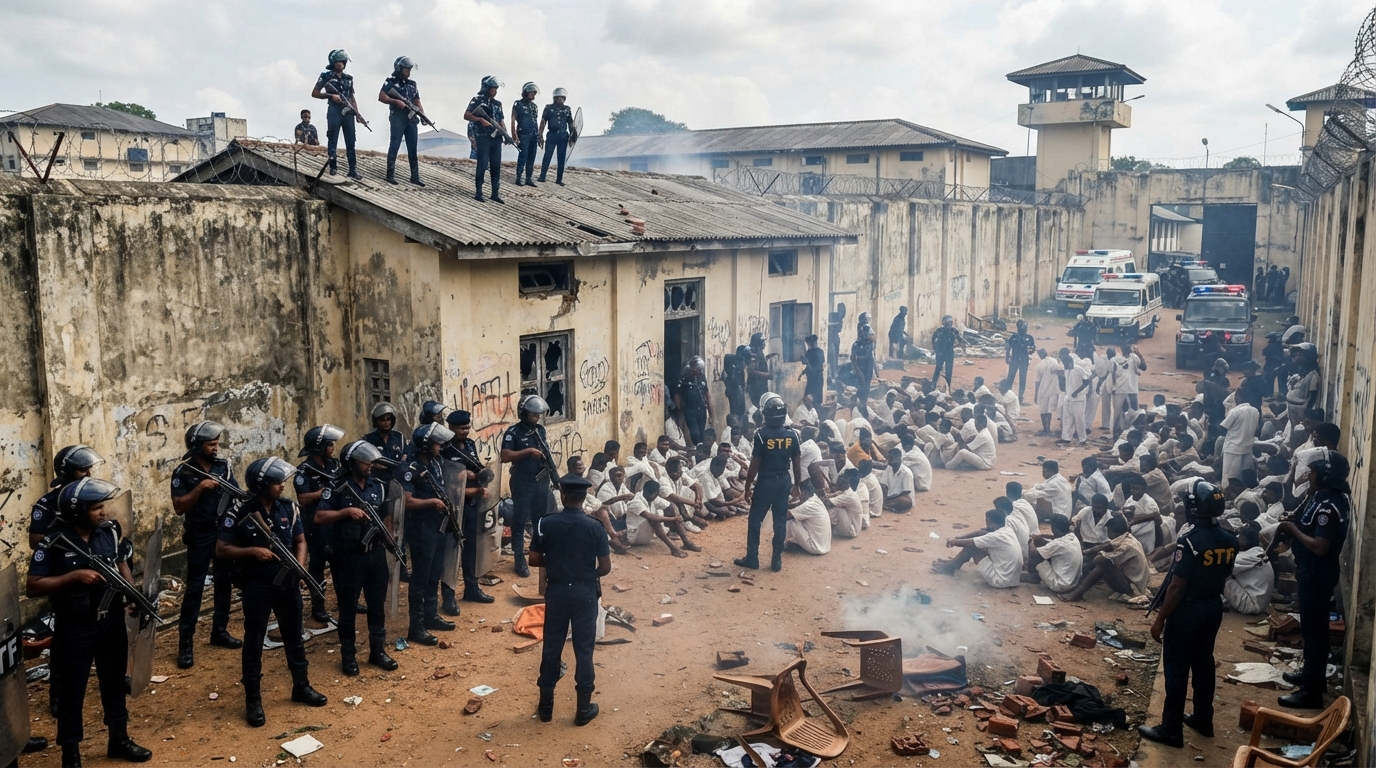
Prisoner riot in Sri Lanka: there are victims and injuries
Three prisoners were killed and 23 were injured in riots in various prisons in Sri Lanka. Police and special forces were deployed to the scene. This was reported by Al Jazeera.
Public Security Minister Ananda Wijepala told parliament that one prisoner was killed when 40 prisoners tried to escape from the New Magazine prison in the capital Colombo on the night of August 6.
On the morning of August 7, a second riot broke out at Kuruwita prison, about 80 kilometers from the capital. Two more prisoners were killed there.
The minister said that 23 prisoners were injured and hospitalized as a result of these two incidents. Police and special forces were able to bring both riots under control.
In addition, on August 7, police used tear gas against protesting prisoners at an open-type prison in the coastal city of Negombo, 40 kilometers from Colombo.
According to the minister, in response to the riots at all three prisons, police were working to return prisoners who had climbed onto the roofs and entered open areas to their cells. In a speech in parliament, Wijepala said that the violence was related to disputes between drug traffickers and rival criminal gangs. He said that the government was trying to determine whether the riots were premeditated.
“If we look at all these incidents together, it seems that there was planning and sabotage behind them. However, we can only say for sure after a thorough investigation,” Wijepala said.
The prison riots come a month after 10 prison guards and 20 inmates were killed in two days of clashes at a prison in Negombo.
Overcrowding in Sri Lanka’s prisons is a major problem. Justice Minister Harshana Nanayakkara recently told parliament that prisons designed to hold 10,000 people now hold more than 39,000 prisoners.
“Today, Sri Lanka has four times the prison population. They have been patient for a long time,” said Senaka Perera, president of the Prisoners’ Rights Committee.
The majority of the prisoners are suspects awaiting trial on drug-related charges. According to Perera, recent laws that have tightened bail conditions have led to prison overcrowding.
Sri Lanka is currently planning to amend its constitution to reduce the backlog of more than 1 million cases and reduce the prison population. According to the law, the term of office of high court judges will be extended by two years.