

Paramount and Warner Bros sued to block $110bn mega merger
A dozen US states are taking legal action to halt the largest media consolidation in Hollywood history.
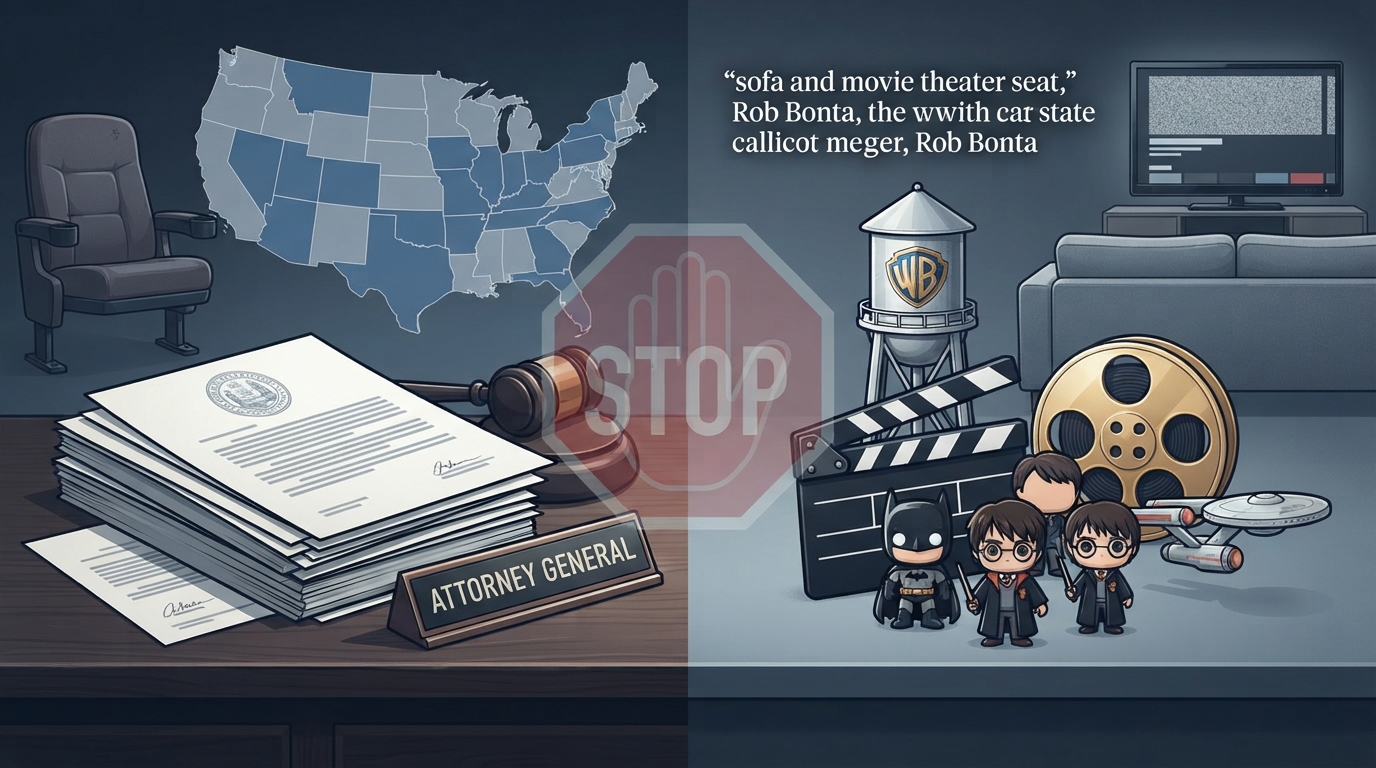
Paramount and Warner Bros have been sued to prevent a $110 billion merger. Warner Bros is based in Burbank, California. A coalition of twelve U.S. states has come together to challenge the merger, arguing that this would represent the largest media consolidation in Hollywood's history, potentially harming competition and increasing prices for consumers.
California is leading the group of states that has filed a lawsuit aimed at stopping the merger. California Attorney General Rob Bonta stated that the merger would negatively impact "audiences on every sofa and movie theater seat in the US." If the merger proceeds, the new entity would control more than a quarter of major film releases. Alongside Disney, Universal, and Sony, these four conglomerates would dominate 86% of the market.
The merger would mark the end of a century-long rivalry between two of Hollywood's most prominent studios. Together, they own iconic franchises such as Harry Potter, Batman, Mission: Impossible, and Top Gun, as well as major television networks like CNN, MTV, and Nickelodeon.
This legal challenge presents a significant obstacle for the entertainment giants as they seek to combine their operations. In June, the U.S. Department of Justice had given its approval for the merger. However, the coalition of attorneys general is urging the companies to pause the transaction while it undergoes judicial review, warning of a temporary restraining order if they do not comply.
If the merger is approved, the combined entity would control nearly one-third of the U.S. theatrical motion picture market and basic cable programming. Bonta asserted that it "would lead to higher prices, lower quality, and less content for film and television, harming movie theaters, basic cable distributors, and ultimately, audiences on every sofa and movie theater seat in the US."
The lawsuit focuses on three key areas: major cinema releases, blockbuster films, and cable television channels. The states contend that the loss of competition would diminish the bargaining power of movie theaters and television networks. Currently, if one studio demands unreasonable prices, a distributor can choose to work with a competitor. Without that option, the lawsuit claims that theaters and TV networks will face increased fees, which will ultimately be passed on to consumers through higher ticket prices, elevated cable bills, and fewer options.
"Nothing justifies these substantial harms to competition," the lawsuit asserts.
On the other hand, proponents of the merger argue that the traditional media landscape is in turmoil. Cable TV viewership is declining rapidly, and cinema attendance is under significant pressure from technology companies and streaming services, making consolidation an economic necessity.
In response to the lawsuit, Paramount called it "fundamentally flawed" and "wrong," stating that it would "vigorously defend the transaction." The company added, "Delaying this transaction will only harm entertainment workers who have already suffered over recent years as technology has disrupted their livelihood and cost California tens of thousands of entertainment jobs." The BBC has reached out to Warner Bros for a statement.