

Pakistan restricts international media reporting
Anyone working for foreign media, including Pakistanis, will now need permission to report from anywhere outside three major cities.
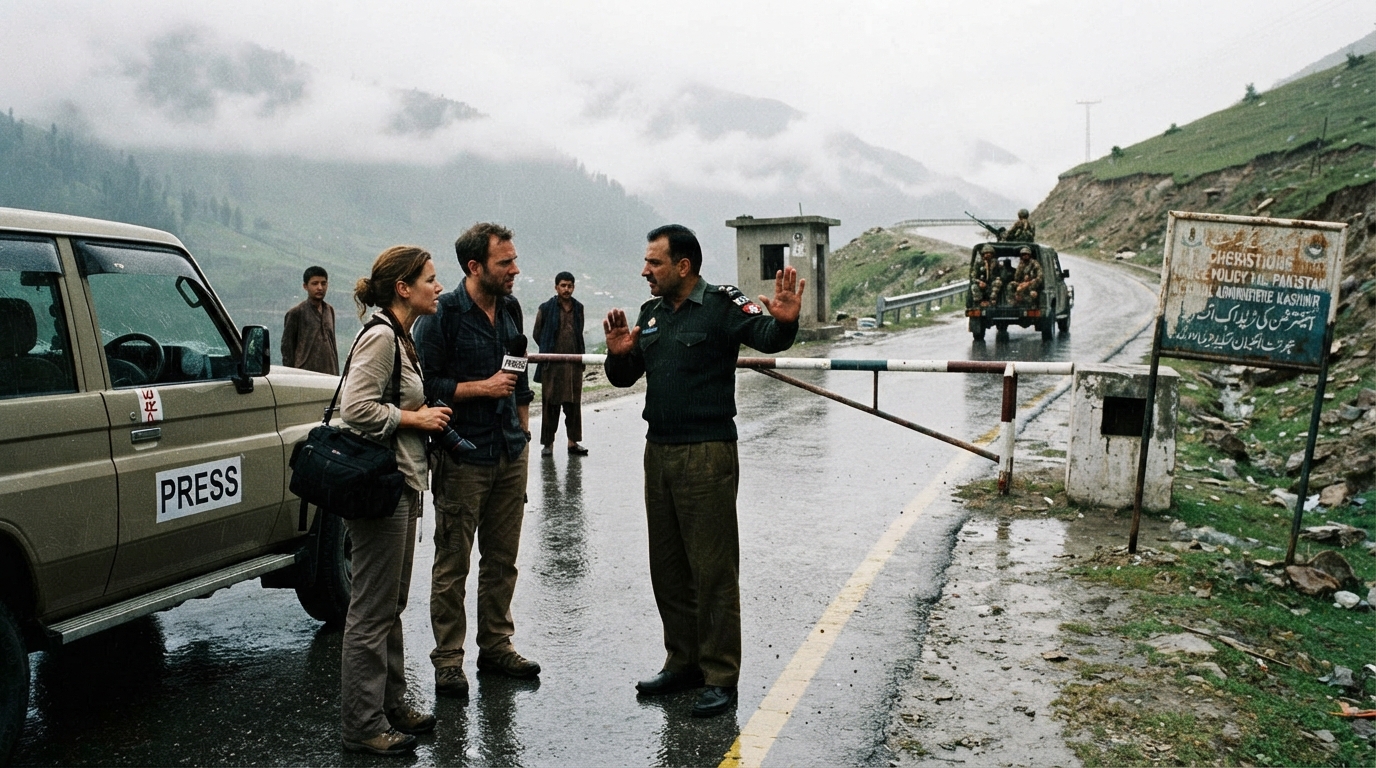
Pakistan has imposed new restrictions on international media reporting, drawing sharp criticism from journalist organizations. Foreign media personnel, including Pakistani nationals, must now obtain permission to report from any location outside of Islamabad, Karachi, and Lahore.
These new regulations effectively place on-the-ground reporting by foreign media at the discretion of authorities across most of Pakistan, a country that ranks 153 out of 180 on the World Press Freedom Index.
Political commentator Mustafa Nawaz Khokhar stated, "These guidelines are tantamount to choking international media in an increasingly shrinking space." He added that the public relies on international media for independent reporting, and these restrictions could lead to more disinformation and the spread of fake news.
While media limitations are not new in Pakistan, local media often face greater pressure than international outlets.
The government, which has been critical of coverage of deadly protests in Pakistan-administered Kashmir, will now require foreign media to seek permission to travel to that region.
Issued on Sunday, the government claims the "Foreign Media Facilitation Guidelines, 2026" are not intended to restrict media but to "provide an administrative mechanism" for verification, access facilitation, and coordination of reporting requirements. However, the guidelines do not specify the processing time for obtaining a "No Objection Certificate" (NOC), which is the required permission.
Foreign journalists already need NOCs and can face months-long waits or even no response, severely hindering their ability to report breaking news in the country of 240 million people. Consequently, international media often depend on Pakistani nationals, who can travel more easily or are based in cities like Peshawar or Quetta, to verify information. Under the new guidelines, any contributor, including freelancers, residing outside the three designated cities will need NOCs to cover a story.
Zaffar Abbas, editor of Dawn newspaper, called the restrictions "ridiculous and totally unacceptable." He stated, "I have worked as a journalist in this country for over 40 years and have reported during the times of two military rulers and a number of autocratic civilian rules, but have never seen the imposition of such restrictions." He further argued that requiring journalists to get an NOC for travel outside the three major cities undermines both freedom of movement and freedom of the press. The government, however, maintains that this is not a blanket restriction on individual movement.
The guidelines also stipulate that journalists can lose their accreditation for "acts against ideology, sovereignty, security or public order of Pakistan." Khokhar described this as "vague," raising concerns about its interpretation. The government, conversely, asserts that any accreditation system must retain the ability to act, particularly when "the holder is involved in conduct affecting national security or public order."
According to Supreme Court lawyer Salhuddin Ahmed, there is no statutory framework supporting these guidelines. He stated, "These 'guidelines' are merely an executive order and lack any legal backing from statute." Ahmed added that the rules of business, which the guidelines refer to, are meant to regulate internal government functioning, not create legal obligations for others. He concluded that the guidelines are "a hastily and ill-thought-out attempt to further curb independent reporting in Pakistan." The government, however, maintains that the guidelines are used under rules of business and regulate the Information Ministry's administrative relationship with foreign media, as its External Publicity wing is responsible for foreign media.
A group of international journalists and the president of Pakistan's Federal Union of Journalists are seeking a meeting with the information minister to express their concerns.
Authorities appear particularly focused on reporting from certain areas. On Monday evening, the External Publicity wing sent a WhatsApp message to foreign media organizations, instructing anyone in Pakistan-administered Kashmir (PAK) to "return back IMMEDIATELY" and apply for an NOC. This region has experienced two months of violent clashes between protesters and security officials, resulting in dozens of deaths, amidst a boycott of ongoing local elections. Internet access restrictions have made information verification difficult.
This ministry message followed reports from inside PAK published by several international news outlets, including the BBC. Al Jazeera's website has been inaccessible in Pakistan since Monday, after a report from its correspondent in the regional capital was labeled "yellow journalism" by the Pakistan Ministry of Information. No public announcement of a ban on the news site has been made.
Kashmir is a highly disputed and militarized region, with both India and Pakistan claiming the entire territory but controlling only parts of it. Coverage of unrest in PAK is politically sensitive. Two Pakistani journalists informed the BBC that their editors had warned them to avoid the topic.