

'My only son was shot standing up for justice' - inside city gripped by deadly protests in Pakistan-administered Kashmir
The BBC gains unique access to Rawalakot, scene of violent clashes between security forces and protesters in Pakistan-administered Kashmir.
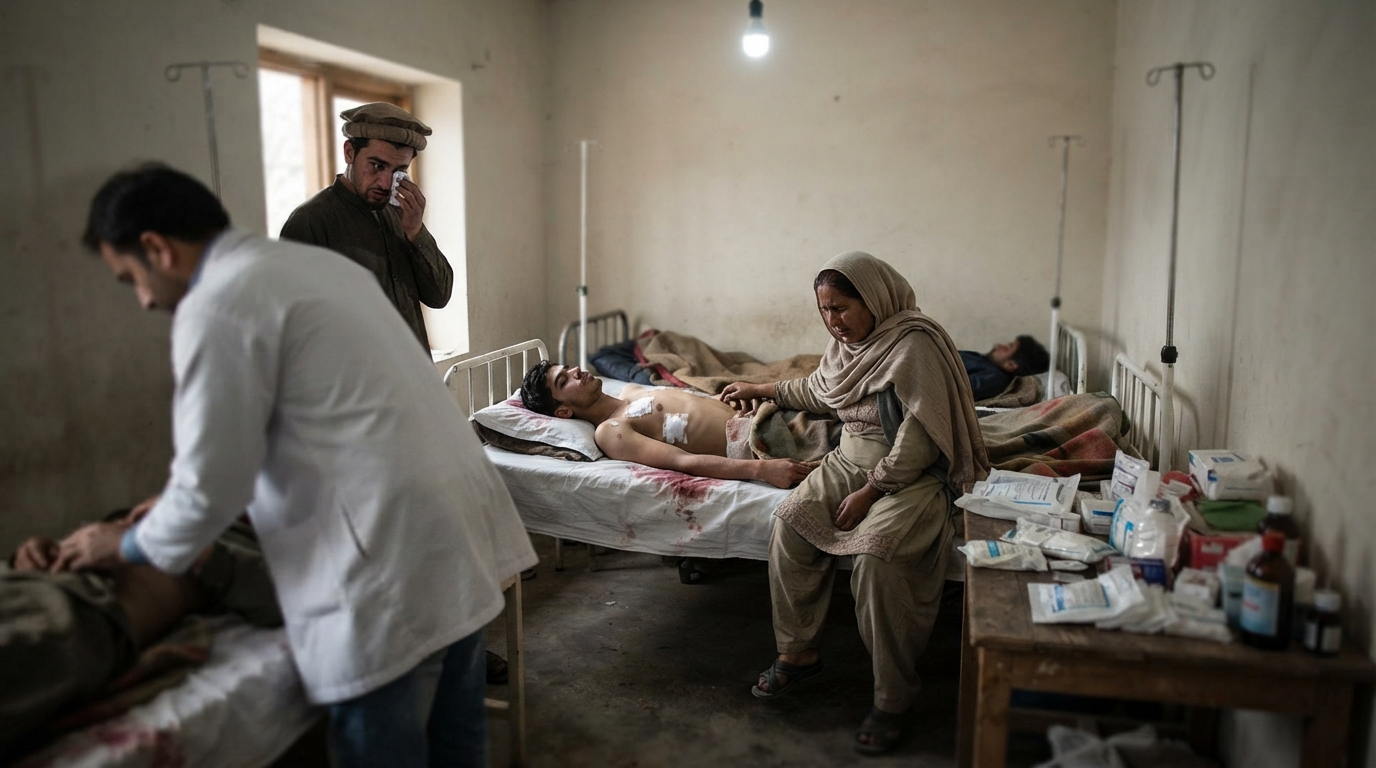
"My only son was shot standing up for justice," lamented a mother in Pakistan-administered Kashmir, a region gripped by deadly protests.
Dr. Anwar's makeshift clinic, a spare bedroom serving as a medical supply cupboard and a bed under a red tarpaulin outside, is struggling to cope with the influx of seriously injured protesters in Rawalakot, Pakistan-administered Kashmir (PAK). Shafqat Hussain, shot in the chest, lay dying on a blood-stained sheet, a testament to the clinic's grim reality.
Over the past two months, clashes between security forces and protesters from the Joint Awami Action Committee (JAAC) have claimed dozens of lives across the region, home to approximately 4.5 million people, where elections are currently underway. The BBC is the first media outlet to access Rawalakot and report from the heart of the protests.
Dr. Anwar, whose name has been changed for his protection, explained, "We have enough supplies for first aid – to stop bleeding, clean and dress wounds, and remove superficial bullets. But patients with serious injuries to the chest, abdomen, head, or other vital organs require advanced hospitals." He added that even major hospitals would be overwhelmed by a simultaneous influx of such patients. Since July 27, the clinic has treated 50 to 60 critically injured patients, with Dr. Anwar personally treating 15 to 20 gunshot victims.
Protesters are hesitant to seek treatment at the main hospital, fearing arrest or further shootings, a claim authorities deny. "Most of those killed or seriously injured are young people, aged between 15-16 and 32-35. I've seen very few patients over 40," Dr. Anwar observed. Authorities claim the JAAC has blocked roads to the city.
At Hussain's bedside, his friend Ali, wiping away tears with his shawl, choked out, "We only asked for affordable flour, electricity, and our basic rights. Instead, our brothers are being killed. What was our crime? Why are live bullets being fired at us?"
JAAC protesters assert their demonstrations are about fundamental rights, including concerns over electricity prices, education, and healthcare. They claim an agreement signed with the Pakistan and PAK governments in October, intended to address these issues, has not been implemented. The local government disputes this, alleging the group is armed and aims to disrupt the ongoing elections. They refuse to permit the protesters to march to the regional capital, Muzaffarabad.
The JAAC, banned in June and labeled foreign-funded terrorists, rejects this characterization. They maintain they are peaceful and, while funded by the PAK community abroad, are not sponsored by India. They contend they are victims of violence, with Pakistan's security forces firing upon them.
With internet access cut and roads blocked or guarded, information has been scarce. The BBC spoke to multiple families in the city who reported losing loved ones to protest-related shootings. Asma, who was at the protest herself, recounted hearing her only son had been shot. "We were only asking for our rights. We are not terrorists," she asserted. "No mother could ask for a better son." She added, "He knew there were risks, but he believed standing up for justice was important. He used to say that dying for a just cause was an honour."
Salman mourned his younger brother, describing him as "loved by everyone" and his death as "a great loss." He added, "At the same time I feel proud that he gave his life while standing up for the rights of the people. He was not fighting or attacking anyone."
Ayub, a retired soldier who lost his son, did not blame the Pakistan government or military. Instead, he pointed to the PAK government for calling in paramilitary forces. "I lived through the martial law periods of General Zia-ul-Haq and General Pervez Musharraf," he stated, "But I have never seen anything like what is happening now. In my opinion, it is extreme injustice." He insisted, "My son had done nothing wrong. None of the protesters had done anything wrong."
The PAK government denies allegations of indiscriminate firing on peaceful protesters, stating that law enforcement acted against individuals involved in attacks on personnel, threatening public safety, or obstructing lawful authority.
The BBC observed food shortages, with protesters sharing what little they had. Most shops were closed, and some residents spoke of efforts to smuggle in bags of rice on motorbikes. Roads into the city were blocked by felled trees, which authorities attribute to the JAAC. Other entry points on the main road now feature security checkpoints. The PAK government denied preventing food or medical supplies from entering Rawalakot, claiming they were facilitating their entry.
Authorities have repeatedly labeled the JAAC a violent group, sharing drone footage they claim shows JAAC members carrying guns on rooftops. At news conferences, police officials displayed weapons they said were seized from the group, reporting injuries and deaths among security personnel to local media. They claimed one man under interrogation confessed to being promised 10 million rupees (approximately £26,700) for every paramilitary officer killed.
Umar Nazir, a member of the JAAC's core committee in Rawalakot, denied authorities' claims of infiltration. While acknowledging that security officials may have died, he stated, "I believe that certain elements, who are under their control, were infiltrated into our ranks. Such people were certainly present among us." He further speculated, "I believe they may have carried out such actions themselves in order to justify their own narrative. I am not making a definitive claim, but there is no evidence whatsoever that any such violence came from our side." Nazir provided no evidence for his infiltration claim, and authorities accuse the JAAC of a disinformation campaign, particularly on social media.
At the JAAC protests attended by the BBC, no weaponry or shooting was observed, though repeated gunshots were heard overnight, with the source and target unclear. The atmosphere remained tense and uncertain, with no one knowing when the situation might escalate. Nazir expressed the group's willingness to talk, but for now, more protests are planned.