

Kidnapped rare Serbian eagle freed into wild after rescue
Feliks the eagle was abducted as he first flew the nest in Serbia and wound up in the Middle East with poachers who demanded a ransom.
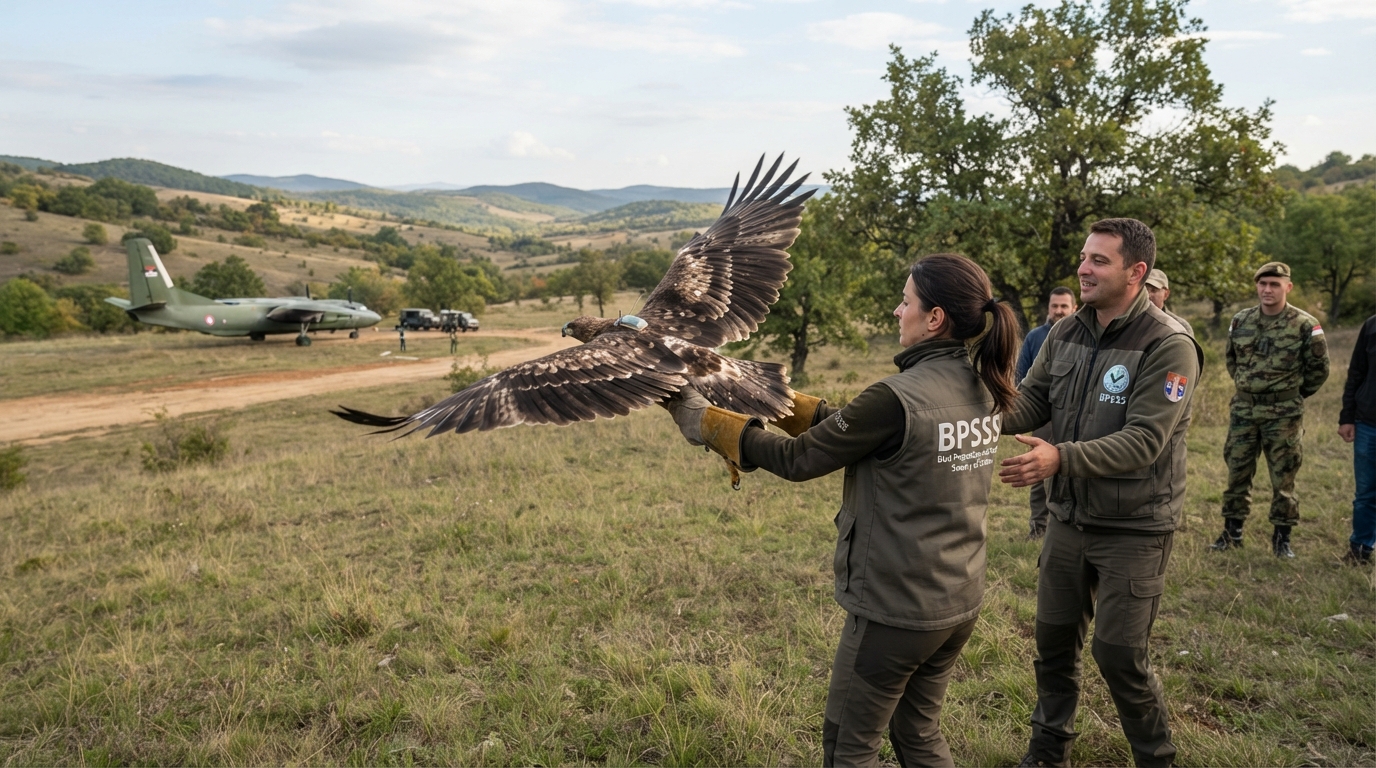
A rare eastern imperial eagle, Feliks, has been successfully rescued from animal traffickers and returned to the wild in Serbia after enduring months in captivity. Serbian peacekeepers facilitated his journey home on a military transport plane.
Feliks, who left his nest last year, was captured in Syria by poachers who subsequently demanded a ransom, which was refused. Following extensive negotiations, the bird was transferred to a wildlife center in Beirut, Lebanon, where he spent over six months recuperating before his repatriation on a Serbian military aircraft.
This protected species is critically endangered. However, conservation efforts initiated in 2017 have significantly increased the population in Serbia, from a single pair to 29 pairs this year, according to the Bird Protection and Study Society of Serbia (BPSSS).
In July 2025, shortly after the young raptor first took flight, experts began tracking him for conservation purposes as he journeyed towards the Middle East. Uros Stojiljkovic of the BPSSS informed AFP news agency, "At that point, we started to worry because we could see that he was heading towards an extremely unsafe region."
When the bird's tracking signal was lost in October, it was initially suspected that the tracker was malfunctioning. However, it soon became apparent that Feliks had been abducted and was eventually offered for sale by poachers.
Weeks later, a partner organization in Lebanon contacted the Serbian conservationists, informing them that Feliks' unnamed captors had demanded a ransom. Stojiljkovic told AFP, "We categorically refused. By doing so, you are effectively supporting that smuggling chain."
Adult eastern imperial eagles boast a wingspan of six feet (2 meters). Lengthy negotiations ultimately secured the bird's release. The Associated Press reported that refugees transported Feliks in a potato sack across the Nahr al-Kabir river, located on the northern border between Syria and Lebanon.
In June of this year, Serbian peacekeepers returning from Lebanon escorted the bird to Palic Zoo. Sonja Mandić, the zoo director, stated that Feliks arrived at the zoo's shelter "exhausted, after a long and demanding transport by military plane," and his health was monitored daily.
After more than a month of careful recovery, Feliks was released into the wild on Thursday. Milan Ružić, executive director of the BPSSS, expressed his hopes: "We wish Feliks to get stronger as soon as possible, survive all the adversities, conquer his territory and leave descendants." Experts confirmed that the young eagle will be closely monitored in the coming weeks.