

Kazakhstan's cancer mortality drops 26.6% amid improved early detection rates
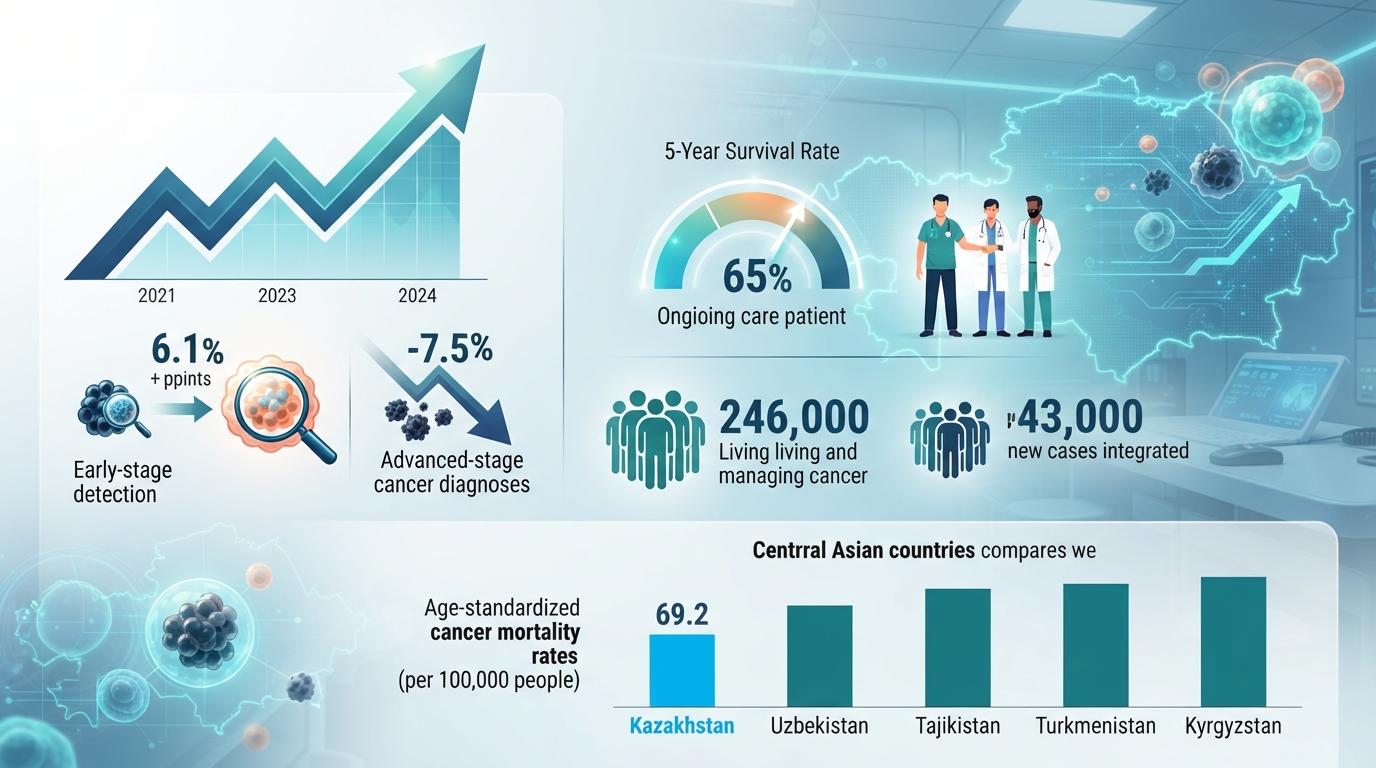
Kazakhstan's Ministry of Health has announced a 26.6% reduction in cancer mortality over the last three years, attributing the decline to enhanced early detection and improved patient survival rates.
During this period, the proportion of cancer cases identified at an early stage rose by 6.1 percentage points, reaching 36.8%. Concurrently, there was a 7.5% decrease in the number of advanced-stage cancer diagnoses.
The ministry also noted that the five-year survival rate for cancer patients has climbed to 65%, a testament to advancements in both diagnostic methods and treatment protocols.
Currently, approximately 246,000 individuals in Kazakhstan are living with cancer and receiving ongoing medical care, with nearly 43,000 new cancer cases identified each year.
This progress, as stated by the Ministry of Health, stems from the execution of a comprehensive national cancer control strategy. This plan was initiated in response to directives from President Kassym-Jomart Tokayev and has prioritized the modernization of the nation's oncology services.
Kazakhstan stands out among Central Asian nations for its key oncology metrics and is actively striving to align with the standards observed in OECD countries, where early diagnosis and contemporary treatment approaches are fundamental to cancer care.
According to the most recent GLOBOCAN country fact sheets, Kazakhstan registered the lowest age-standardized cancer mortality rate among the five Central Asian countries, at 69.2 deaths per 100,000 people. Uzbekistan followed with 71.5 deaths per 100,000, and Tajikistan with 76.5. Turkmenistan and Kyrgyzstan reported the highest rates in the region, at 82.5 and 82.8 deaths per 100,000 population, respectively.