

National Family Health Survey–6 (NFHS-6) reflects India's accelerated progress in maternal and child health, nutrition, and financial protection
Tashkent Times is an English language online-newspaper that brings all latest Uzbekistan news
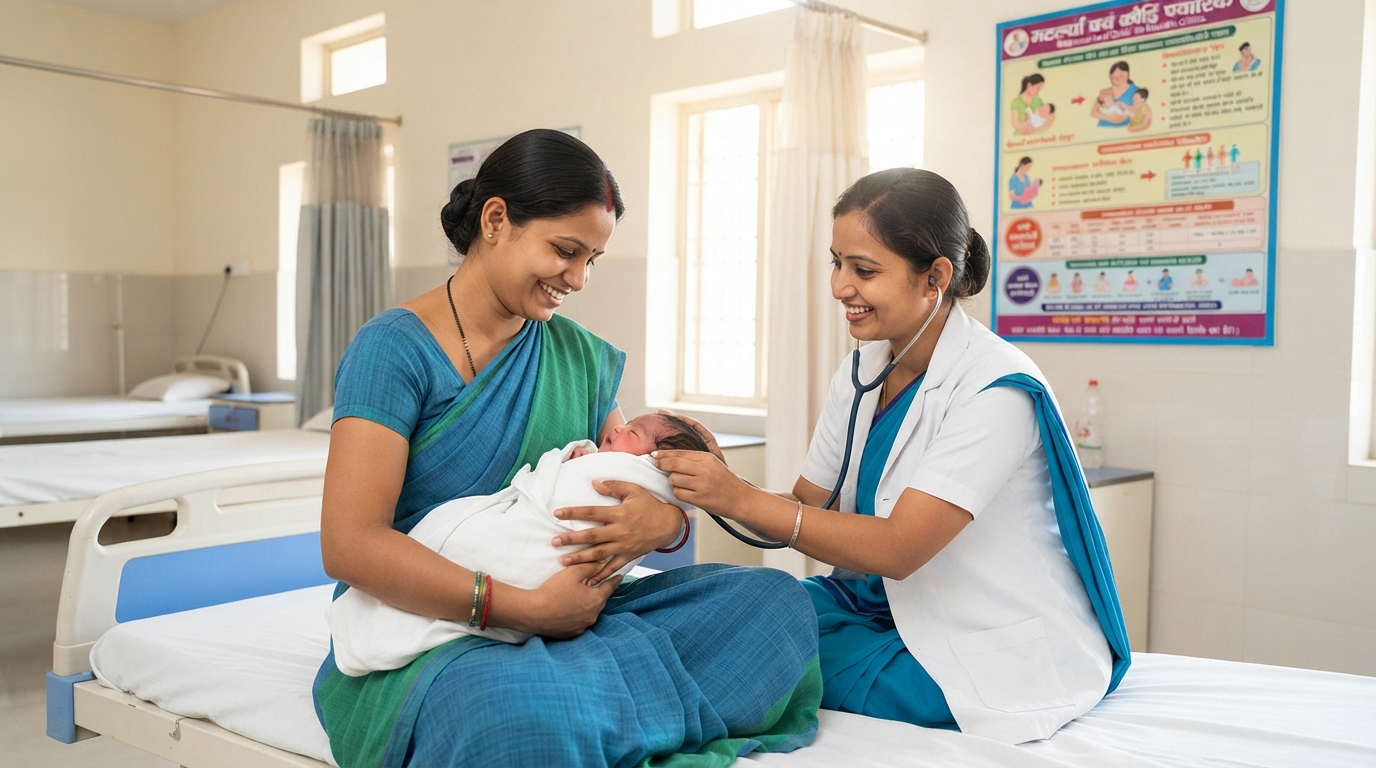
**India's Accelerated Progress in Maternal and Child Health, Nutrition, and Financial Protection Highlighted by National Family Health Survey–6 (NFHS-6)**
India has demonstrated remarkable advancements across key indicators in health, nutrition, and social development. These improvements are a direct reflection of consistent governmental policies and the focused execution of vital national programs. The recent announcement of the findings from the sixth iteration of India's National Family Health Survey (NFHS-6), conducted by the Indian government, underscores this progress.
In Tashkent, Ms. Smita Pant, India's Ambassador Extraordinary and Plenipotentiary, hosted a press briefing to discuss the survey's principal findings and the significant achievements within India's healthcare sector. Ambassador Smita Pant emphasized in her remarks that India's healthcare system has garnered substantial recognition, both domestically and internationally.
The National Family Health Survey–6 (NFHS-6) was carried out during 2023–2024 by India's Ministry of Health and Family Welfare, in collaboration with the International Institute for Population Sciences (IIPS), Mumbai, which functioned as the nodal agency. The survey encompassed approximately 679,000 households across 715 districts throughout India. It furnishes crucial data on population, health, nutrition, and family welfare, forming a foundational basis for evidence-driven program planning and implementation down to the district level. To date, six rounds of this survey have been completed: NFHS-1 (1992–1993), NFHS-2 (1998–1999), NFHS-3 (2005–2006), NFHS-4 (2015–2016), NFHS-5 (2019–2021), and NFHS-6 (2023–2024).
A comparison of NFHS-5 and NFHS-6 reveals the following primary findings:
**Enhanced Safe Motherhood, Institutional Deliveries, and Maternal and Child Healthcare**
India has witnessed substantial enhancements in maternal and child healthcare. Antenatal care coverage for pregnant women reached 95.9%, indicating stronger reach and continuity of maternal health services.
The proportion of institutional deliveries increased from 88.6% to 90.6%, bringing India closer to achieving universal coverage. Similarly, the percentage of births attended