

In Uzbekistan, 7,517 people were prosecuted for corruption in 2025.
In Uzbekistan, 7,517 people were prosecuted for corruption-related crimes in 2025, with damages exceeding 2.9 trillion soums.
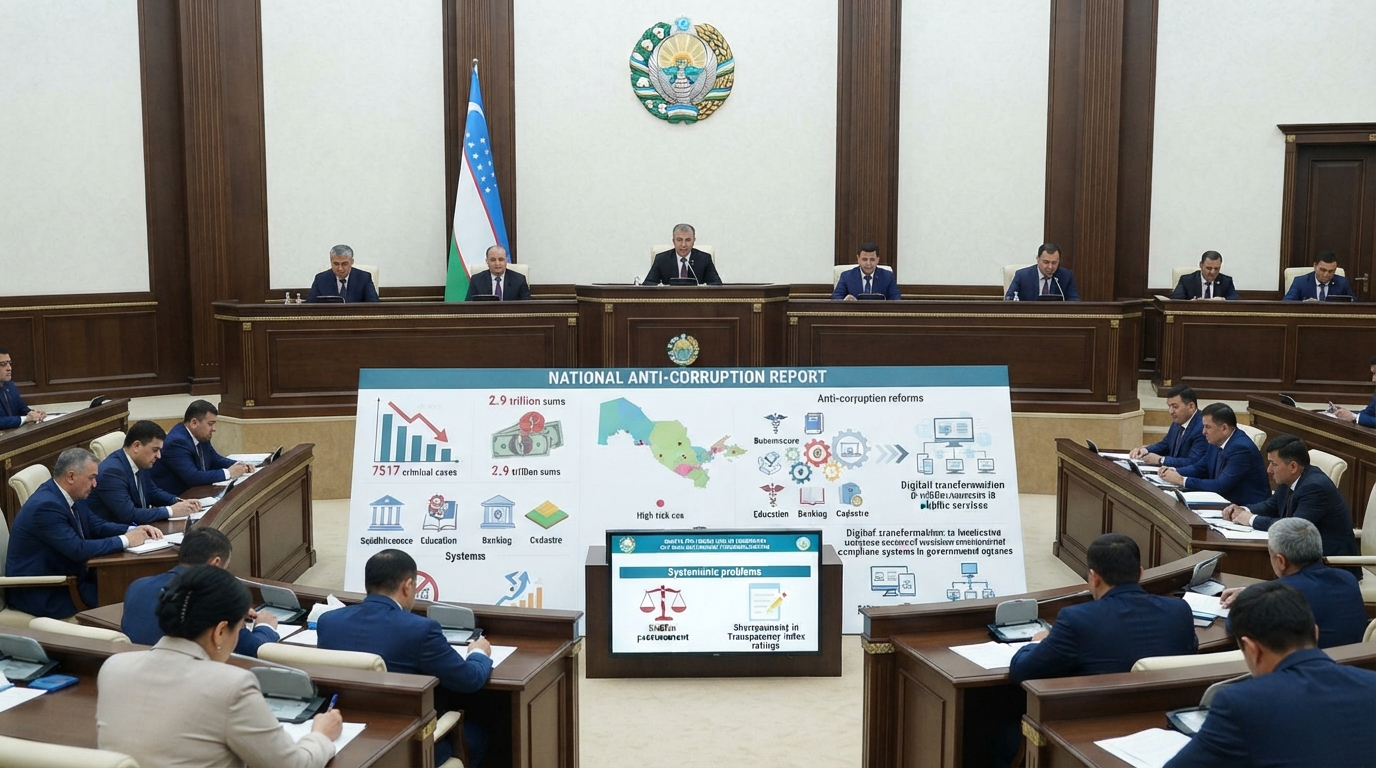
In 2025, 7,517 people were prosecuted for corruption offenses in Uzbekistan, and the damage caused to state interests exceeded 2.9 trillion soums. This information is contained in the National Anti-Corruption Report, which was reviewed at the 18th plenary session of the Senate of the Oliy Majlis, as reported by the Senate of the Oliy Majlis of Uzbekistan.
According to the report, in 2025, steps were taken to increase the openness and transparency of public administration, digitalize public services, prevent corruption, and strengthen public oversight as part of anti-corruption reforms.
In particular, in accordance with the objectives set at the extended meeting of the National Anti-Corruption Council with the participation of the President of Uzbekistan, the causes of corruption and bureaucracy in healthcare, education, employment, banking, and cadastral services were studied in all regions of the country.
Based on these studies, on-site meetings were held in regions and ministries, and targeted roadmaps were approved for districts and cities with high corruption risks.
In 2025, seven regulatory acts aimed at further improving the anti-corruption system were also adopted. The digitalization of public services was expanded, and measures were taken to identify and eliminate violations in public procurement.
Independent internal anti-corruption control structures operating on the compliance principle were established in government agencies and organizations.
At the same time, during the discussion of the report, senators noted persistent systemic problems. The highest number of corruption crimes was recorded in preschool and school education, healthcare, local khokimiyats, and commercial banks.
Corruption factors were identified in every fourth draft regulatory act. Violations amounting to 12.6 trillion soums were discovered in public procurement. At the same time, some government agencies and regions demonstrated unsatisfactory results in terms of anti-corruption effectiveness and the transparency index.
Senators emphasized the need to improve the effectiveness of preventive measures, strengthen the rule of law in public procurement, strengthen the internal control system, and ensure transparency in government agencies.
Particular attention was paid to strengthening oversight of compensation for damage caused to the state as a result of corruption.
During the discussion, Senate members made proposals for further improving the anti-corruption activities of the Anti-Corruption Agency, ministries and agencies, and local government bodies.
Following its review of the National Report, the Senate adopted a corresponding resolution.