

How to avoid the worst of the Italian heat
From supermarkets to night-time tours, experts share how to make the most of Italy during this latest heatwave.
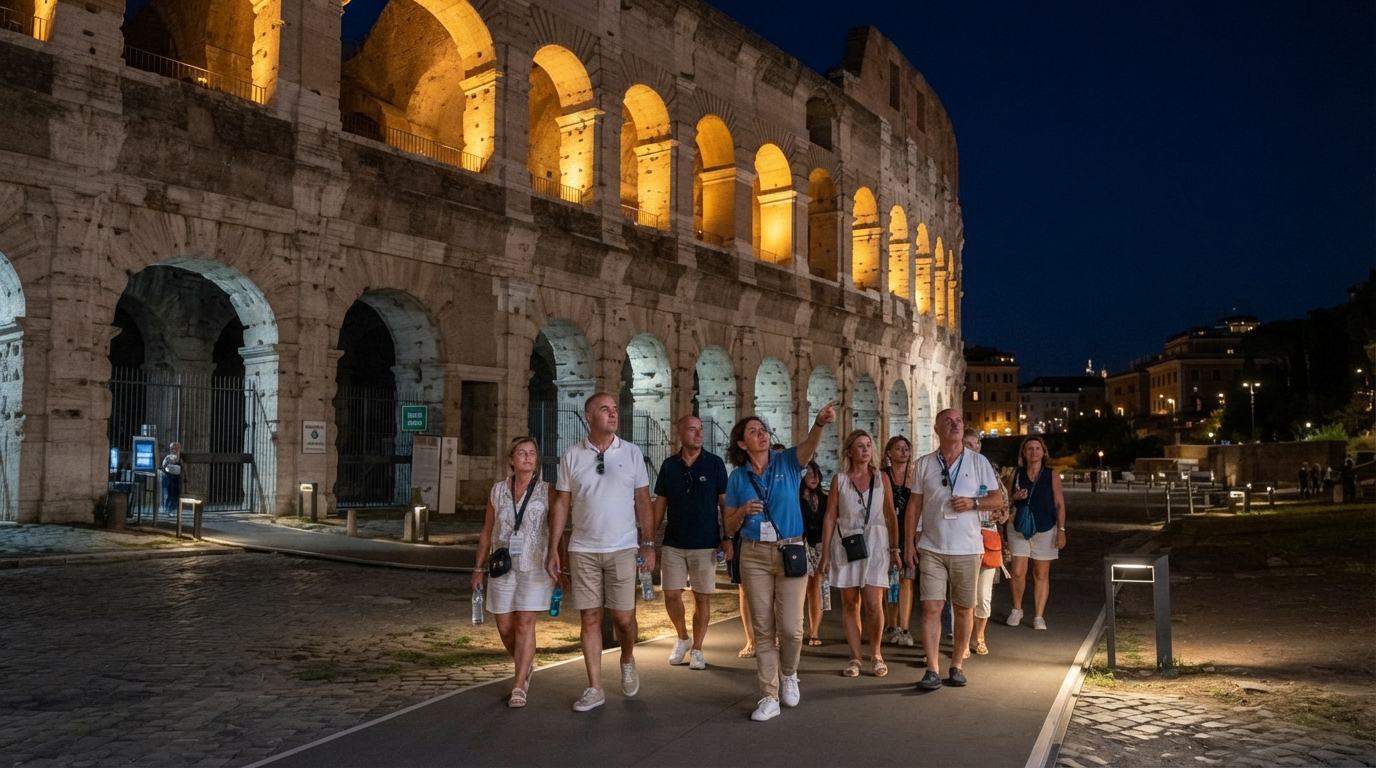
Italy is currently experiencing dangerously high temperatures, prompting the Ministry of Health to issue a red alert for all 27 of its major cities, including popular tourist hubs like Milan, Naples, Venice, and Rome, effective Thursday. As Europe's peak holiday season continues, the BBC consulted experts for advice on navigating Italy's latest heatwave.
While some Italians view the current heat as a recurring consequence of climate change, residents from southern Italy have expressed surprise at the intensity when visiting northern regions.
Simone Quilici, director of the Archaeological Park of the Colosseum, cautioned the BBC that visiting outdoor attractions during Italy's hottest hours, typically after lunch, is a "significant error." The Colosseum itself does not dictate visiting times but directs visitors to regional authority guidelines.
To facilitate cooler visits, the ministries of tourism and culture have extended evening hours for some attractions. The government announced these additional August opening times last week:
* **Colosseum (Rome):** Fridays and Saturdays, 19:45 to 23:30
* **Pantheon (Rome):** Daily, 19:00 to 23:00 (except Thursdays)
* **Sforza Castle (Milan):** Daily, 17:30 to 19:30
At the Colosseum, misting fans have been installed at entrances, and the number of medical stations for emergencies has been increased. Quilici noted that Rome has adapted to high temperatures, describing the situation as part of the "global phenomenon" of climate change rather than an isolated event. He is also in discussions with archaeologists about introducing more shade-providing vegetation within the Archaeological Park of the Colosseum.
In Rome, Mateo Medina, director of operations at Vivicos International Travel, reported that his team has introduced tours from 22:00 to midnight and has observed increased demand for 08:00 tours.
Air-conditioned museums are a primary recommendation for escaping the heat. Visiting Italy's numerous churches also offers a cool refuge while allowing visitors to experience the nation's Catholic heritage. Medina noted that cooking classes and wine tasting sessions, typically held in air-conditioned venues, are becoming popular alternatives to walking tours. He also suggested Rome's parks—Villa Borghese, Villa Adriana, and Parque de Acquedotti—for shade, and recommended exploring the underground Catacombs of San Sebastian and San Callisto.
Locals and tour guides interviewed by the BBC universally advised seeking shelter from the sun during Italy's hottest periods. Marco Carrino, a tour guide in Naples, specifically warned against visiting open archaeological sites during peak heat. For his tours to Pompeii, he recommended early morning visits or, if possible, avoiding the hotter months entirely. He also encouraged tourists to visit the National Archaeological Museum of Naples, highlighting its importance for archaeology and its extensive Roman, Egyptian, and Greek collections.
Italian travel expert and writer Alessia Armenise praised supermarkets as an overlooked resource. Beyond their air conditioning, she suggested heading to their deli counters for a reasonably priced, fresh, made-to-order sandwich, offering an alternative to "queuing for those silly focaccia places that honestly taste the exact same." Enjoying a Sicilian granita or Rome's grattachecca is another way to stay cool.
Armenise also advised planning activities around natural bodies of water or any water features. "Instead of walking, get a boat," she suggested, noting that this can reveal sights inaccessible by land. She explained that viewing a coastline from the sea offers the added benefit of cooling water splashes, as opposed to hiking.
For those driving, Dr. Agata Chrzanowska, an art historian and tour guide in Florence, recommended the hills and mountains north of the city, particularly the Garfagnana region, as "a very good spot to runaway from the heat."
If visiting major attractions like the Vatican in Rome is essential, Armenise advised booking tickets in advance to avoid waiting in scorching temperatures. Medina added that while many landmarks sell tickets online, they tend to sell out quickly, requiring organization.
Armenise also suggested exploring local galleries and museums in smaller towns and cities. These are often less crowded, may have a cafe for extended stays, and offer a different cultural experience than world-renowned attractions like the Colosseum. During a recent trip to Bologna, she sought refuge from the evening heat in a cinema. While watching a film is a common activity, she noted that visitors might discover an old theater that is "still a part of the history of that city." In Verona, she recommended an evening concert at the Verona Arena, an amphitheater in the city center.
Dr. Chrzanowska shared a local tip for Florence: the Odeon cafe and bookstore. She described it as a "recently modernised art-nouveau cinema/theatre transformed into a beautiful bookshop where you can order and drink, with air con, and relax a little bit with books around you."
Venetian tour guide Fiona Giusto, who operates Venice Tours, plans most of her routes around shaded stopping points. Like other guides, she consistently advises tourists to stay hydrated, wear a hat, and use sunscreen. For cultural experiences without the heat, she suggested Venice's Teatro La Fenice, a historic opera house, and the Ca' Rezzonico art museum. Giusto concluded, "The best advice I can give is good common sense."