

What heatwaves mean for summer weddings – and how to plan for one
The wedding industry is facing last-minute costs to cope with the heat and October bookings are up.
**Summer Weddings Face Heatwave Challenges: A Guide to Planning Ahead**
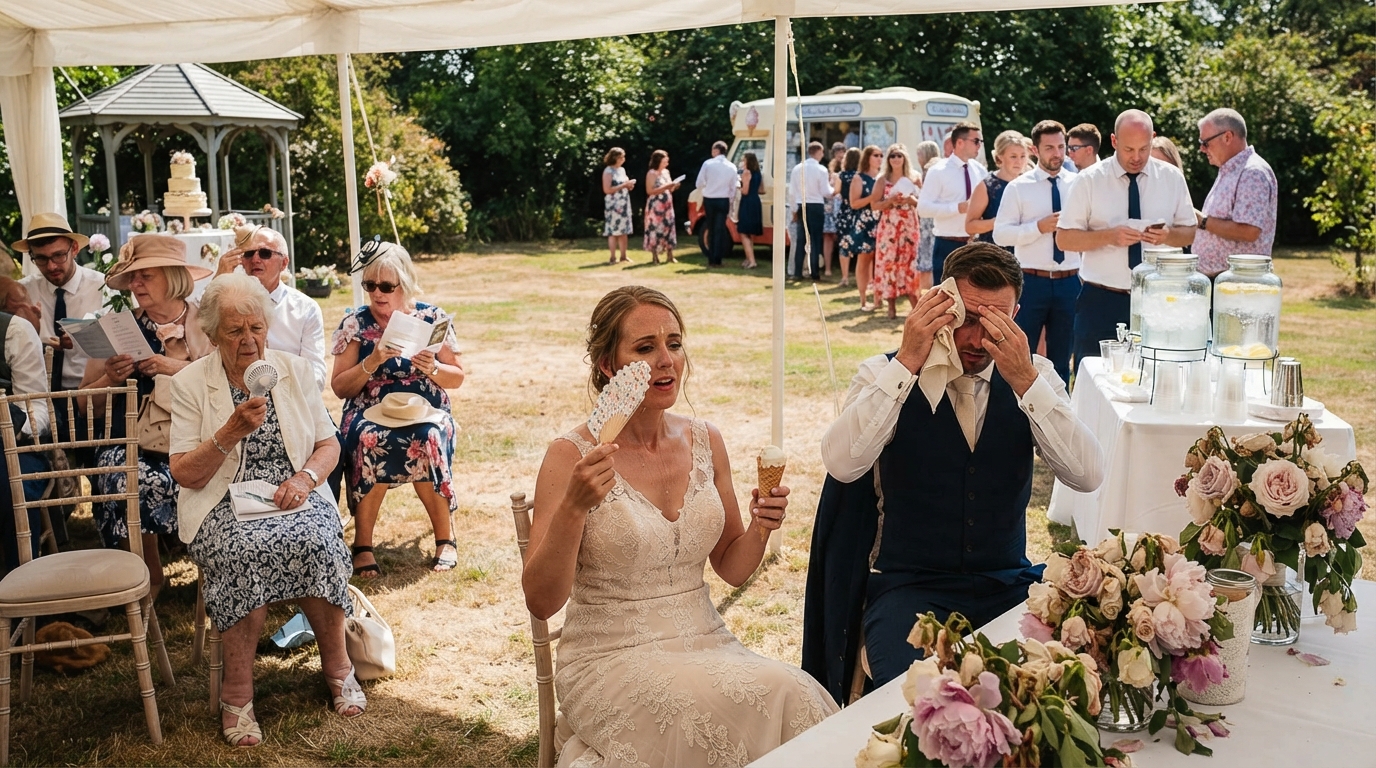
Aimie and Ryan's summer wedding became a last-minute scramble to combat the heat, a scenario increasingly common for couples tying the knot. "As soon as I put my dress on, my makeup was just falling off my face," recounted Aimie Seale, one of many brides whose July nuptials coincided with a heatwave. Despite choosing the month to avoid rain, Aimie found herself battling 30C temperatures in a predominantly glass church in West Yorkshire.
"It was just unbearably hot," Aimie described. "I remember looking at my husband at one point, and he was just dripping with sweat, so everybody kept passing him tissues halfway through the service." To provide relief, Aimie and Ryan hastily arranged an emergency marquee for shade and an ice-cream van for their guests – an unexpected expense on a day where the average UK wedding already exceeds £20,000.
This struggle with heat is projected to intensify. Half of the years between 2015 and 2024 have seen temperatures surpass 35C, a significant increase from one in ten, as climate change heightens the risk of heatwaves. Consequently, ice cream vans and fans have become last-minute additions to many wedding budgets this year.
Zoe Burke, head of brand at the wedding planning app Bridebook, notes a growing concern among couples, evident in online discussions. "On platforms, like Reddit, people are discussing what they are going to do to navigate the heatwave," she stated. Searches for fans by brides last summer were five times higher than in 2019.
While adding a few fans might seem a minor cost for couples, the financial impact on wedding businesses – including hosts, caterers, and suppliers – has been substantial. Michelle Miles, a board adviser to the UK Wedding Association and founder of the Sustainable Wedding Alliance, estimates the cost to businesses "into the thousands [of pounds]."
A major expense for venues is the equipment and energy required to maintain cool spaces and food. Miles explained, "[Some] venues are having to bring in air conditioning units; they are at a premium when everyone else is wanting those units to keep their houses cool and businesses."
Increased water consumption by guests also presents a challenge for venues, impacting alcohol sales. "There has been a massive hit on alcohol sales. Venues would quite often rely on these to boost their profits, and people are...not drinking alcoholic drinks as much as they would on a temperate day," Miles added.
Beyond the wedding party, even flowers are wilting. Popular choices like peonies and roses, traditionally available for two months, now have a flowering window of just two weeks. Rebecca from Lilac and Lace Floral Design described an "extremely tough growing season with water shortages, drought, no rainfall, slow germination in the heat, flowers going over too quickly." For a recent wedding, she had to consult three times as many growers to secure enough stems, leading to an estimated £200 increase in delivery costs.
Veteran wedding planner Sarah Haywood, with over two decades of experience, has observed a shift in wedding calendars. "Over the last decade we have been advising people to avoid the heat of July and August [particularly] for destination weddings. And we're busier on what we call the 'shoulder season' which starts earlier and finishes later in the year." Traditionally June and September, the shoulder season now extends into October. The 2026 UK Wedding Report from Bridebook confirms a significant rise in October weddings following hotter-than-average summers.
Couples, who typically book 12 to 18 months in advance, are now reconsidering their dates. Marie Cavanagh, set to marry in Kent in early July, said, "The recent heatwaves have made me think a little bit differently…we will definitely be factoring [the heat] into what we are selecting to wear."
Sophie Miller, a stylist at Dotty Bridal in West Yorkshire, suggests applying advice previously given to brides marrying in hot overseas locations to UK weddings. "We would recommend against a sleeve, lighter fabrics…and with ballgown [dresses] we would suggest putting a hoop in the dress to hold it off your skin." Some designers are even incorporating zinc oxide into fabrics to create a cooler feel.
While UK temperatures have peaked in the mid-30s this summer, Europe has repeatedly seen temperatures exceed 40C. Samantha Bottomley, a wedding planner in France, notes that Europe, once a popular destination for UK couples seeking guaranteed sunshine, is now facing changes. "It has been a very difficult season so far heat-wise. We have changed to late afternoon ceremonies, for the first time ever this year, we have moved outdoor cocktail receptions indoors." Her company is now exploring northern European destinations like Denmark, Sweden, and Norway, which offer beautiful scenery and lower temperatures.
UK wedding venues are also adapting their barns, orangeries, and stately homes. James Matthews, managing director of Xenia Venues, which operates two wedding sites in Essex and Suffolk, invested in a French-built orangery a few years ago, leveraging their experience with higher European temperatures. It features an air-to-air heat pump for cooling and vents for hot air escape. Matthews is "extremely confident" that without these cooling measures, bookings would decline. "The weather isn't necessarily driving people out of summer weddings, but the weather will drive people out of venues that aren't equipped on an unpleasantly warm day." Miles also mentioned Crockwell Farm has introduced more foliage to help keep venues cool.
**Tips for Planning a Summer Wedding in a Heatwave:**
1. **Dress Cool:** Grooms can forgo three-piece suits, and brides should opt for lighter fabrics.
2. **Avoid Peak Heat:** Consider pushing the wedding start time to early evening to avoid the hottest part of the day, typically between 12:00 and 16:00.
3. **Provide Shade:** For outdoor weddings, use marquees with openable sides, parasols (umbrellas work too), or choose a tree-lined spot to keep guests out of direct sun.
4. **Offer Water:** Set up a dedicated water station separate from the bar to prevent queues. Have ushers distribute water upon arrival or place bottles under seats.
5. **Beware of Buttercream:** This popular wedding cake ingredient is prone to melting if not kept cool.