

FAO, IOFS Strengthen Locust Monitoring in Central Asia
FAO and IOFS held a regional training in Uzbekistan to strengthen locust monitoring, early warning systems and agricultural risk prevention in Central Asia.
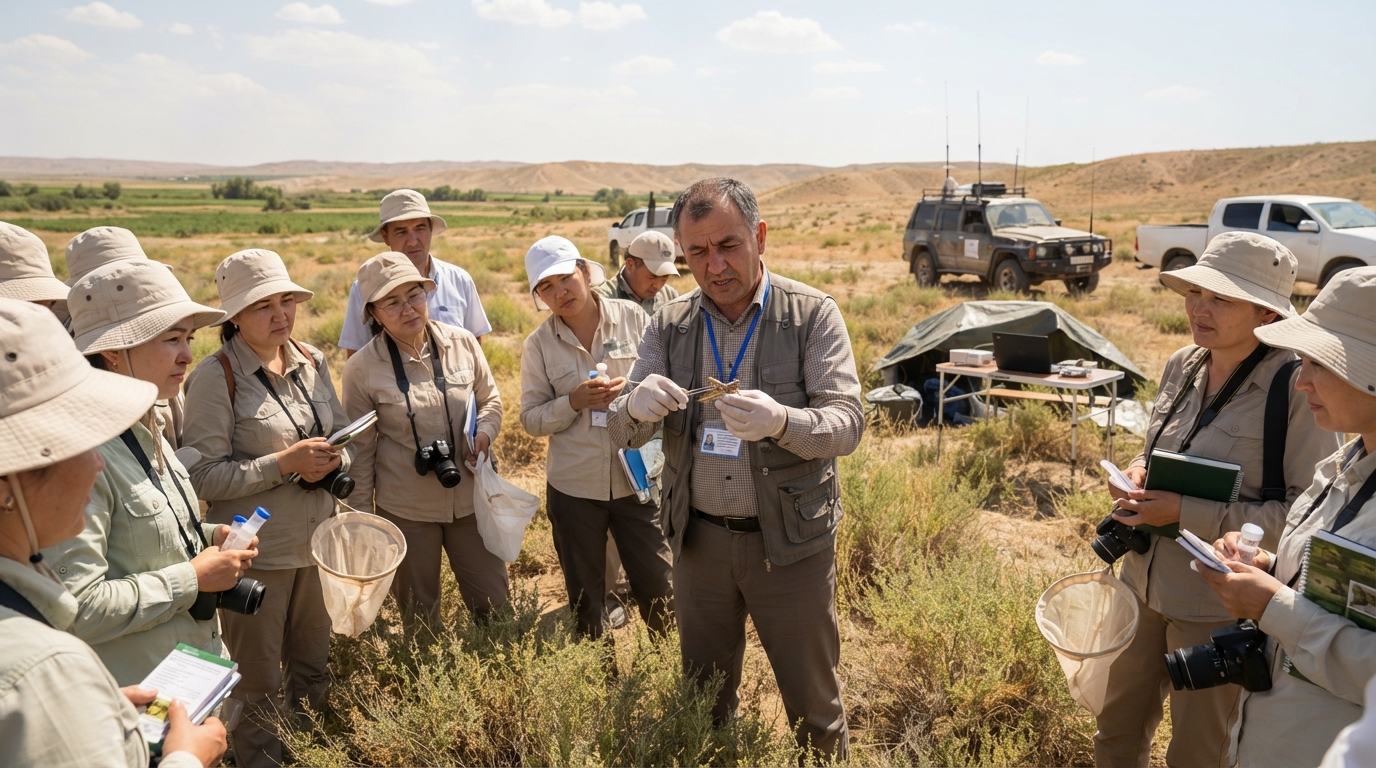
Tashkent, Uzbekistan (UzDaily.uz) – The Food and Agriculture Organization of the United Nations (FAO) and the Islamic Organization for Food Security (IOFS) recently collaborated to host a specialized regional training in Uzbekistan's Bukhara Region. The initiative aimed to enhance early locust detection and bolster Central Asian nations' readiness to mitigate agricultural threats.
This heightened focus on monitoring comes in the wake of significant locust aggregations observed in various parts of Uzbekistan, including the Bukhara Region. While Uzbek authorities previously clarified that these occurrences were localized, seasonal, and caused no damage to crops or pastures, such events underscore the critical need for continuous surveillance, timely risk assessments, and the development of highly skilled specialists.
Experts from plant protection and locust control services in Kazakhstan, Turkmenistan, and Uzbekistan participated in the training. It was organized as part of FAO's Programme to Improve National and Regional Locust Management Systems in the Caucasus and Central Asia, which receives funding from international partners, and the IOFS Programme on Transboundary Pest Management. The event was also held in close collaboration with the Agency for Quarantine and Plant Protection, operating under Uzbekistan’s Ministry of Agriculture.
The primary goal of the training was to refine specialists' abilities in identifying locust species, elevate the quality of field surveys, advance forecasting systems, and fortify early warning and rapid response mechanisms. Experts emphasized that precise species identification is fundamental to effective locust population management, as different species exhibit distinct biology, distribution, and potential agricultural threats, necessitating scientifically informed monitoring and control strategies.
The training curriculum integrated theoretical instruction with practical fieldwork. Participants conducted surveys in the Jondor, Peshkun, and Romitan districts of the Bukhara Region, collecting samples of various locust and grasshopper species for subsequent analysis. These practical sessions provided an opportunity for participants to apply modern survey, identification, and sampling techniques directly within the insects' natural habitats.
During the theoretical segments, specialists delved into the morphology, taxonomy, and ecology of key economically significant locust species in Central Asia, examining their life cycles and methods for identifying different developmental stages. Particular attention was given to species within the Dericorys genus, including the saxaul locust (Dericorys albidula), as well as the establishment of reference collections and the application of biological pest control methods.
The training was led by Alexander Latchininsky, FAO Senior Locust Management Expert, and Furkat Gapparov, a leading researcher at the Research Institute of Quarantine and Plant Protection, which operates under the Agency for Quarantine and Plant Protection of Uzbekistan’s Ministry of Agriculture.
Upon completion of the training, participants' practical skills in identifying major locust species and their developmental stages were assessed. Discussions also focused on opportunities to integrate the newly acquired knowledge into national monitoring and forecasting systems.
The organizers underscored that such initiatives are instrumental in strengthening regional cooperation, fostering the exchange of scientific information, and enhancing coordination among Central Asian countries in their efforts to combat transboundary pests. By building professional capacity, improving monitoring systems, and expanding international cooperation, the region can transition from merely reacting to locust outbreaks to proactively preventing them. This strategic approach is vital for safeguarding crops and pastures, bolstering food security, and preserving the livelihoods of rural communities throughout the region.