

Central Asia records world's fastest tourism growth in 2025
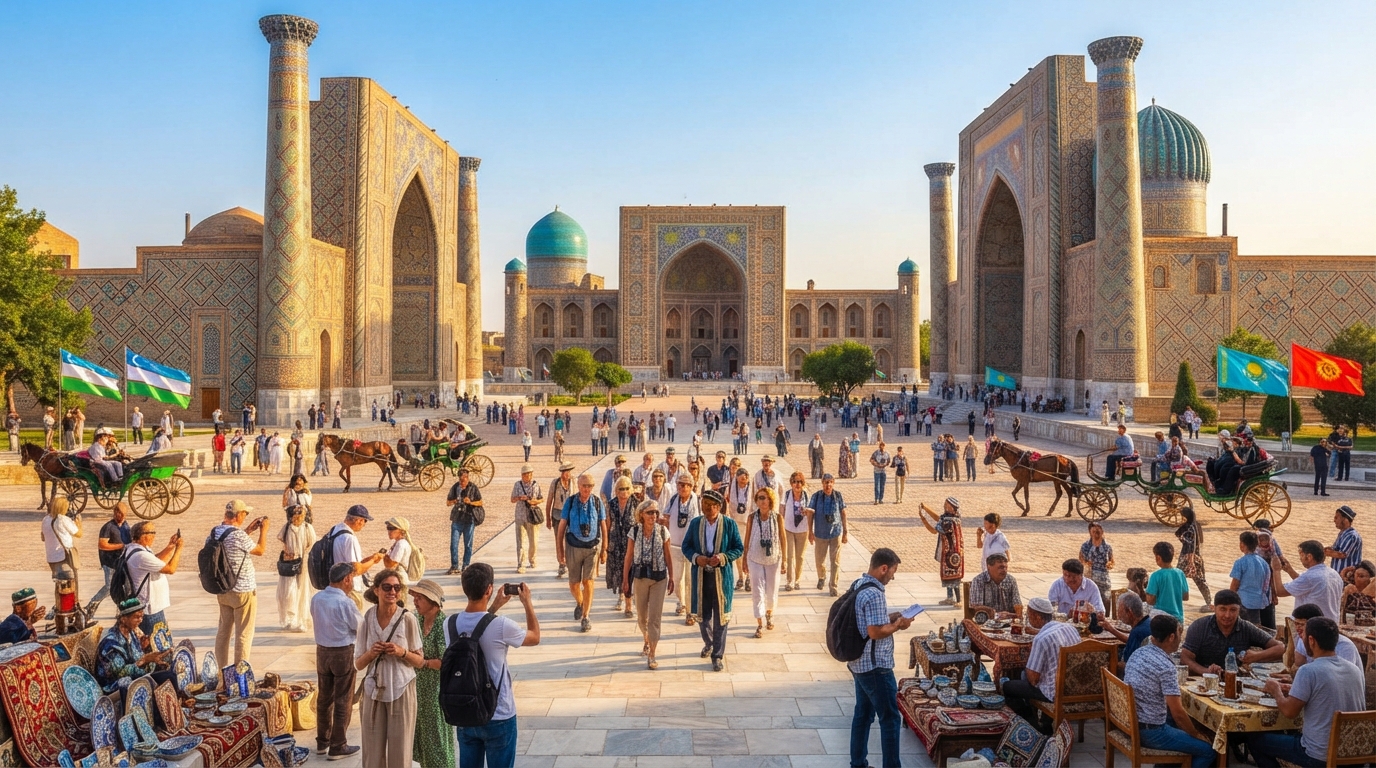
Central Asia experienced the world's most rapid expansion in tourism's economic impact in 2025, with the sector's contribution to the regional economy surging by 17.7% to reach $20.1 billion, as detailed in a report by the World Travel & Tourism Council (WTTC) and reported by Economist.kg.
In 2025, tourism constituted 4.3% of Central Asia's cumulative gross domestic product, according to the report. The economic input from the sector marked a 27.1% increase from $15.8 billion in 2019, surpassing pre-pandemic levels.
Central Asia's annual tourism growth rate of 17.7% outstripped other Asian regions. During the same period, Northeast Asia saw an 8.7% rise in tourism's economic contribution, while Southeast Asia recorded a 7.6% increase.
Spending by international visitors in Central Asia climbed by 26.4% in 2025. Concurrently, employment within the tourism sector expanded by 9.5%, and investment in the industry grew by 12.4%.
Currently, tourism supports approximately 1.7 million jobs across the region, representing one out of every 17 jobs. Projections indicate that tourism-related employment will reach 2.2 million by 2036.
Visitors collectively spent $15.4 billion throughout Central Asia in 2025. International tourists accounted for $9.9 billion of this total, with domestic travelers contributing $5.5 billion.
Leisure and recreational travel comprised 84.5% of tourism expenditures, while business travel made up the remaining 15.5%.
Uzbekistan emerged as the top foreign destination for Central Asian travelers in 2025, attracting 25% of all international trips undertaken by residents of the region. Kazakhstan followed with 23%, and Kyrgyzstan with 18%. Russia accounted for 16% of outbound travel, while Turkiye represented 6%.
The report also highlighted the strong interconnectedness of regional tourism. Kazakhstan drew 29% of visitors traveling within Central Asia, followed by Uzbekistan with 22%, Russia with 20%, and Kyrgyzstan with 19%.
Experts attributed the region's swift tourism growth to heightened interest in historical cities, mountain destinations, and ecotourism, alongside improved transport links and simplified visa procedures. The ongoing enhancement of regional connectivity has also made travel between Central Asian nations more accessible, fostering cross-border tourism.
Forecasts suggest that tourism's contribution to Central Asia's economy could rise to $21.7 billion in 2026, indicating continued expansion for the sector following its recovery from the COVID-19 pandemic.
Central Asia has increasingly promoted multi-country tourism routes that connect historical cities, cultural landmarks, and natural attractions across the region. The expansion of air and land connections, coupled with streamlined travel processes, has bolstered efforts to position Central Asia as a more integrated tourism destination for international visitors.