

Asphalt can be produced from cottonseed in Uzbekistan
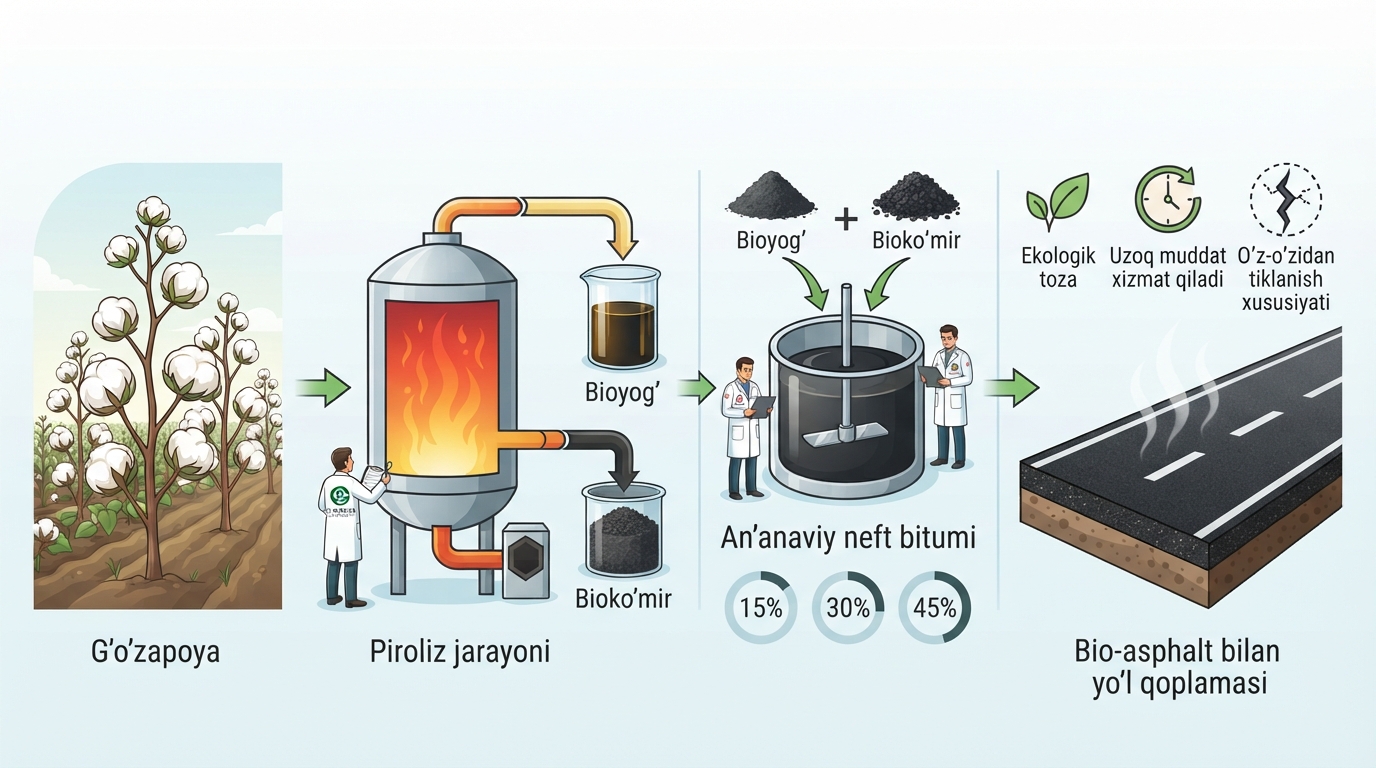
Uzbekistan may have the opportunity to produce asphalt from cottonseed. This was reported in the “Fakt 24” information program of the “Uzbekistan 24” TV channel.
Scientists from Samarkand State Technical University, in collaboration with Turkish specialists, have launched an international scientific project to create a new type of asphalt raw material from cottonseed. Within the framework of this innovative project, the total cost of which is 2 billion 824 million soums, cottonseed will be used as the main raw material for the asphalt formula.
The scientific team will process cottonseed by pyrolysis, resulting in two useful products: bio-oil and biochar. These products will gradually replace traditional petroleum bitumen: first by 15%, then by 30%, and then by 45%.
The report notes that this will reduce the need for petroleum products in road construction and turn waste that would otherwise be burned in the fields into useful raw materials.
According to Chidem Turkyilmaz, rector of Samarkand State Technical University, the project aims to create environmentally friendly, long-lasting and self-healing road surfaces by extracting bio-oil and biochar from cotton stalk waste and using them in asphalt concrete. He noted that this project will contribute to the effective use of agricultural waste and the introduction of innovative technologies in modern road construction.
These studies are being conducted simultaneously in Uzbekistan and Turkey. The project is being implemented in cooperation between Samarkand State Technical University and the prestigious higher education institution in Adana, Turkey - Chukurova University.
Project leader Burat Yigit Katanalp from Turkey said that although asphalt roads are an integral part of everyday life, their main component, bitumen, is obtained from oil. Oil is a finite and non-renewable resource that takes millions of years to form. Therefore, it is very important to reduce dependence on oil, ensure environmental sustainability, and use natural resources efficiently.
In addition, due to traffic loads, temperature changes, and environmental influences, microcracks appear in asphalt pavements over time, which leads to road deterioration and increased maintenance costs. According to Katanalp, the goal of this project is to develop asphalt technologies that will solve two main problems.
Experts say that the results of this project will be of great importance not only for science, but also for everyday life. The new technology will extend the service life of roads, reduce maintenance costs, and help protect the environment.
Earlier, it was reported that Uzbekistan has begun using polymer-based asphalt pavements. In July, innovative solutions were discussed with an Egyptian company for installing special devices that protect asphalt pavements from direct sunlight.