

Zambia courts sealed off as election petition deadline looms
Preparations for President Hakainde Hichilema's second inauguration appear to be continuing.
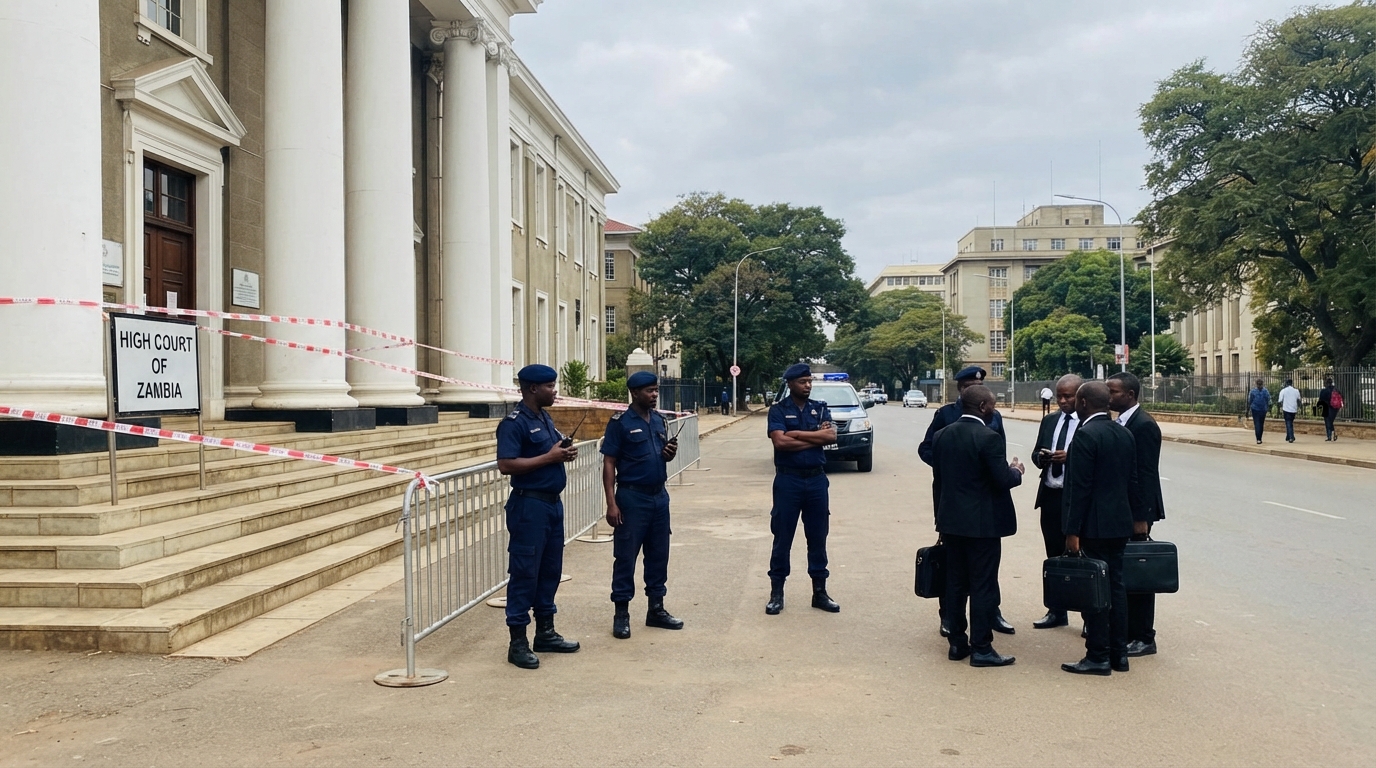
Zambian courthouses have been sealed off as the deadline to challenge the recent presidential election results approaches, with opposition candidate Brian Mundubile vowing to contest the outcome.
Court facilities in Lusaka, the capital, and other locations have been closed, accompanied by an unusual police presence and taped-off entrances to prevent access. Monday marks the final day for filing a petition against the presidential election results, a move that could potentially impact the scheduled September 1 inauguration of incumbent Hakainde Hichilema.
Lawyers arriving at the courts on Monday were instructed to leave. One attorney informed the BBC that three armed individuals approached his vehicle, identified themselves, and ordered him to depart the vicinity. The sealed courts include the High Court in Lusaka, the Supreme Court (which also houses the Constitutional Court), and several local courts. The reopening date for these premises remains unknown, and the BBC has sought comment from the Zambian police and judiciary.
Despite these developments, preparations for Hichilema's inauguration appear to be proceeding. The youth and sport ministry has extended a media invitation for journalists to accompany a cabinet official on an inspection of arrangements at National Heroes Stadium, the anticipated venue for the ceremony.
Mundubile, who secured 38% of the vote to Hichilema's 60%, previously rejected the election results last week, citing irregularities, and announced his intention to challenge them in court. He is currently in hiding due to alleged threats, under the protection of what his campaign describes as an "international human rights body." His decision to go into hiding followed the arrests of other opposition figures and the death of former minister Mutotwe Kafwaya during a security operation in the capital, which officials described as an exchange of fire.
The arrests and Kafwaya's death prompted calls for independent investigations from human rights groups and the Law Association of Zambia. Amnesty International labeled Kafwaya's killing "deeply alarming" and urged prompt, thorough, and impartial investigations, while the lawyers' association similarly expressed "grave concern" and demanded an inquiry.
Regional and international observers largely characterized the August 13 election day as peaceful. However, they raised concerns regarding late electoral reforms, media freedom, and access to media in the period leading up to the poll. The EU observation mission suggested that restrictions on the opposition might have contributed to an "uneven contest."
Regarding vote tallying, the EU mission noted an intimidating heavy military presence and reported attacks on some tallying centers. It also highlighted that staff in many centers did not record results on tally sheets immediately after announcement and cited weak verification between digital entries and paper records. The mission added that returning officers frequently paused proceedings while awaiting instructions from headquarters. The EU mission further called for "maximal transparency" concerning the election outcome, noting that the electoral commission did not publish separate polling-station results.