

Xbox workers stunned after jobs 'bloodbath'
The video game giant owned by Microsoft plans to let 3,200 workers go. Will it be a big reset or a system crash?
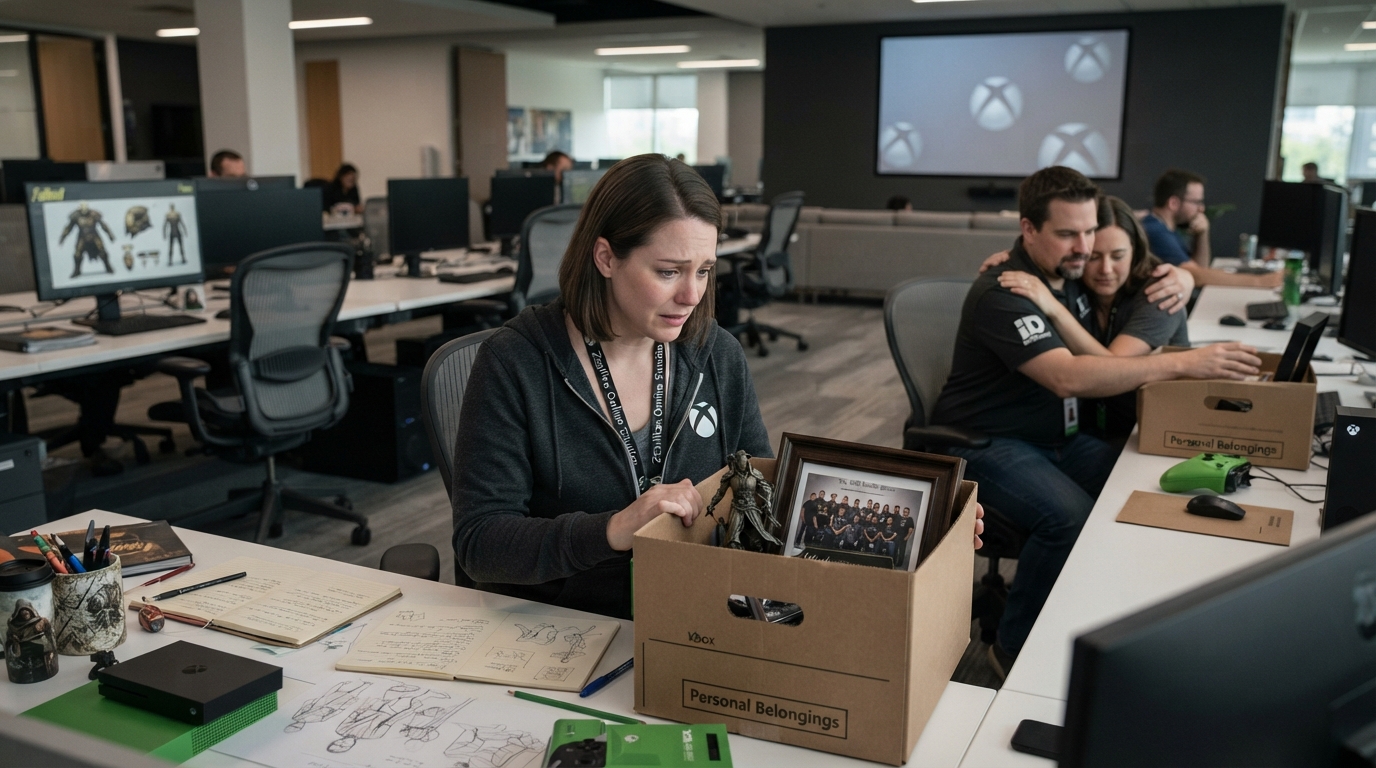
Xbox employees were left in shock following significant job cuts. Xbox executives have stated their intention to concentrate on their most successful franchises, including Fallout.
"Blindsided." This was the sentiment expressed by game developer Morgan Goin when she learned of her layoff from Xbox's ZeniMax Online Studios (ZOS) last week. Goin, a senior encounter designer who contributed to the well-known fantasy role-playing game The Elder Scrolls Online, was aware that layoffs were imminent.
For several weeks, reports of a "bloodbath" at Microsoft's gaming studios had been circulating after the division's new CEO, Asha Sharma, issued a memo indicating her plans to "reset the business." "We knew something was going to happen to somebody, but not who or how much," Goin remarked.
Approximately a month later, employees were informed that around 3,200 positions—about 20% of the console maker's workforce—would be eliminated. Half of these layoffs would occur immediately, with the remaining 1,600 spread over the next year. Xbox leadership has maintained that these "painful" reductions across its extensive network of studios are essential for future success, as the company shifts its focus to its most popular titles. The strategy aims to allocate more resources to blockbuster series to expedite new releases for fans.
However, former employees argue that the layoffs have stripped the company of decades of talent and expertise, raising doubts about whether Xbox can achieve its goal of a "bigger future." Asha Sharma assumed the role of Xbox CEO in February of this year.
Layoffs in the gaming industry have become increasingly common since 2022, with estimates indicating that nearly 58,000 jobs have been cut globally. This trend is largely attributed to over-hiring and aggressive expansion during 2020, when the COVID-19 pandemic led to a surge in player engagement and spending. During this time, Xbox acquired several studios and publishers, including ZeniMax/Bethesda, the owner of the immensely popular The Elder Scrolls and Fallout franchises, and Activision Blizzard, known for Call of Duty, which was purchased for $69 billion (£56 billion) in 2023.
While video games continue to be profitable, production costs have soared. Factors such as the cost-of-living crisis, changing consumer habits, and rising hardware expenses due to significant investments in AI have all impacted the market.
When Sharma's memo was released in early June, some employees, including Autumn Mitchell, began to feel anxious. "People are reading in between the lines," said Mitchell, a former senior quality assurance tester at ZeniMax. "Does it mean me? Does it mean them? Does it mean my project? Does it mean my studio?" Mitchell is one of four Xbox developers who spoke with BBC Newsbeat about their job losses in the recent cuts. All are members of studio unions affiliated with the Communication Workers of America (CWA). They reported that requests for information were met with a "deafening silence" in the weeks leading up to the layoffs. "What we were left with was just a lot of uncertainty for about a month," Goin, who is part of ZOS's bargaining committee, stated.
Simon Prefontaine, a game designer at Bethesda Game Studios' Montreal office, mentioned that his studio works on "core franchises" like Fallout and The Elder Scrolls. "We were expecting maybe a few of us might get hit; we're probably pretty safe," he said. "We did not expect the scale of layoffs that we have here. We're stunned."
Andrew Willis, a producer at ID Software, the influential studio behind iconic series like Wolfenstein, Doom, and Quake, faced a similar fate. He learned he was among nearly 100 staff members being laid off just as the major expansion for last year's Doom: The Dark Ages was released. He noted that some employees had worked between 12 to 17 hours a day for several months to complete the downloadable update. "I did not think that they would cut the studio in half," he said.
Willis and other former ID staff members who shared their experiences online claimed that most of those laid off were technical staff skilled in the studio's proprietary ID Tech engine, a suite of tools and software used to develop its games since 1996. Willis described it as a "cultural institution" respected in the industry for its capabilities, but noted that it has a steep learning curve requiring significant experience. "They basically just threw it into the trash can at this point," he remarked.
The studio has asserted that it still has "the crew to build the games and tech we’re known for," despite its reduced size. Xbox informed the BBC that it has "dozens of people working on ID Tech across multiple locations" and characterized reports of the Texas team being nearly eliminated as "inaccurate." However, they did not address claims regarding extended work hours.
At ZOS, Goin estimates that some departments have been reduced to a quarter of their previous size, which she