

World War II-era ammunition has begun to explode due to forest fires in Europe.
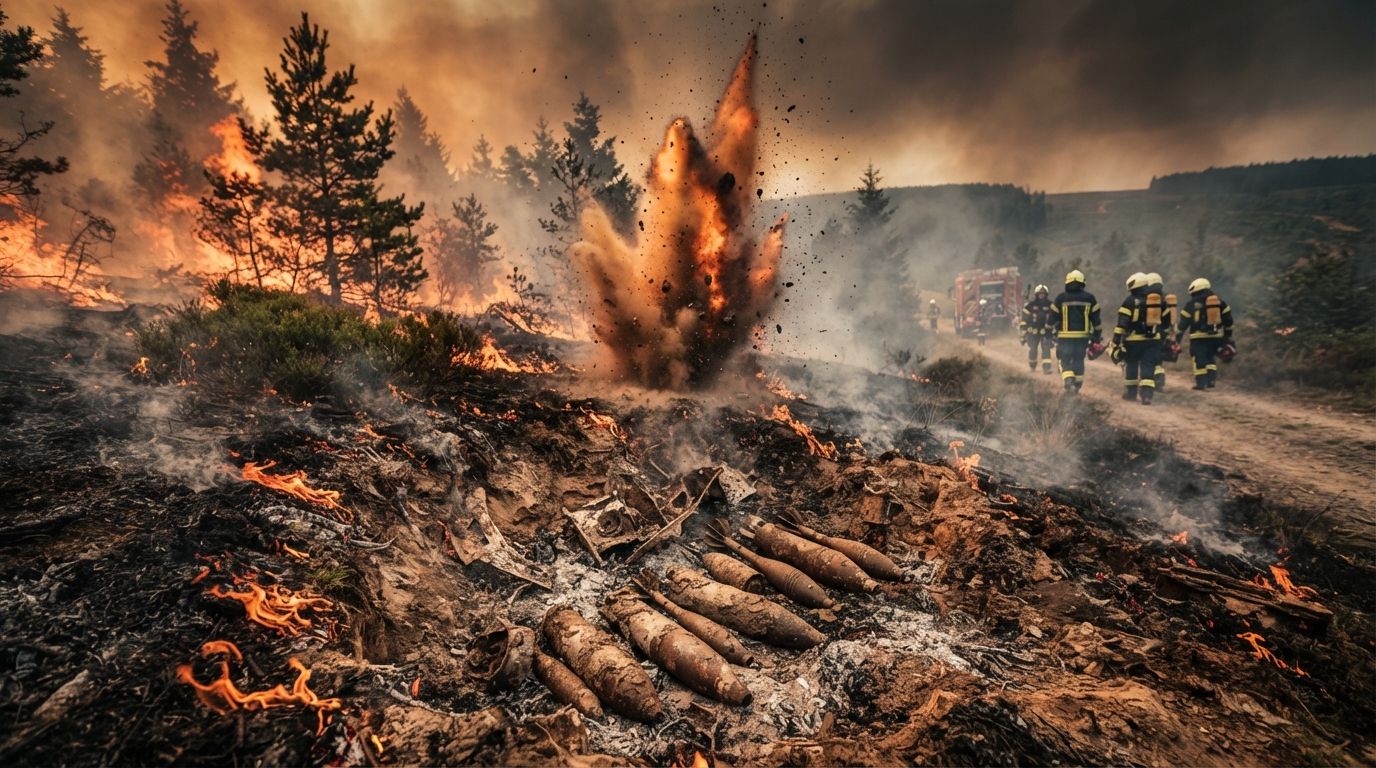
The wildfires raging across Europe this summer are not only destroying forests and buildings but also detonating munitions left over from the First and Second World Wars. Explosions have already been reported in France, Belgium, Germany, and the Netherlands, posing an additional threat to firefighters and rescuers.
One of the most dangerous areas is the Belgian province of Liège, where the forests of the High Fens, located near the German border, are burning. Fierce fighting took place here during World War II, and the area is littered with mines, shells, and other munitions. Local authorities reported several explosions during the fires. Rescue services are forced to consider the presence of munitions underground when working in fire-ravaged areas. Historian Bernard Collard, who surveys former battlefields with a metal detector, notes that dangerous objects can be found almost anywhere. Over the years, he has found mortar shells, machine guns, helmets, and other military artifacts. A similar situation developed in France. In early August, a massive fire near the town of Le Porge in the southwest of the country uncovered a cache of ammunition from World War II. Around 400 shells and other weapons, mostly mortar and anti-tank ammunition of French and German manufacture, were found at the site. According to local authorities, some of the ammunition may have exploded during the fire. Residents reported the sounds of explosions, which one official described as "the sound of war." The fire destroyed more than 180 homes.
Fires are particularly dangerous because high temperatures can cause the ammunition to spontaneously detonate. Under normal conditions, recovered ammunition is rendered harmless or destroyed by controlled explosion, but during a fire, this process becomes significantly less predictable.
Researchers believe that climate change is exacerbating the problem. Warmer and drier periods increase the likelihood of large fires, and after heavy rainfall, vegetation grows rapidly, which then becomes fuel for the fires. Fires not only ignite old munitions but also destroy the vegetation that had concealed them for decades.
Additional discoveries are linked to the drying up of European rivers and lakes. Droughts have exposed munitions on the Danube and Rhine, and in Hungary, the Margaret Bridge was previously closed after a World War II-era bomb was discovered at its base.
In Belgium alone, explosive ordnance disposal services receive over 3,000 calls annually and destroy between 200 and 250 tons of munitions left over from the two world wars. Amid climate change, scientists believe this legacy of war is becoming increasingly visible and poses a new threat to areas considered safe for decades.