

Will Central Asia Become a Single Consumer? The Region Intends to Create a Shared Food System
The Central Asian Food Systems Compact cooperation program, which envisions the development of a unified regional food system, was presented in Central Asia. It aims to more closely link agricultural production, processing, and delivery to markets, as well as to establish the exchange of scientific developments. This was reported by the information service of the Ministry of Agriculture of Uzbekistan. The initiative proposes to view Central Asia not […]
Will Central Asia Become a Single Consumer? The Region Intends to Create a Common Food System
In Central Asia, a cooperation program called the Central Asian Food Systems Compact was presented, providing for the formation of a single regional food system. It aims to link agricultural production, processing, and market supplies more closely, as well as to develop the exchange of scientific advancements. This was reported by the information service of the Ministry of Agriculture of Uzbekistan.
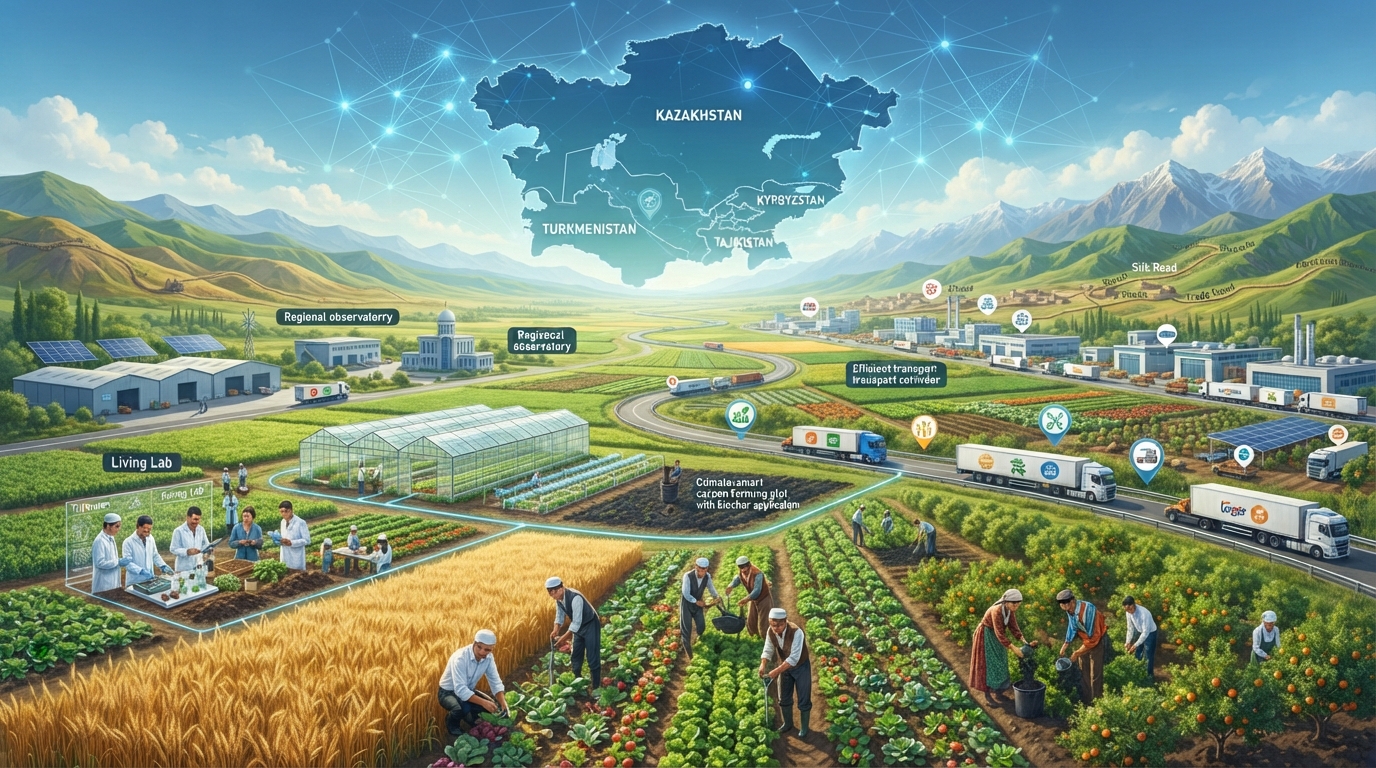
The initiative proposes to view Central Asia not as a collection of countries remote from maritime trade routes, but as a single space where agriculture, food trade, and land logistics can be jointly developed.
At the presentation, the Minister of Agriculture of Uzbekistan, Ibrokhim Abdurakhmonov, voiced proposals to strengthen the region's food security, introduce innovations into the agricultural sector, and make more efficient use of scientific developments. Special emphasis was placed on practical cooperation between the countries.
### Seven Principles Instead of General Declarations
The program is based on seven principles, designated as 7D. They provide for making decisions based on reliable data, diversifying agricultural production and markets, as well as competent planning and developing solutions taking into account local conditions.
Three more principles relate to discipline and the timely execution of tasks, long-term sustainability of the agricultural system, and a respectful attitude toward people, primarily farmers.
Among the proposals is the creation of a regional food basket observatory, which will make it possible to monitor the situation with basic food products. It is also proposed to introduce result-oriented financing mechanisms and to create Living Labs in each country — platforms where new agricultural technologies can be tested and their effectiveness evaluated in practice.
### From New Technologies to Carbon Farming
The program covers other areas as well. Among them are the application of epigenetic approaches in agriculture, the development of healthy nutrition using aquatic biological resources, and the creation of food corridors based on land routes.
Special attention is proposed to be paid to circular carbon farming. It combines the use of biochar, the restoration of soil health, and the development of carbon markets.
In the long term, these initiatives could help Uzbekistan become a platform for testing new agricultural solutions, and Central Asia to strengthen links in food production and processing, trade, and scientific exchange.
To implement the program, it is planned to expand cooperation with the Food and Agriculture Organization of the United Nations (FAO), countries of the region, international financial institutions, scientific organizations, and the private sector.