

Why the PM could finally drop the triple lock pension pledge
Andy Burnham said that he would make tough decisions to fund a new national care service.
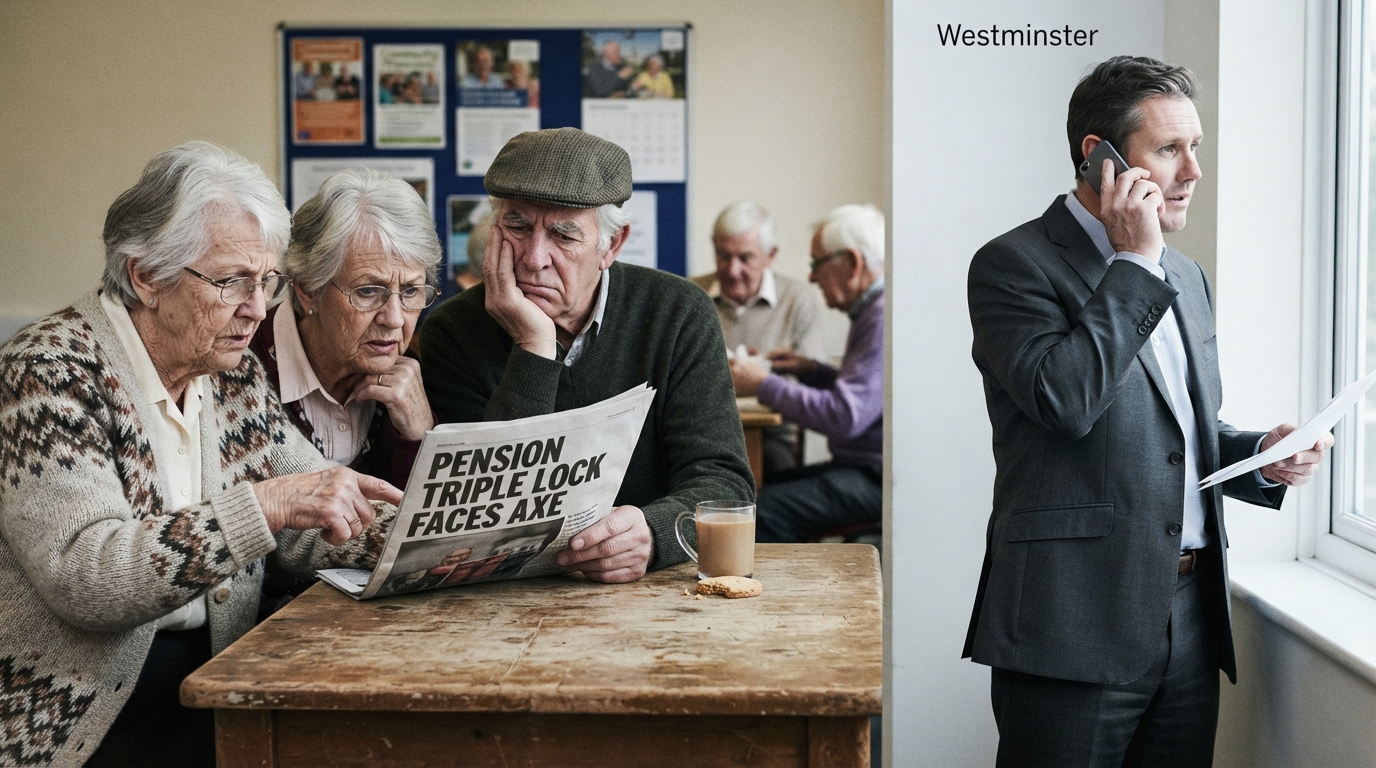
Why the PM could finally drop the triple lock pension pledge
The prime minister’s Sunday morning BBC interview stirred speculation about the future of a policy long regarded as politically untouchable.
The timing of the PM’s new social care plan prompted suggestions that the government may be preparing to sound the death knell for the state pension triple lock after 16 years.
Andy Burnham is set to outline difficult choices to pay for a new national care service as part of Labour’s next general election manifesto, aiming to secure a mandate for the changes in the next Parliament.
The triple lock, which in theory runs out at the end of this Parliament, means state pensions increase every April by at least 2.5%, or by whichever is higher of prices or earnings.
Earlier this month, BBC News put the exact question of whether the triple lock could be changed in the next Parliament to Chancellor John Healey, who answered: “the PM has said, like I have, that we must bring down welfare costs”.
It was a non-denial that reflected the fact the PM has been inundated with advice, including from some of his preferred economists, that abolishing the triple lock, or even hinting that it could be removed in future, is a major opportunity for Britain’s economic policy at a difficult moment in the bond markets for all heavily indebted countries.
The UK in particular is viewed as a country where successive governments have avoided hard long-term decisions. Could this be Burnham and Healey’s effort to change that perception, even in the somewhat volatile markets for government borrowing?
The politics are more complicated. Reform’s leaders regard the policy as a key possible dividing line with Labour.
Many in Westminster privately accept that the Osborne-era policy is economically unsustainable, but say it is politically impossible to unwind.
Many pensions campaigners note that even after rises, the UK state pension is not generous by international standards, although other countries have very different systems and levels of private provision.
Former ministers argue that the trade-off of redirecting pension savings toward an in-kind care service could alter the debate.
The lock costs £15.5bn a year, three times original estimates of the 2030 cost, largely because of the volatility of prices and earnings.
Returning to an earnings link could save tens of billions of pounds a year over the long term.
That is the kind of saving that could realistically help fund some form of national care service, with money potentially left over as a cushion in a volatile world.
It was once considered politically unthinkable, but the government now appears to be considering it, at least for the future.