

Why some have no choice but to pay costly oil prices
The rural communities vulnerable to heating oil prices rises as the weather gets colder.
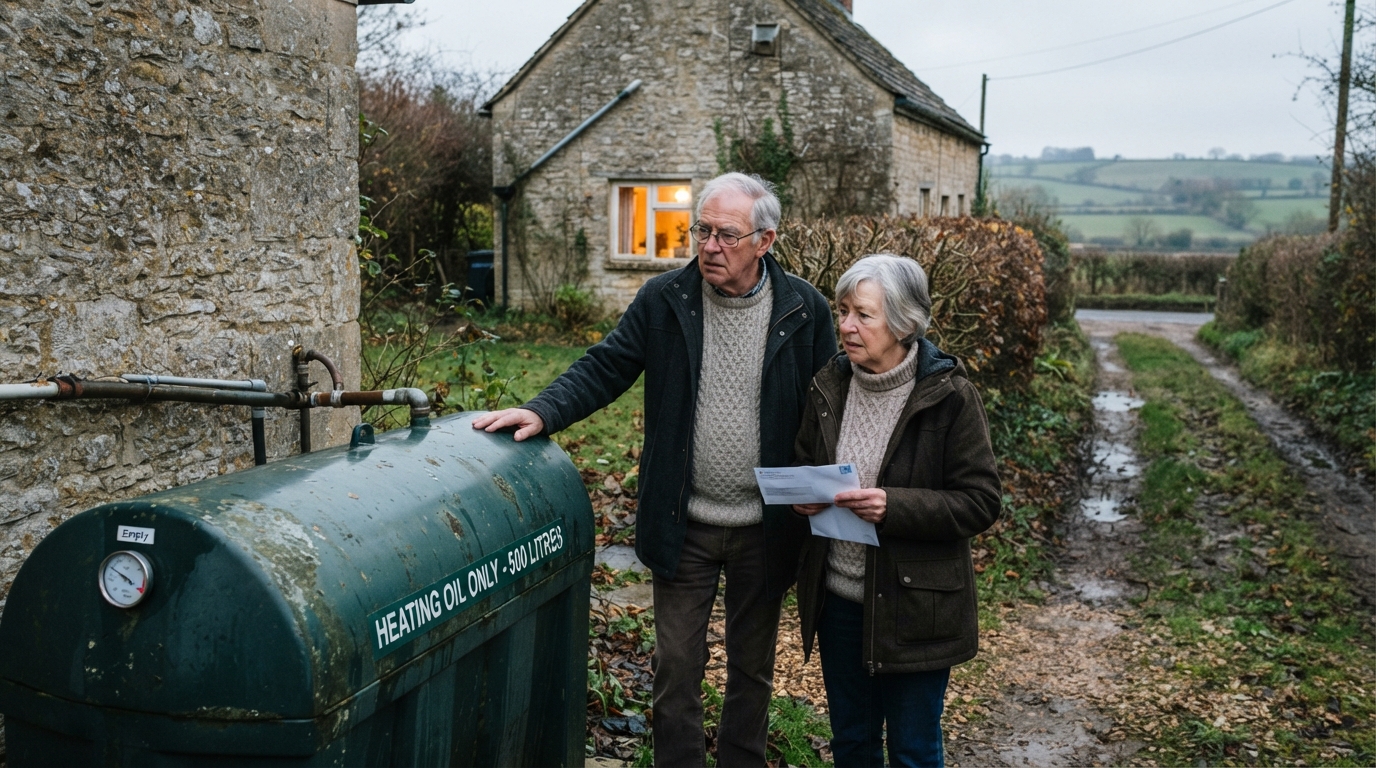
Why some people have no option but to pay high oil prices
Many heating oil customers are having to buy ahead of the colder months
As temperatures fall, many people will begin turning their heating on. But for the one-and-a-half million people across the UK who are not connected to the mains gas network and instead depend on heating oil, that choice can be a difficult one.
Most of those people live in rural areas.
Unlike gas and electricity, the heating oil market is unregulated, meaning any shifts in global prices are quickly passed on to customers.
Tensions in the Middle East and the continuing war in Ukraine are both affecting supply and pushing prices higher.
Until March this year, prices were fairly steady at around 60p per litre (ppl), but when the war in Iran began in March, they surged to a peak of 134ppl.
After easing over the past few months, prices are climbing again and now stand at 111ppl, according to price comparison site Boiler Juice.
The BBC has spoken to several business owners and homeowners across the West about how the increase is affecting them.
Peter Mason lives in Minety, in north Wiltshire, where most homes depend on heating oil.
"I'm getting toward the end of the tank and need to top up for winter... it will be over £550," he said.
Mason said that last year "it was about £300 to fill up - it is horrendous".
He said: "The price goes up and down. It can vary plus or minus £50 but it has never been as high as it is today.
"It means I'll have to eek out what I spent my money on. I'm retired, its not like I can change jobs.
"I have to be really careful and pull money out of savings."
Most tanks hold 500 litres of oil and would currently cost about £550 to fill.
Dylan Williams owns the van-driving business Van & I of Monmouth, Wales, and regularly works in the Forest of Dean, Stroud and South Gloucestershire.
The 51-year-old said he was paying more for fuel than at any point in the three years he has run the business.
He said he had been forced to raise the prices of his services to help cover the increase.
At the beginning of the year, he said, a full tank cost between £120 and £130, but that has now risen to £160.
"It's ever increasing, ever worrying - keeping an eye on the news, keeping an eye on the diesel prices," he said.
"I mean I've got fuel cards... you don't pay the pump prices, you pay the fuel card prices but it doesn't make much a difference these days.
"It's a few pence really."
Yvette Farrell, volunteer director of Dean Forest Kitchen, which cooks fresh meals every day and delivers them to clients across the Forest of Dean, said they may have to raise prices because there is "not going to be much choice in the future".
She said: "It's impacted us a lot because we work on a not-for-profit scenario so there is not a lot of wiggle room when it comes to increase in any expenses.
"So the cost of fuel is really, really hitting the business hard and we're having to do our best to still keep going to our clients who are spread across a very rural area with no public transport.
"But we have to take these meals to them because... they will not have somebody coming to see them during the day because they're so isolated."
Tristan Holland, company director at TLC Support Service, oversees a small team of community care workers who travel around Wotton-under-Edge and Dursley.
Staff use their own vehicles and the company pays mileage at 55p per business mile.
He said: "We had an increase in our fees back at the start of the year, just kind of taking into account all the extras that were coming in this year but even that does make it tight.
"Everything has risen - the cost of the fuel, the training, even the uniforms that we purchased.
"Everything has gone up and so we try to keep our services as affordable as we possibly can but there has to be a profit or else we just can't carry on going."
The Iran war has disrupted the production and transport of wholesale oil, and prices can rise or fall depending on the words and actions of key political figures.
Prices could fall if there is a peace deal between the US and Iran.
For people who rely on heating oil, that leaves them feeling powerless.
Richard Willan, who runs the Nadder Oil Buying Club in Wiltshire, where more than 1,000 residents buy in bulk together to secure a better price, said rural residents were becoming increasingly exposed as the colder months arrive.
"We are watching to see what happens with (Donald) Trump in the mid-term elections in America, that might change things again," he said.
The Competitions and Markets Authority (CMA) said heating oil customers in remote areas were too vulnerable to price shocks.
CMA chief executive Sarah Cardell said: "Stronger safeguards are needed - including regulatory oversight and better support for vulnerable consumers as well as communities living in areas of the UK that are particularly exposed to higher and more volatile prices."
With prices above 100ppl and temperatures dropping, there are growing calls for more help for rural communities.
Chief Executive of Action in Rural Communities England Corinne Pluchino said: "Without specific targeted support for heating oil and LPG users, thousands of rural people risk becoming the forgotten victims of the energy crisis."
The organisation is calling on the government to remove VAT on heating oil and LPG for six months in this month's budget.
There are also locally run support schemes such as the Surviving Winter campaign, run by a group of charities in Wiltshire, which helped more than 3,000 people last year with heating costs.
A spokesperson for the Department for the Environment and Net Zero said: "We are helping thousands of households on heating oil switch to clean heat with grants worth £9,000, alongside a dedicated resilience fund for areas with higher rates of oil heating.
"We urge eligible households to apply."