

Why Nigeria's one-time political giant may face extinction
Once a giant of African politics, the PDP is in danger of being wiped out after January's elections.
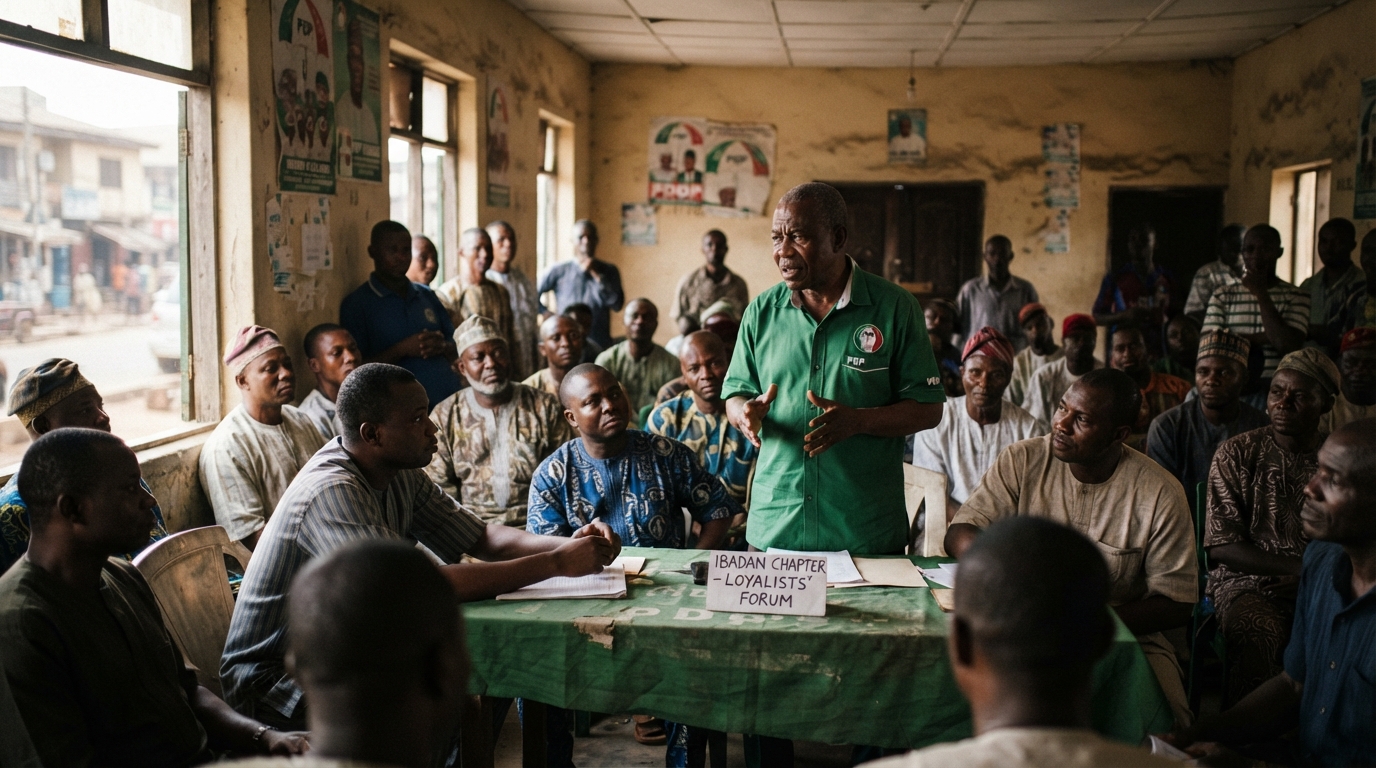
The Peoples Democratic Party (PDP), once a dominant force in Nigerian politics, now faces potential extinction. The question of its survival looms over the general election campaign, which commenced this week. A legal battle over the party's leadership could render it irrelevant in the upcoming polls.
This marks a significant decline for the PDP, established in 1998. After the end of military rule in 1999, when its presidential candidate Olusegun Obasanjo secured power and ushered in democracy, the party seemed unassailable. In 2008, its chairman even predicted it would govern for six decades. For 16 years, the PDP controlled the presidency through Olusegun Obasanjo, Umaru Musa Yar'Adua, and Goodluck Jonathan, along with the majority of Nigeria's 36 states.
However, the 2015 federal election delivered a major blow. The PDP lost the presidential election to Muhammadu Buhari and the newly formed All Progressives Congress (APC), a coalition of opposition parties and disaffected former PDP members. Goodluck Jonathan's concession to Muhammadu Buhari in 2015 marked the beginning of the PDP's decline.
According to political analyst Ishaq Buhari, the party's national leaders, accustomed to federal power, were bewildered by their new role in opposition. "They were a party that was so used to power, being in opposition was a new challenge they struggled with from the start," he told the BBC.
While 2015 was a significant setback, 2025 proved to be devastating for the party's foundations. This year saw a wave of defections and intense internal conflicts. A particularly damaging development was the defection of several state governors. At the beginning of 2025, the PDP held eight states, but by December, five governors from Delta, Akwa Ibom, Enugu, Bayelsa, and Rivers had switched to the ruling APC. They cited the PDP's diminishing viability and a desire for improved cooperation with the federal government as their reasons. By early this year, the PDP held three states, but this number has now dropped to zero, with the Oyo governorship lost just last month.
Internal power struggles, factionalism, the insistence on regional power rotation, and disciplinary actions have all contributed to widespread disillusionment within the party. The PDP has lost prominent figures and talent, including former Vice-President Atiku Abubakar last year, who had been the PDP's presidential candidate in 2019.
The crisis was exacerbated by a debilitating leadership dispute. In November 2025, a faction of the party, believed by observers to represent the majority of members, held a controversial national convention in Ibadan, Oyo state, despite court orders attempting to prevent it. This convention expelled Nyesom Wike, a prominent PDP member currently serving in President Bola Tinubu's APC-led government. Wike, a co-founder of the party, leads a rival faction that has paralyzed the PDP. He had controversially assisted the APC in winning Rivers state in the last presidential election, leading to accusations of betraying the PDP. However, legally, the faction led by Wike is recognized as the legitimate party. This recognition allowed his faction to submit its slate of presidential and parliamentary candidates to the electoral commission, leaving the rival faction without any representatives on the ballot.
Despite the turmoil, some staunch loyalists remain hopeful. Aminu Adamu, a politician and dedicated PDP member belonging to the anti-Wike faction, believes the party can regain its former prominence. He points to examples from Thailand and Argentina, where parties have recovered after years out of power. "We have seen it happen before," he told the BBC. "All we need to do is put our house in order and start to build from there. If we make all the necessary corrections, by 2032 I really think PDP can be a major force again."
Others highlight the party's enduring grassroots network, which includes offices, activists, supporters, and local leaders—elements crucial for winning and maintaining power. However, by 2032, it might be too late. Given the party's current disarray and the fact that candidates backed by Wike are on the ballot, voters are unlikely to trust them.
Analyst Deji Olarenwaju believes the only way for the once-mighty party to survive is through an alliance with either the African Democratic Congress, now considered the largest opposition group, or Peter Obi's Nigeria Democratic Congress. "Because on their own they are going nowhere," he stated.