

Why heart diseases are affecting younger people and how to reduce the risk of developing them. Cardiologist's advice
Feeling well does not yet mean that everything is fine with the heart — hypertension and some other diseases can proceed without symptoms for years. For World Heart Day, "Gazeta" spoke with cardiologist Dina Arnopolskaya about how to notice a problem in time and what helps to reduce the risks.
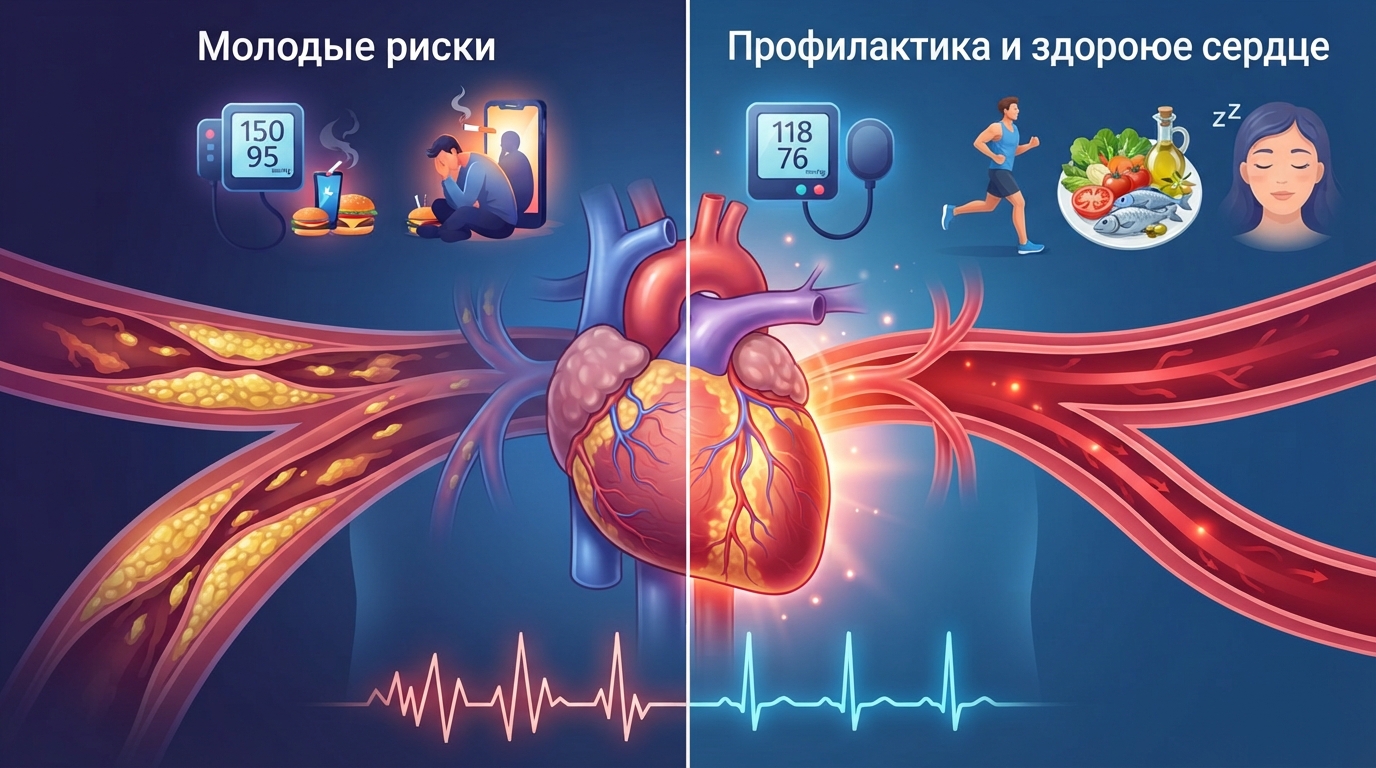
Why the heart and blood vessels are "getting younger" and how to reduce the risk of their diseases. Cardiologist's advice
Cardiovascular diseases remain the leading cause of death globally — according to WHO estimates, they accounted for about 32% of all deaths in 2022.
According to the National Statistics Committee, 54,081 people died from diseases of the circulatory system in Uzbekistan in the first half of 2026 — 62.3% of all those who passed away during this period. On average, this is approximately 300 people per day.
Medical professionals also note another trend: cardiovascular diseases are increasingly being diagnosed in young patients.
The risk is increased not only by heredity, but also by physical inactivity, constant stress, sleep disorders, smoking, and poor diet. The danger also lies in the fact that some diseases can develop for a long time without symptoms and manifest for the first time as a heart attack.
For World Heart Day, "Gazeta" spoke with cardiologist and Doctor of Medical Sciences Dina Arnopolskaya about why cardiovascular diseases are increasingly found in young people, how to recognize the risks in time, and what helps to preserve heart health.
Cardiovascular diseases include hypertension, coronary heart disease, atherosclerosis, heart rhythm disorders, heart failure, as well as diseases of the valves and heart muscle. According to Dina Arnopolskaya, the first three are the most common in Uzbekistan, as well as worldwide. Infectious and non-infectious inflammations, as well as other diseases of the heart muscle, blood vessels, and valves, are less common.
With hypertension, a person's blood pressure is consistently elevated. Coronary heart disease develops due to a disruption in the blood supply to the heart muscle, most often when the coronary arteries narrow. Atherosclerosis occurs when fats and other substances accumulate in the walls of the arteries. Gradually, an atherosclerotic plaque forms, which narrows the vessel and obstructs blood flow. If it becomes inflamed and damaged, a blood clot can form in its place. It is capable of completely blocking the artery, disrupting the blood supply to an area of tissue and depriving it of oxygen.
If a blood clot blocks a blood vessel in the heart, a heart attack occurs; if it blocks a vessel in the brain, an ischemic stroke occurs. Due to the stoppage of blood flow, other organs can also suffer, such as the kidneys, intestines, or the retina of the eye. Weakening of the vascular wall can lead to an aneurysm — an expansion of the blood vessel wall, which, if ruptured, can cause dangerous internal bleeding. High blood pressure, elevated cholesterol, diabetes mellitus, and chronic inflammation contribute to the development of atherosclerosis and vascular damage.
A separate group consists of diseases of the heart muscle — cardiomyopathies. In these conditions, the myocardium can thicken, weaken, or become less elastic, making it harder for the heart to pump blood. Such diseases are often accompanied by arrhythmia — a disruption in the frequency and rhythm of heartbeats. Some types of arrhythmias are hereditary and are associated with genetic changes that affect the functioning of heart cells.
The heart and blood vessels can be affected by infections. They can cause inflammation of the heart muscle, valves, and the lining of the heart. In autoimmune diseases, the immune system mistakenly attacks the body's own tissues. For example, rheumatic heart disease develops as a result of an incorrect immune response to a streptococcal infection and can damage heart valves.
According to Dina Arnopolskaya, rheumatism is the leading cause of valvular heart defects in Uzbekistan. Infectious, autoimmune, and hereditary heart diseases are less common, but they can also lead to severe complications.
As a result of various cardiovascular diseases, heart failure can develop. This is a condition in which the heart cannot pump enough blood to supply organs with oxygen and nutrients. It can occur against the background of coronary disease, long-term hypertension, damage to the valves or the heart muscle.
The risk of cardiovascular complications depends not only on health status, but also on age and gender. In 2025, mortality from diseases of the circulatory system among men in Uzbekistan was 313.9 cases per 100,000 people, while among women the figure reached 266.6. At a young and working age, the difference is particularly noticeable: 112.5 deaths per 100,000 men compared to 39.1 among women.
"At a young and middle age, cardiovascular diseases are more often the cause of death in men, because they develop earlier in them. At an older age, women quickly catch up with men in the frequency of such deaths. This is partly due to the onset of menopause and changes in estrogen levels, which are involved in maintaining vascular elasticity and cholesterol metabolism. At the same time, blood pressure, cholesterol, and sugar levels can rise, and body weight can increase," explains Dina Arnopolskaya.
Hypertension, heart attacks, and strokes are increasingly being diagnosed in young people today. Dina Arnopolskaya attributes this to a combination of hereditary predisposition and a changed lifestyle.
Hereditary characteristics can make the heart and blood vessels more vulnerable to the influence of external factors. For example, genetic features can affect cholesterol metabolism, blood pressure, blood clotting, and the functioning of the heart muscle. This does not mean that a person will definitely get sick, but with a family history of early heart attacks, strokes, or sudden death, the risk may be higher.
According to the cardiologist, while hereditary factors remain the same, lifestyle has changed noticeably: people's physical activity has decreased, and the information load has significantly increased. It becomes a source of chronic stress, which raises levels of adrenaline, noradrenaline, and cortisol. This can lead to an increase in blood pressure and blood sugar, as well as metabolic disorders. In addition, constant tension often disrupts the sleep-wake cycle, and lack of sleep increases the risk of obesity, hypertension, and diabetes mellitus.
"Stress can be not only obvious and acute — relatively speaking, not just 'smashing plates.' The constant flow of information, the need to be in touch and control what is happening around 24 hours a day keep the body in a state of tension. A person may not be aware of their state, but the hormonal system continues to react," explains Arnopolskaya.
People have started to move less and more often choose foods with a high amount of salt, sugar, and easily digestible carbohydrates — sweets, pastries, sugary drinks, and highly processed food. Excess salt contributes to increased blood pressure, and a large amount of sugar and calories leads to weight gain and metabolic disorders. Smoking additionally damages blood vessels and increases the risk of blood clots.
All these factors can gradually disrupt the function of the endothelium — the inner layer of the vascular wall. Normally, it helps blood vessels dilate and prevents the formation of blood clots. When its function is impaired, blood vessels relax worse, constrict more easily, and become more susceptible to inflammation, the formation of atherosclerotic plaques, and blood clots.
Obesity also increases the workload on the heart and is often combined with hypertension, impaired carbohydrate and fat metabolism. Among the unfavorable indicators, Arnopolskaya also names elevated uric acid levels. But its connection with cardiovascular diseases is not as straightforward as the connection with high blood pressure, sugar, and cholesterol, so this indicator is evaluated along with other risk factors.
"When several factors act simultaneously, changes in the blood vessels can start earlier. That is why hypertension or atherosclerosis are detected today in people who have not yet reached old age. In non-urbanized areas, the more familiar age pattern of cardiovascular diseases is still preserved. In cities, the influence of information load, physical inactivity, sleep and eating disorders is more pronounced," says the doctor.
Many cardiovascular diseases can proceed for a long time without noticeable symptoms. First of all, this applies to hypertension, which often does not cause pain or other characteristic sensations, but gradually damages blood vessels and increases the workload on the heart, brain, and kidneys. A person with hypertension is socially active and does not complain about health until complications appear. Therefore, WHO calls it a "silent killer": sometimes the first noticeable manifestation of the disease is already a heart attack or stroke. Therefore, one cannot rely solely on how one feels.
Even a heart attack can sometimes occur without characteristic pain. This is possible in people with a high pain threshold, as well as in diabetes mellitus or kidney failure, which can be accompanied by damage to the nervous system. In these cases, sudden shortness of breath, weakness, or cold sweat should be alarming.
"Prevention of cardiovascular diseases should start from childhood, forming healthy habits. And the scope and frequency of examinations depend on age, heredity, and individual risk factors," explains Dina Arnopolskaya.
People in whose families there were cases of early heart attack, stroke, or sudden death should be examined earlier and more often. Increased control is also necessary for obesity, diabetes mellitus, cholesterol metabolism disorders, and already identified high blood pressure. Special attention should be paid to heart health by women who had hypertension, gestational diabetes, or other complications during pregnancy — they are associated with a higher risk of cardiovascular diseases in the future.
A basic check-up includes monitoring weight, blood pressure, and pulse, as well as tests for glucose and lipid profile — total cholesterol, low- and high-density lipoproteins, and triglycerides. For people under 40 who do not have risk factors, Arnopolskaya recommends measuring blood pressure at least once a year, and sugar and lipid profile — about once every five years. After 40, blood pressure should be checked every three to six months, and blood tests — once every one to three years. Regular measurements help to notice a steady increase in indicators, even if a person feels well. Therefore, according to the cardiologist, a blood pressure monitor should be in every home.
"If a person has already had abnormalities detected, or if they have obesity, diabetes, or a family history of cardiovascular diseases, examinations need to be undergone more often. The individual frequency is determined by the attending physician," she says.
At least once in a lifetime, the cardiologist advises checking lipoprotein (a) — a genetically determined marker, the elevation of which is associated with the risk of atherosclerosis, heart attack, and stroke. Its level is mainly determined by heredity and usually remains relatively stable, so a single test is sufficient for most people. With a high indicator, it is necessary to monitor other risk factors more closely.
If complaints or abnormalities appear, the doctor may prescribe additional tests. An ECG evaluates the electrical activity of the heart, daily monitoring helps to identify periodic rhythm disturbances, and an ultrasound shows the structure of the heart, the condition of the valves, and the pumping function. A doctor can notice signs of damage to the retinal vessels in hypertension during an examination of the fundus of the eye.
More complex studies — computer and magnetic resonance imaging, scintigraphy, angiography, and coronary angiography — are prescribed for specific indications.
"An examination always begins with simple and accessible methods and, if necessary, proceeds to more complex ones. After 40, an ECG is recommended once a year. If a person has no complaints and no previously identified cardiovascular diseases, there is no need to regularly undergo a heart ultrasound," advises Dina Arnopolskaya.
For home monitoring, it is better to use a proven automatic blood pressure monitor with an upper arm cuff of the appropriate size, or a wrist cuff.
People with arrhythmia should use a manual blood pressure monitor — devices that measure pressure on the finger are currently not validated for monitoring pressure.
For 30 minutes before the measurement, you should not smoke, drink coffee or other caffeinated beverages, or exercise. Before the procedure, you need to empty your bladder and rest for at least five minutes without talking or using your phone.
Blood pressure is measured while sitting: the back should rest against the back of the chair, feet should be flat on the floor, and legs should not be crossed. The arm is placed on the table so that the cuff is at heart level. It is put on a bare upper arm, not over clothing. During the measurement, you must not talk or move.
"The first time, blood pressure should be measured on both arms. In the future, you should use the arm on which the indicator turned out to be higher," advises Dina Arnopolskaya.
At one time, two measurements should be taken with an interval of one to two minutes, and the average value calculated. If the doctor has prescribed home monitoring, blood pressure is usually measured in the morning and evening at approximately the same time for at least three, and preferably seven consecutive days. The results must be recorded and then shown to a specialist.
A single elevated reading is not enough to make a diagnosis. Hypertension can be indicated by readings from 140/90 mm Hg when measured in a medical facility, or an average home pressure from 135/85 mm Hg. The doctor makes a decision on treatment not only based on the pressure level, but also taking into account age, concomitant diseases, and overall cardiovascular risk.
"The main recommendations have long been known: a daily routine, a full night's sleep, a diet close to the Mediterranean one, and regular physical activity of moderate intensity. It is also important to control psycho-emotional stress, give up smoking and other addictions," says Dina Arnopolskaya.
A diet close to the Mediterranean one includes more vegetables, fruits, legumes, whole grains, nuts, fish, and vegetable oils. It is advisable to consume red and processed meat, sweets, pastries, and highly processed foods less often. At the same time, nutrition must remain complete, diverse, and meet the body's needs for calories, proteins, fats, carbohydrates, vitamins, and minerals.
It is worth paying attention to the amount of salt and sugar in the diet. Excess salt contributes to increased blood pressure, and a significant part of it comes not from the salt shaker, but from sausages, canned food, sauces, ready-made meals, and snacks. Excess sugar and easily digestible carbohydrates — sugary drinks, desserts, and pastries — can contribute to weight gain and metabolic disorders.
Physical activity is no less important. The cardiologist recommends that adults dedicate at least 150 minutes a week to moderate aerobic exercise. This can be brisk walking, cycling, swimming, or other activity that slightly increases breathing and heart rate. You should start gradually, especially after a long break. For people with already identified heart diseases, it is better to discuss a safe intensity of activities with a doctor.
A full night's sleep is also part of the prevention of cardiovascular diseases. Most adults need seven to nine hours of sleep. Not only its amount is important, but also the routine: it is advisable to go to bed and wake up at about the same time. Constant lack of sleep and an irregular schedule are associated with increased blood pressure, weight gain, and impaired glucose metabolism.
All forms of tobacco and nicotine use, including electronic cigarettes, are dangerous for the heart.
Quitting smoking reduces the risk of heart attack and stroke at any age, including in people with a long history of smoking. It is also necessary to limit alcohol consumption — there is no way to use it to "protect blood vessels."
It is impossible to completely eliminate stress from life, but it is possible to reduce constant psycho-emotional load. To do this, it is important to alternate work and rest, limit the continuous flow of information, and leave time for sleep, movement, and recovery.
Healthy habits do not replace monitoring indicators. Even when feeling well, it is important to monitor weight, blood pressure, sugar, and cholesterol levels. If the values go beyond the normal range, lifestyle correction alone may not be enough — the need for treatment is determined by a doctor.
"In prevention and treatment, patients often make two mistakes: they self-prescribe medications or stop taking drugs without consulting a doctor. You should not choose therapy based on the advice of acquaintances or information from the Internet. Normalization of blood pressure, sugar, or cholesterol usually means that the treatment is working, not that it can be canceled," emphasizes the cardiologist.
She notes that prevention works when changes become part of everyday life.