

White House to roll out the red carpet for historic Xi Jinping visit
Trump and Xi are expected to discuss a range of issues from trade to AI during the latter's multi-day visit to Washington.
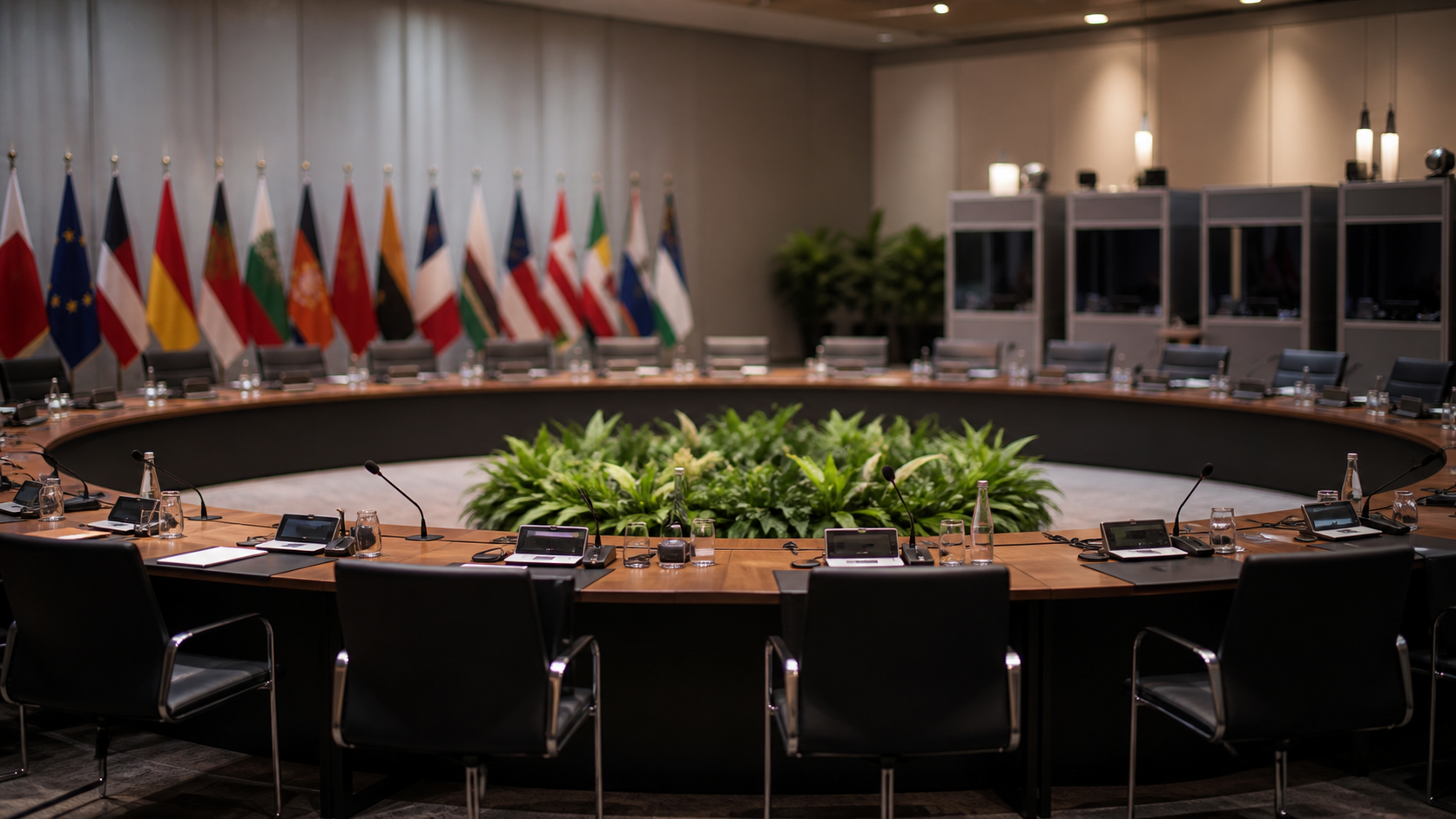
**White House prepares grand welcome for historic Xi Jinping visit**
US President Donald Trump is set to host Chinese leader Xi Jinping in Washington this week, with artificial intelligence, trade and Taiwan among the issues on the table for the leaders of the world’s two superpowers.
Xi is expected to be met personally by Trump at Andrews Air Force Base on Wednesday, before a White House welcome ceremony on Thursday that will include a military flyover and nearly 500 service members.
The visit will be Xi’s first to the US in more than 10 years and his third meeting with Trump since the US president returned for his second term.
The high-profile state visit comes as a US-China trade deal struck last year is due to expire in November.
That trade truce, reached in October 2025 when Trump and Xi met in South Korea, led Washington to pause sharp tariff hikes on Chinese goods, while Beijing eased restrictions on rare earth exports vital to manufacturing.
Experts said they will be watching closely for some kind of announcement on extending the agreement during the visit.
Xi’s trip to Washington, which ends on Friday, will feature plenty of ceremony, including elaborate dinners, private tours and performances.
David Sacks, a fellow for Asia studies at the Council on Foreign Relations, called Trump’s planned lavish reception “really unprecedented”.
“From meeting Xi Jinping at Andrews Air Force Base to having a flyover for Xi as well, this is not something afforded to any US ally,” Sacks said, “much less an adversary like China.
“It’s quite, quite stunning,” he continued.
Trump is expected to raise several matters in his talks with Xi, especially tariffs and trade.
The US president has long complained about America’s trade deficit with China, which is more than $91bn (£68.2bn), according to the latest US Census Bureau figures.
Also, Chinese rare earth exports to the US are down.
US and Chinese officials held trade discussions on the sidelines of the United Nations General Assembly on Tuesday but did not achieve meaningful progress before Xi’s visit, multiple sources told the BBC.
According to sources familiar with White House thinking, the talks centered on possible agreement in non-tariff trade issues and agricultural exports.
US negotiators are expected to keep talking with Chinese counterparts in Washington on Wednesday after Xi arrives.
Another major subject likely to come up between Trump and Xi is artificial intelligence, which David Firestein of the Bush China Foundation said has “climbed rapidly toward the top of the agenda” before this visit.
China and the US are locked in what has been called an AI arms race. But after a series of recent high-profile security incidents involving the emerging technology, pressure has grown on the Trump administration to regulate AI and slow its development.
Senator Bernie Sanders wrote on X this week: “For the sake of all humanity, Trump and Xi must negotiate a treaty NOW to pause AI and ban superintelligence before it’s too late.”
Trump’s former White House adviser Steve Bannon and some Republicans in Congress have also warned about the dangers posed by AI.
The president, who sees the technology as essential to the US economy and as a front in a global power struggle, has been hesitant.
He regards beating China in the AI race as a main goal. “Whoever wins AI, wins,” Trump has said.
Firestein told the BBC he expects Trump and Xi to discuss possible AI cooperation.
US Treasury Secretary Scott Bessent met with his Chinese counterpart He Lifeng and said the two had “very successful” talks on trade and AI.
Experts who spoke to the BBC said major breakthroughs on AI or other issues are unlikely during the many Trump-Xi meetings scheduled this week.
Taiwan is another continuing diplomatic sticking point.
The US Congress has approved a multibillion-dollar arms sale to Taiwan that still needs Trump’s signature. He has delayed acting on it for now, seeing it as leverage with China.
China has long pledged to “reunify” with self-governing Taiwan and has not ruled out using force.
Firestein said he expects Xi will want Trump either to agree to extend the delay on the arms sale or to avoid the sale altogether.
Xi, like Trump, is also dealing with economic pressures at home and is expected to use the visit to discuss deeper US-China trade ties.
But that could create a political challenge for Trump. Some members of his cabinet and his supporters view China with deep suspicion.
Despite the obvious obstacles still standing in the way of any new US-China agreements, it is clear that Trump sees direct personal contact with Xi as crucial to the process.
“Trump has made a decision that no matter what, we need to not have a confrontational relationship with China,” Stephen Orlins, president at the National Committee on US-China Relations, said.
“He believes that the more he and President Xi meet, the less confrontational that relationship will be,” Orlins continued, “and he is right.”