

Which territories of Uzbekistan are most at risk of landslides?
Which territories of Uzbekistan are most vulnerable to landslides?
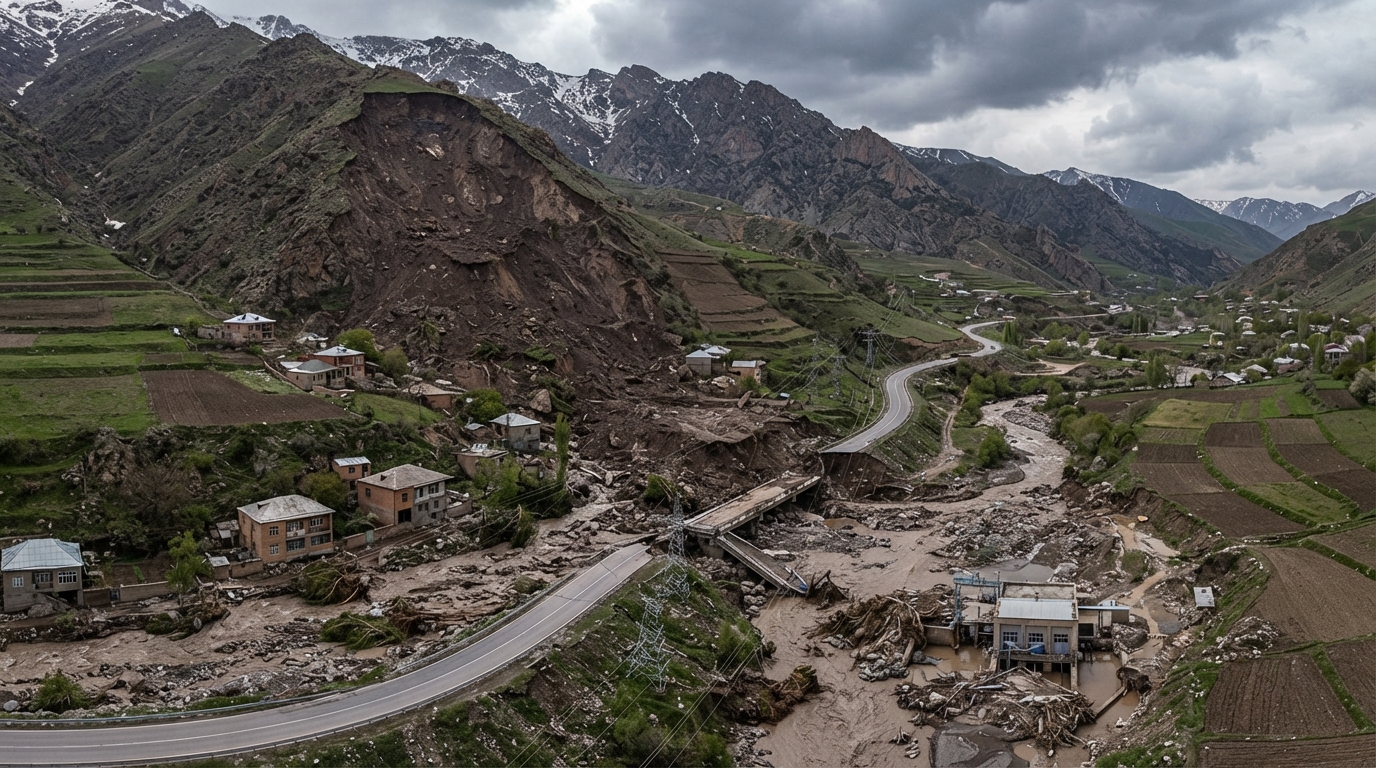
Against the backdrop of high seismicity and climate change, landslides remain one of the natural hazards for the mountainous regions of Central Asia. In a study by the Eurasian Development Bank (EDB), among the territories of Uzbekistan where a potential risk of such phenomena exists, the Akhangaran district of Tashkent region and certain sections of the Tashkent – Osh corridor are named. There, landslides are capable of causing damage not only to residential buildings, but also to transport and engineering infrastructure.
The authors of the study link the landslide hazard in the region to the mountainous terrain, high seismic activity, and the development of slopes subject to ground displacement. Among additional factors, they name heavy precipitation, snowmelt, and earthquakes.
Potentially hazardous zones also exist in other Central Asian states. In Kyrgyzstan, these are mountainous and foothill areas; in Tajikistan, the Ayni district and certain parts of Dushanbe; and in Kazakhstan, the foothills of Almaty and the Almaty region.
The events in Nepal at the end of September 2026 testified to the consequences that landslides can lead to. Heavy downpours triggered 304 landslides, damaged 31 bridges and hundreds of houses. As a result, 20 people died. The destruction of power line supports also caused the shutdown of 12 hydroelectric power plants with a total capacity of 358 megawatts and the restriction of power supply to industrial enterprises.
According to international experts, potential direct losses from landslide risks in Central Asia could reach 3.59 billion dollars. This figure was obtained through modeling and assumes the total loss of facilities located in the risk zone. This refers to an estimate of possible damage, rather than actual losses incurred.
To reduce risks, the EDB recommends taking landslide, mudflow, and flood hazard maps into account when planning construction, as well as restricting building on unstable slopes and in river floodplains.
In addition, experts suggest developing monitoring and warning systems, as well as determining evacuation routes and backup options for transport connections, water supply, and electricity supply in advance. Such measures, in their opinion, should help reduce possible damage and ensure the operation of critical infrastructure in the event of natural disasters.
As a reminder, in January–September 2026, 2.2 thousand earthquakes were recorded in Uzbekistan. To monitor seismic activity, 57 more stations from Kyrgyzstan, Tajikistan, and Kazakhstan were connected to the national network of 108 stations.