

What to do if you don't feel like eating at all?
What to do if you lose your appetite?
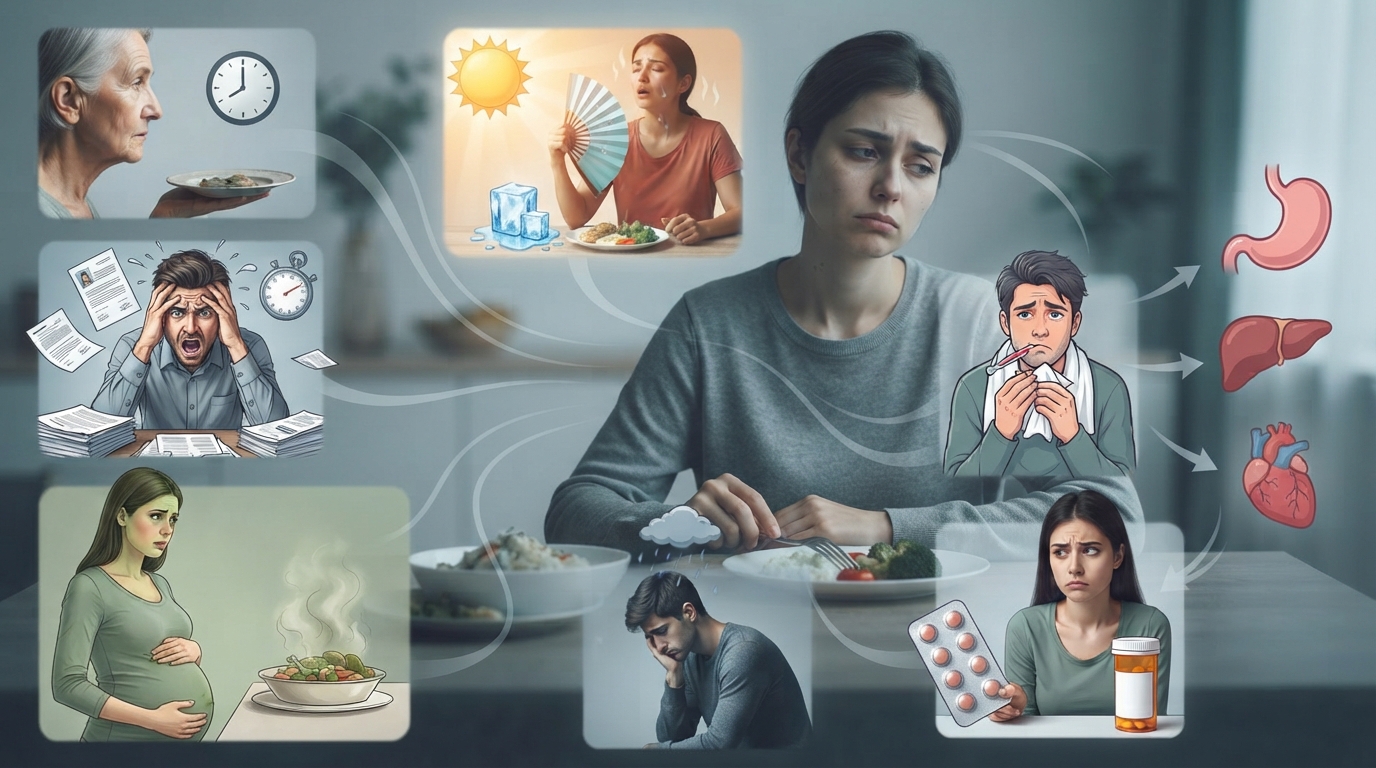
A loss of appetite is not a diagnosis, but a sign of serious health problems or a simple misunderstanding. Here are some common factors that can lead to loss of appetite.
**1. Age**
Appetite is often related to age. As you get older, your metabolism slows down, and your body needs fewer calories than it did when you were younger.
However, there may be other reasons. Scientists suggest that older people may not produce enough of the hormone ghrelin, which is responsible for appetite, or that the activity of the sensory organs may change, reducing the pleasure of food.
Research is ongoing, but one thing is certain: the older we get, the less we eat.
**2. High physical or mental stress**
If you are constantly moving all day, in a hurry, worried, and tired in the evening, you should not be surprised if your appetite decreases.
In extreme fatigue, the body is forced to choose what to spend energy on: movement or digestion of energy-intensive food. If you can’t get up from work, the brain reduces the activity of the gastrointestinal tract, as a result of which you don’t want to eat.
**3. Pregnancy in women**
Many expectant mothers experience nausea and loss of appetite, most often this happens in the first trimester.
The exact cause of decreased appetite during pregnancy is unknown. However, experts say that this is a process associated with hormonal restructuring of the body, increased sensitivity to tastes and smells. Perhaps, giving up favorite foods is an evolutionary mechanism: in this way, the mother’s body tries to protect the fetus from substances that are potentially harmful to its development.
**4. Weather**
In the summer heat, you will want to eat much less than in late autumn or winter. The fact is that food is part of the body’s thermoregulation system. When we are cold, we tend to consume more calories to stay warm. In the heat, the body does not need additional heating, and therefore food is neglected.
**5. Mood**
Someone's appetite is lost due to nervousness, while for someone, on the contrary, stress encourages them to eat more. Scientists have not yet discovered a general algorithm that connects emotions and eating behavior. But it is clear that the desire to eat largely depends on mood. At the same time, this connection is individual for each person.
**6. Smoking**
Nicotine has an additional effect: it reduces the need for food.
**7. During the peak of acute respiratory viral infections and other diseases**
Leptin is a hormone that gives you a feeling of satiety. But at the same time, this substance is actively involved in the immune response to infection.
With the onset of a cold, flu, and other infectious diseases, leptin levels increase — this allows the body to repel a pathogenic attack. However, after the hormone increases, a feeling of satiety appears spontaneously. That is why sick people often refuse to eat.
**8. Taking certain medications**
A decrease in appetite can be one of the side effects of antibiotics. However, other drugs sometimes reduce the desire to eat. Painkillers based on codeine and morphine, as well as diuretics, cause such reactions.
**9. Mental disorders**
It is possible that loss of appetite is also caused by depression. Another common mental illness that is directly related to reluctance to eat is anorexia nervosa. Doctors call this a condition in which people avoid eating for fear of gaining weight.
**10. Digestive system diseases**
Appetite changes can be one of the first symptoms of inflammatory bowel disease and Crohn's disease.
**11. Viral hepatitis and other liver damage**
One of the most important organs in the digestive system is the liver. This organ sorts substances, cleans them of toxins, and only then transfers them to the general bloodstream. As a result of viral hepatitis and other liver diseases, it ceases to perform its functions.
In order not to overload the diseased liver and give it a chance to recover, the body reduces the production of hormones, enzymes and other substances responsible for the manifestation of appetite.
**12. Cardiovascular diseases**
Loss of appetite is one of the symptoms of chronic heart failure. In addition, unwillingness to eat is associated with developing heart attacks and heart defects.
**13. Endocrine diseases**
When the thyroid gland produces less hormones than necessary (this condition is called hypothyroidism), appetite is significantly reduced. However, weight gain may occur.
**14. Iron deficiency**
Weight loss accompanied by a decrease in appetite, especially if all this is accompanied by a feeling of fatigue and lack of energy, is one of the most characteristic signs of iron deficiency in the body.
**15. Cancer**
A decrease in appetite is often accompanied by cancer, for example:
* stomach cancer;
* pancreatic cancer;
* colon cancer;
* ovarian cancer.
**Do you need to restore your appetite?**
On the one hand, reducing your appetite is a convenient thing. Someone suffers from diet rules, and you reduce the calorie content of the diet on your own.
On the other hand, you should not rejoice at the lack of appetite. With a limited diet, you get less nutrition. And this can lead to hypovitaminosis, a decrease in hemoglobin levels, anemia and more serious problems.
What the long-term consequences of a decrease in appetite will be depend on the reasons that caused this condition. If you do not want to eat due to depression or heat, this is another thing. If the loss of appetite is associated with liver, heart and even cancer diseases, urgent measures must be taken.
**What to do if you do not want to eat?**
First of all, take care of yourself, be calm. If your appetite has decreased due to external reasons, for example, due to heat, fatigue, anxiety, then the desire to eat will return as soon as the stress factors disappear.
But if, even if everything is in order in your life, your appetite has disappeared or indifference to food persists for several weeks, consult a therapist.
In some cases, you may need to take an analysis. Among them:
* general and biochemical blood tests;
* thyroid hormone tests;
* hepatitis tests;
* urine analysis for drug content;
* ultrasound examination of internal organs.
All this will help to find the cause of loss of appetite. Depending on the tests, the doctor will prescribe treatment or refer you to a specialized specialist - endocrinologist, cardiologist, oncologist, hepatologist, psychotherapist.