

What the Sergey Yesenin Museum in Tashkent will look like after reconstruction. Photos
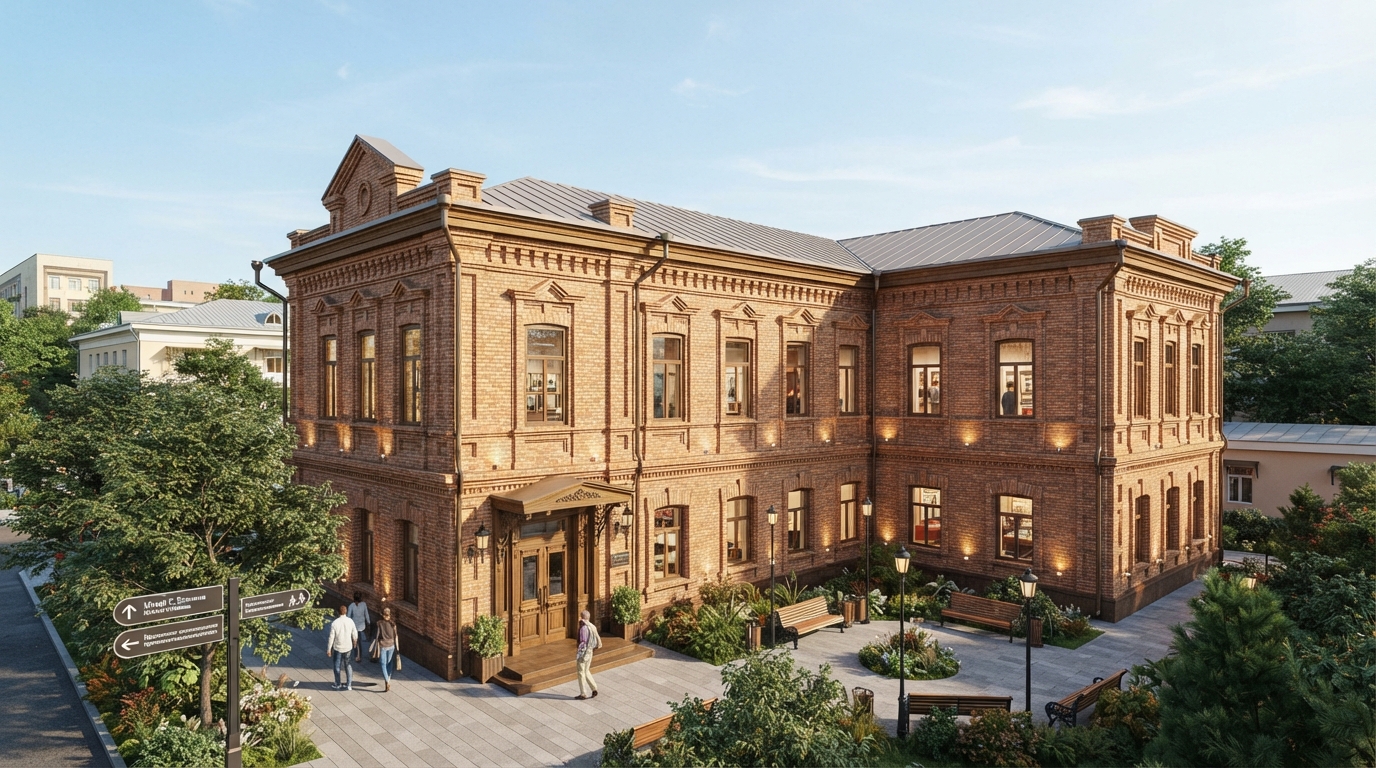
What the Sergei Yesenin Museum in Tashkent will look like after reconstruction. Photos
After reconstruction, the Sergei Yesenin Museum in Tashkent will preserve the historical appearance of the building, while gaining modern exhibition spaces and new conditions for storing exhibits.
The project provides for the restoration of the facade of the historic late 19th-century building based on archival photographs. At the same time, the original masonry made of pre-revolutionary "Nikolayev" brick is intended to be preserved and carefully treated.
The historical atmosphere is also planned to be preserved inside the memorial part of the museum. The original layout will remain here, and the exhibition halls will be complemented with wooden finishes, built-in shelving, historical furniture, and modern lighting.
In addition, the museum will become more than just an exhibition space. It will feature an intimate hall for lectures, literary evenings, and film screenings. It will be equipped with a projection screen, armchairs, desks, and library cabinets.
Special attention in the project was paid to the storage conditions of the exhibits. An autonomous air conditioning system with fan coil units is planned for the museum, which will automatically maintain the required temperature and humidity. This should protect manuscripts and other rare items from the effects of unfavorable conditions.
The internal organization of the space will also change. The memorial exhibition is planned to be left unchanged, while administrative offices and staff restrooms will be moved to a separate block. They will not intersect with visitor routes.
Thematic design of the approach to the museum and navigation will also be provided from the main streets. This should make the site more visible to passersby and help tourists find it.
The active phase of the restoration work is planned to resume. The reconstruction is expected to be fully completed and the museum opened to visitors by the end of 2026.