

What small firms want from Healey's first Budget
The owners say they are looking for help on costs ahead of John Healey's first Budget
**What small firms want from Healey's first Budget**
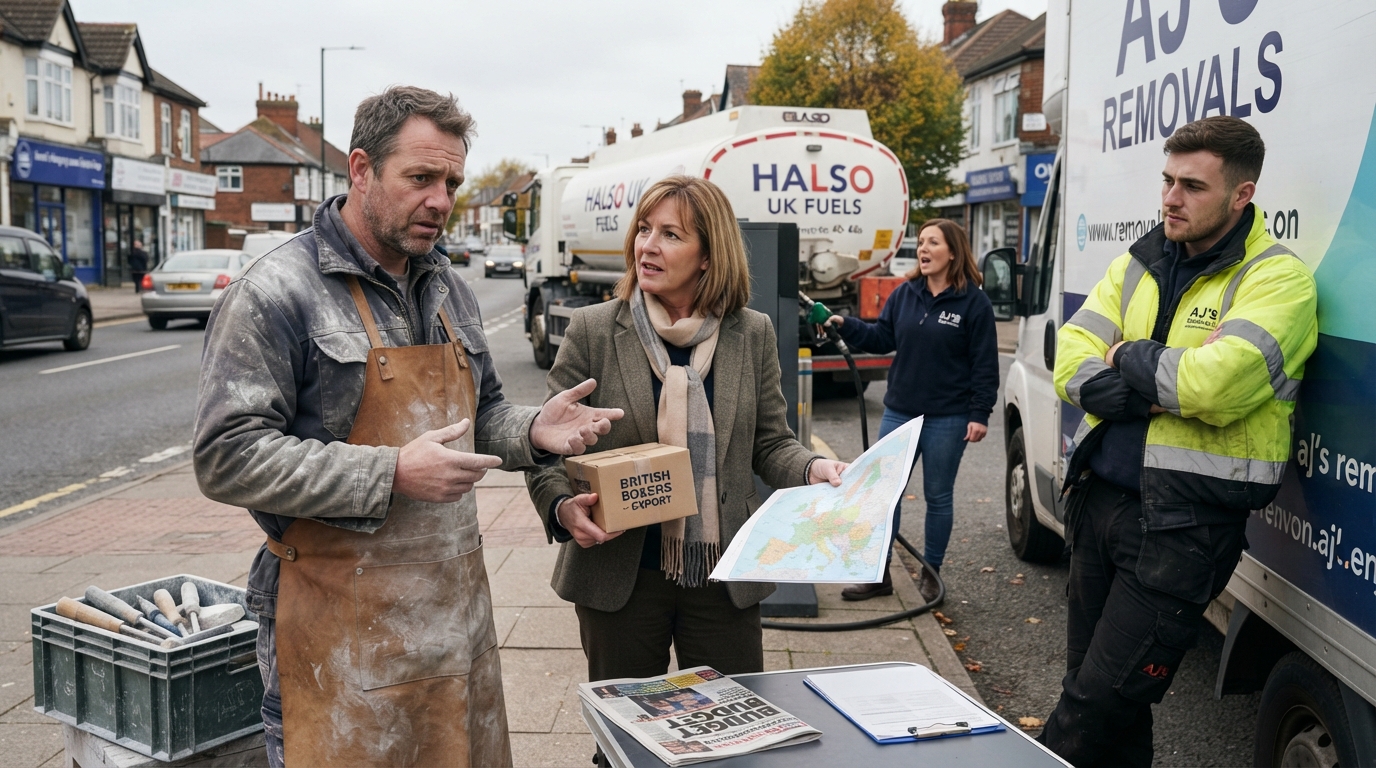
Stonemason Tom Adams wants the Chancellor to ease the strain on employers
As Chancellor John Healey gets ready to unveil his first Budget next week, small business owners say rising costs are making it tougher to expand, invest and hire staff.
From manufacturers and fuel suppliers to removal companies and clothing firms, employers say they are under pressure from higher employment costs, fuel prices and trading difficulties, and want the government to do more to support them.
But Labour ministers face hard decisions as they try to back households and businesses while also honouring spending pledges, sticking to fiscal rules and dealing with higher borrowing costs.
The Institute for Fiscal Studies has warned that the government could face a £35bn gap if it wants to keep public spending plans, raise defence spending and remain within current fiscal limits.
**What is the Budget and what could be in it?**
Tom Adams, who runs Stonemasons of Worcester and employs 12 people, said he wanted to grow his business but was finding that increasingly difficult as costs climbed.
"We've been around for 16 years and we've always grown, but the profit margins once everything has gone out have got smaller, mainly because the government is taking a bigger slice than ever," he said.
"With the Budget coming up I really hope they do something about it. The biggest one for us is National Insurance.
"It went from 13.8% to 15%, then they reduced the threshold from £9,100 to £5,000, so we got hit twice.
"Taxation is crippling businesses. It's getting hard to have money left in the pot to reinvest."
British Boxers chief executive Deb Price wants closer trading links with Europe
Ministers have said policies such as higher employer National Insurance contributions are needed to help pay for public services, while rises in the minimum wage are meant to improve workers' pay.
The government has also highlighted support through changes to business rates and efforts to cut regulation.
Last week, Healey set out plans to reduce what he called "form-filling and pointless paperwork", with ministers saying the changes could save businesses as much as £800m.
For some companies, though, taxes are not the only issue.
Deb Price, chief executive of British Boxers in Leek, said trading with European customers was still more complicated than it used to be.
"Andy Burnham's been talking about having closer ties with Europe," she said.
"I know it won't be popular for everyone, but for businesses it makes things so much easier.
"We do trade now with Europe but it's so complicated compared to before. It's the thing we're finding really difficult."
Fuel supplier Emma Osborn says recent months have been challenging for customers
Concerns about costs were also raised by Emma Osborn, who runs Halso UK Fuels in Lichfield.
She said customers in a wide range of sectors were becoming more careful about spending.
"The last six months have been really challenging," she said.
"We deal with farming, commercial, haulage businesses and domestic customers. Everyone is struggling.
"On the domestic side a lot of people are more hesitant about buying fuel. They're waiting for the prices to drop and calling regularly to see if it's gone down.
"We've had customers crying on the phone."
She said she would welcome action on fuel costs, arguing that both businesses and households needed more support.
Joe Phillips says small businesses need support to keep growing
Fuel duty has been frozen since 2022 and the government extended a temporary 5p cut earlier this year, but there is speculation about whether the freeze will continue beyond the end of 2026.
For businesses that depend heavily on transport, fuel remains one of their biggest costs.
Joe Phillips, who runs Worcester-based AJ's Removals and operates across the UK, said diesel prices were still affecting the company's finances.
"We've been as far north as Fort William and Inverness, and down to Land's End," he said.
"We can't switch to electric vehicles, so we're basically stuck with diesel.
"We could do with some help from the government. They need to look at small businesses and think, 'What could we do to make sure these businesses keep going?'"
A Treasury spokesperson said the government was "on the side of business".
They pointed to a 20% reduction in business rates for pubs, social clubs and live music venues, plans to cap corporation tax and measures aimed at cutting bureaucracy.
"As has always been the case, decisions on tax are a matter for the chancellor to set out at fiscal events, rather than routinely commenting on rumour, speculation or proposals," the spokesperson said.