

What is subordination?
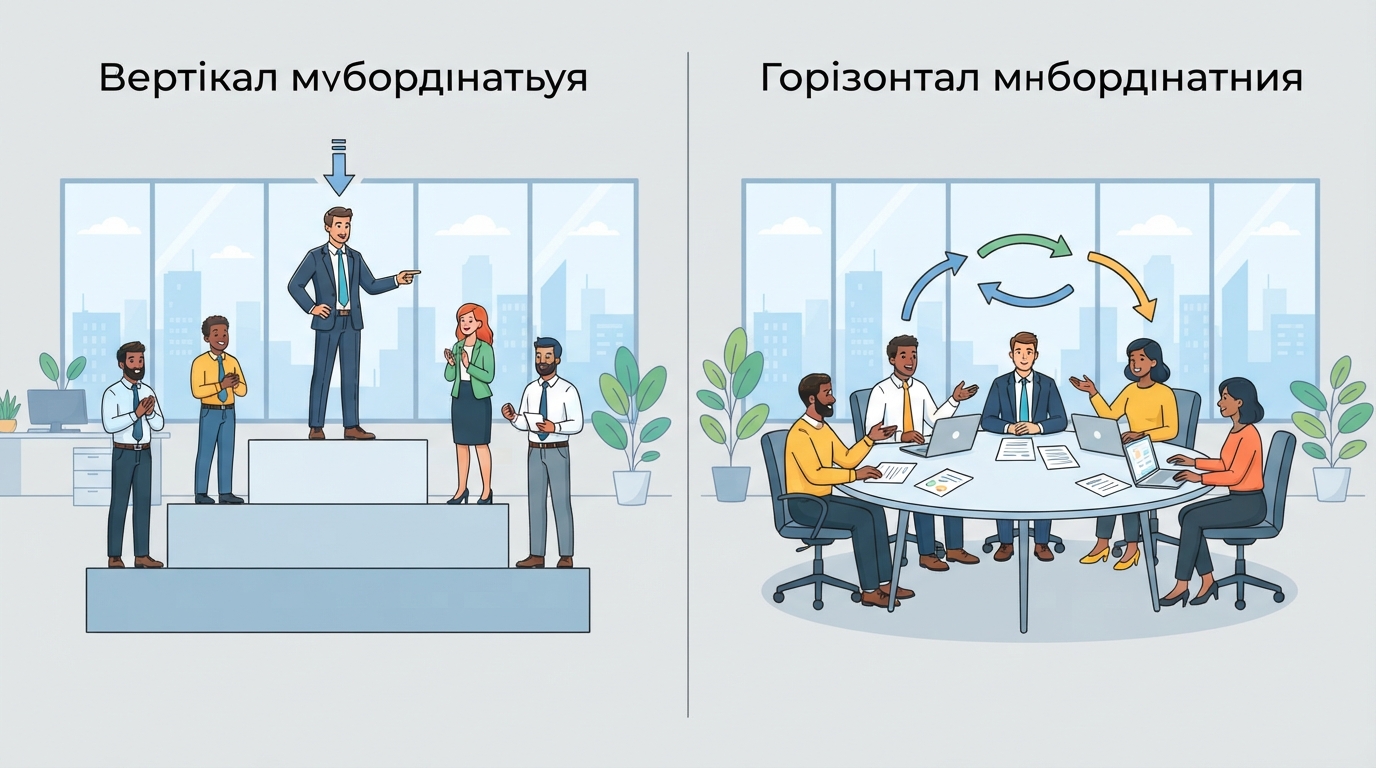
What is subordination?
Subordination is a system of relations based on the obedience of lower-ranking employees to higher-ranking individuals. This term originates from the Latin word "subordinatio," which means "submission." Simply put, subordination is a set of rules defining who reports to whom, whose instructions are carried out, who is accountable to whom, and in what order decisions are made.
Subordination is not only found in the workplace. It also applies to other areas where a hierarchy exists. For example, subordination rules can exist in families, educational institutions, military, and medical organizations.
The proper establishment of subordination in a team serves to ensure the efficient operation of the company and improve its results. Leaders are primarily responsible for shaping subordination.
When an employee joins a company, they enter an already established system. Their task is to perform their job. The task of leaders, on the other hand, consists of organizing the work process qualitatively, creating comfortable conditions for employees, achieving set goals, and ensuring expected results.
**Vertical subordination**
This is a model based on the traditional "top-down" principle, which implies relations between a leader and a subordinate.
In such a system, employees higher up in the hierarchy can give orders or instructions to those in lower positions. Lower-ranking employees, in turn, must recognize the authority of higher-ranking employees, while at the same time providing timely feedback and showing initiative within their competence.
**Horizontal subordination**
This is a model of relations based on equality and mutual respect. In this model, people in different hierarchical structures communicate on an equal basis, without placing special emphasis on age, education, position, or other personal and professional characteristics.
International research on business ethics and subordination shows that management models in modern companies are changing significantly. Rigid and command-based hierarchy is being replaced by a flexible management system based on mutual respect, clear communication rules, and a culture of responsibility.
In this regard, it is noted that companies adhering to high ethical standards are also more successful commercially. According to 2026 data from the Ethisphere Institute, the index of the world's most ethical companies (Ethics Premium) recorded a result 8.2 percentage points higher than the market average over the last five years.
"Today's successful companies are increasingly abandoning hierarchical inequality. That is, relations based on sharp contrasts such as 'I am at the top, you are at the bottom,' 'I am smart, you are not smart,' 'I am the boss, you are the subordinate' are receding. Each employee performs their task within their position. In such conditions, the main motivation is not the difference between positions, but interest in work, professional growth, quality performance of tasks, achievement of common goals, good results, and financial growth," says the specialist.
**Why is subordination needed?**
Adherence to subordination helps improve organizational management, shape a healthy working environment, and establish effective communication necessary for implementing the company's growth and development strategy.
Regardless of whether the management style in the company is democratic or authoritarian, subordination rules must be followed by both leaders and employees. The absence of subordination can cause serious problems for the organization and business. Therefore, it is important to adhere to business etiquette, personal boundaries, and corporate ethics rules from the very initial stages of the company's activity.
Subordination at work is necessary for both the leader and the employee. Adherence to business etiquette and personal boundaries motivates employees and regulates the work process.
**Main signs of professional subordination:**
- **Addressing as "You" (formal) and keeping distance.** Regardless of differences in age, education, position, or work experience, it is preferable to address each other formally in professional relations, unless the parties have previously agreed on another form of address.
- **Respecting the person and not attacking their personality.** Excessive familiarity should not be allowed. Discussing personal matters such as marital status, age, or nationality is considered ethically unacceptable. A person can talk about this if they wish, but asking such questions, especially demanding an answer, is not right.
- **Not bypassing the direct supervisor.** Discussing and distributing an employee's tasks secretly from their direct supervisor or colleagues who need to be aware of the process is contrary to subordination.
- **Only constructive criticism.** When evaluating an employee's work, it is necessary to first mention their strong and positive aspects, show what was done well, and then carefully explain the aspects that need correction or completion. Insults, humiliation, or comparison with other employees are not allowed.
- **Respecting the employee's personal time.** This issue must be regulated in accordance with labor legislation. Forcing an employee to work overtime without agreement and additional payment is considered a serious violation of subordination. Not granting the leave provided by law, threatening with dismissal, or preventing the taking of sick leave also fall under this.
**What happens if subordination is violated by the leader?**
Improper distribution of tasks and failure to clearly define instructions cause confusion among employees and hinder targeted work. Assigning responsibility for the same task to several employees at the same time also creates chaos in management.
Regularly assigning tasks to an employee that do not belong to their position is also a sign of poor management. If a leader has given an instruction, its execution must be controlled by themselves or another leader with appropriate authority. Delegating control to another unauthorized person can violate subordination.
Assigning several "most important" and "urgent" tasks to one employee at the same time also disrupts the work process. As a result of such situations, the leader may lose their authority and trust among the team.
**What happens if subordination is violated by the employee?**
- **Loss of management's trust.** Even if an employee's idea is very good, presenting it in an incorrect form — through overly free behavior, bypassing the established chain of command, or publicly opposing the leader — can leave a negative impression. As a result, the leader will reduce trusting such an employee with strategic information or responsible projects.
- **Damage to reputation.** Colleagues may begin to be cautious of an employee who regularly violates general team rules. Less informal information will be shared with them, and their involvement in team processes may decrease.
- **Slowing down of career growth.** In many companies, promotion depends not only on professional knowledge and skills, but also on skills such as communication, teamwork, and adherence to corporate culture. An employee who cannot properly build vertical working relationships may have fewer opportunities for promotion.
**Methods of regulating adherence to subordination**
Adherence to subordination rules in the workplace is usually regulated through the following documents: labor contract; job description; Labor Code; collective agreement; charter of the organization; internal labor regulations.
According to Articles 301 and 312 of the Labor Code of Uzbekistan, if an employee culpably fails to perform or improperly performs their labor duties, disciplinary action may be applied to them. In particular, they may be given a warning, a reprimand, or their labor contract may be terminated in cases provided by law.
In this regard, subordination should not be confused with absolute obedience or authoritarian management. In the work process, it is considered normal for an employee to express a justified and constructive objection.
For example, an employee may express their opinion by saying: "Considering that approval processes take a long time, there is a risk of missing the set deadline. I propose to review the volume of work or postpone some stages."
Such an approach is considered a sign of professional responsibility. Because the employee is not criticizing the leader's personality, is not trying to deliberately fail to perform the task, but is pointing out the existing risk and proposing a solution.
**Subordination in the family**
When subordination is mentioned, professional relations are often understood. However, a certain hierarchy can also exist in daily life, including in the family.
According to psychologist Kristina Radina, in the family, children treat their parents, and younger ones treat their elders with respect. In some families, pets are also seen as members requiring care and adherence to certain rules.
At the same time, family hierarchy should never justify violence. Family members who are older or higher in status must also treat others with respect. Any physical or psychological violence is unacceptable.
Signs of observing subordination in the family: treating parents and older family members with respect; refraining from shouting and harsh tones; not using physical force; maintaining politeness and tact; respecting each person's personal boundaries.
**Subordination in the army**
Strict adherence to subordination rules is mandatory in the armed forces. This is one of the strictest forms of subordination. If in business a violation of subordination can lead to loss of work or income, in the army its price is measured by human lives and the combat capability of the unit.
Here, subordination is reinforced not just by rules of etiquette, but by military regulations and has legal force. In Uzbekistan, for example, these relations are regulated by the Internal Service Regulations and the Disciplinary Regulations.
**Subordination in medicine**
In the healthcare system, subordination is one of the important foundations of relations between senior, middle, and junior medical staff.
For example, it is considered correct for a nurse's aide to resolve service-related issues first with a nurse, and a nurse with a head nurse. If junior medical staff constantly address the chief physician directly on all matters, this can lead to chaos and difficulties in the work process.
Adherence to medical etiquette, which is part of subordination in medicine, is also important. It regulates relations between team members, as well as relations of medical staff with patients and their relatives.
For example, treating a patient condescendingly, speaking in an overly free or impolite manner is unacceptable. It is also unacceptable to discuss other patients' diagnoses or doctors' mistakes in the presence of strangers.