

What is happening with US interest rates?
The Federal Reserve's interest rate decisions affect everything from mortgages to car loans
What is happening with US interest rates?
The US Federal Reserve has kept interest rates unchanged at 3.75% - 4%.
The move comes within a week of the midterm elections and after the central bank increased interest rates for the first time in three years at its September meeting.
An interest rate shows people and businesses how much it costs to borrow money — for example, through credit cards, mortgages, or business loans — and also what return they receive for keeping money in savings.
The Fed affects interest rates in the US through its target range for the federal funds rate, the rate commercial banks use for overnight borrowing.
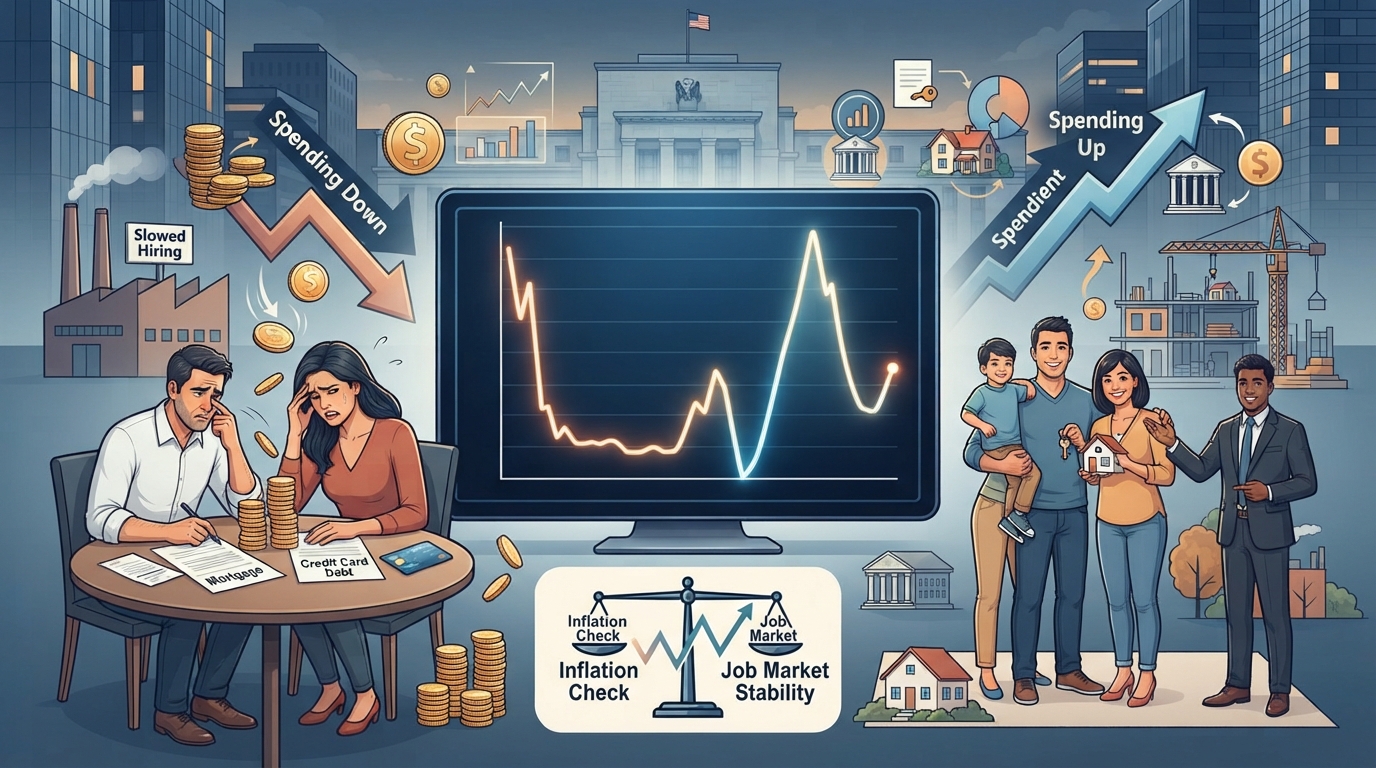
The Fed uses changes in interest rates to try to keep inflation — the pace at which prices change — at 2% a year and to maintain stability in the job market.
When inflation is too high, the Fed usually raises interest rates.
That generally leads banks and other lenders to charge more, which then influences spending and saving choices.
For instance, someone refinancing a mortgage or buying a home for the first time may face higher mortgage rates. It can also mean higher rates on credit cards or car loans. But it also means better returns on savings.
This pushes people and businesses to save more, spend less, and invest less. It also encourages companies to hire fewer people or slow wage increases.
All of this usually lowers demand and eases inflation.
When inflation is low, or if the Fed thinks the economy needs support, it cuts rates.
The idea is that this has the opposite effect, with banks lowering rates and people and businesses spending more and saving less.
US interest rates have historically fluctuated significantly.
The last time Fed rates were as high as they have been recently was in the run-up to and early stage of the 2008 global financial crisis.
The Fed then reduced rates to historic lows to encourage spending and job creation during the economic downturn and kept them there for several years.
Rates rose again before the pandemic, then fell to as low as 0%-0.25% during the pandemic. They later climbed to highs of 5.25%-5% from the middle of 2023 to August 2024 as inflation surged.
They had been declining steadily since then, until rates were raised last month.