

What do you need to know to provide first aid for a bee sting?
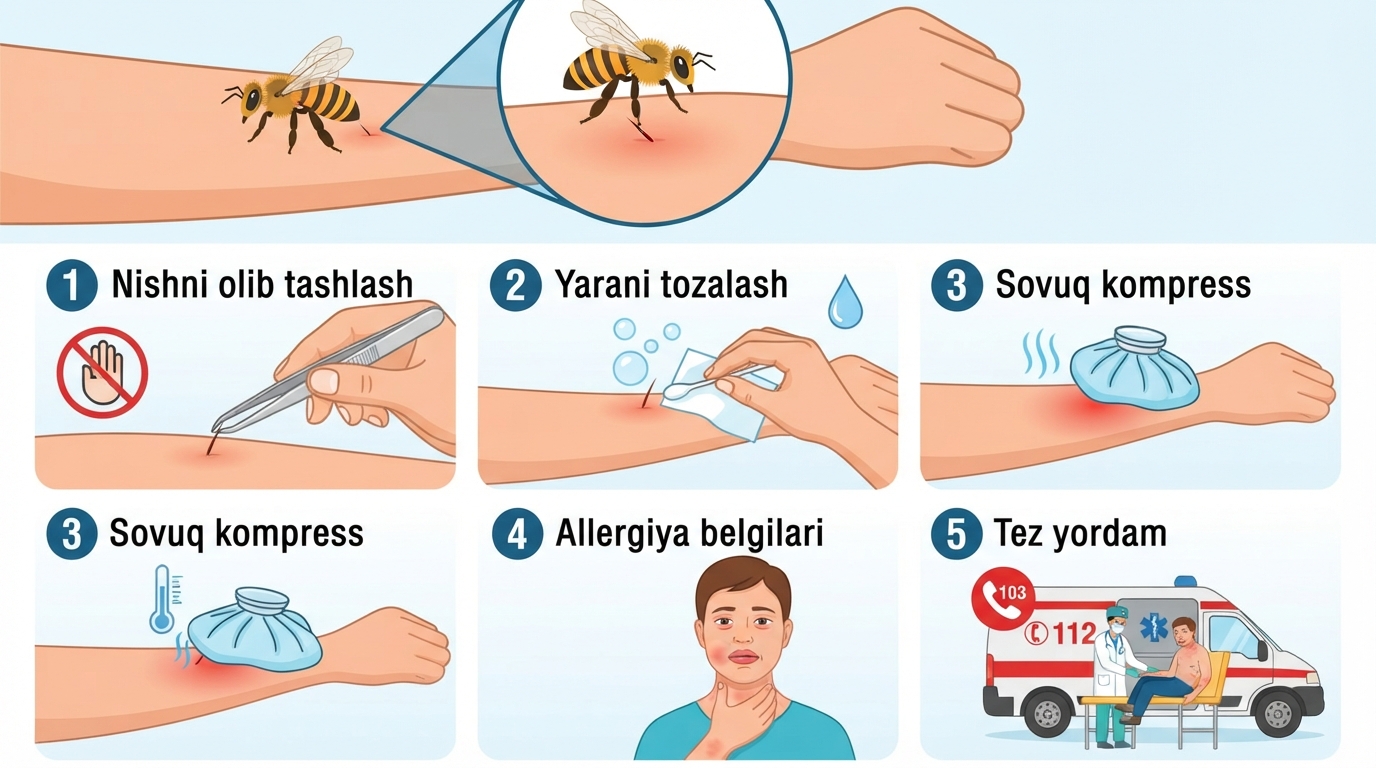
Important information on first aid for bee stings
The likelihood of bee stings increases in the spring season. Bees usually do not attack people, but in some cases, stings may occur. Below is detailed information on what to do if you are stung by a bee and what to look for to identify an allergic reaction.
The importance of bees and the causes of stings
Bees are one of the most beneficial insects in nature. They play an important role in pollinating plants, increasing yields, and producing honey, wax, and other valuable products. Even bee venom has healing properties. However, in the event of an accidental sting, you may not have time to think about these benefits.
Bees are usually not aggressive. They can sting in two cases:
1. **Attractive odors:** If a person has sprayed a perfume with a sharp floral scent, this smell can attract bees.
2. **Protection:** If a person comes too close to a bee hive and the bees feel threatened, or if a bee accidentally gets into the mouth along with berries. A sting in the oral cavity is especially dangerous, as it can cause swelling and difficulty breathing.
Characteristics of a bee sting
Bees sting only once, because their stinger sticks to the skin and the insect cannot withdraw it. Bee venom contains substances that cause allergic reactions, such as histamine. The appearance of swelling is an example of this. The venom also contains proteins, enzymes, acidic and alkaline components, and other substances that attract bees. Therefore, if you are stung near a hive, it is recommended to leave the area immediately so that other bees do not come.
After a bee sting
When a bee sting is first felt, there is a sharp pain. The venom penetrates the skin and the sting remains in the skin, the venom leaks out for a while. Then the bite site turns red, swells, and a small white dot appears in the center. In most cases, this is the end of the process. However, an allergic reaction occurs in about 0.5-2% of people.
Signs of an allergic reaction:
* The swelling increases without decreasing.
* The bite site itches, a rash appears, and the itching spreads throughout the body.
* Difficulty breathing.
* Nausea, even vomiting.
* Dizziness.
* Swelling of the lips, face, and throat.
* In severe cases, fainting.
In such cases, it is necessary to immediately call an ambulance (by calling 03, 112, 103).
Anaphylactic shock is a very dangerous reaction
Anaphylactic shock is a rare but extremely dangerous form of an allergic reaction. Its first signs are associated with an overreaction of the body:
* Swelling occurs very quickly and spreads to unstung tissues.
* The pain is suddenly severe and does not go away.
* The whole body itches.
* The pressure drops sharply.
* Headache.
In these cases, emergency medical care is necessary. After a drop in pressure, laryngeal edema, respiratory spasms, and hypoxia may begin. Such conditions can develop within a few hours, even minutes, so the sooner the patient receives medical care, the higher the chance of survival. 1-2 out of 10 people die from anaphylactic shock.
First aid for a bee sting
First aid for a bee sting is provided according to the same algorithm as for other insect bites:
1. **Removing the sting:** Do not touch the sting, pull it out with your fingers, or squeeze it out of the wound. This can crush the venom sac and worsen the situation. Carefully remove the sting with tweezers, a needle, or the edge of a knife. The less damage to the bite, the better.
2. **Wound cleaning:** Wash the wound with clean water and soap. Then apply an antiseptic. Baking soda also relieves itching and neutralizes the acidic components of the poison.
3. **Reduce swelling:** Apply a cold compress. A damp towel, a bag of vegetables from the refrigerator (wrapped in a cloth) will help.
4. **Drink more fluids:** Water helps the body flush out the poison faster.
5. **If you have symptoms of an allergy:** Take antihistamines such as Suprastin, Cetrin, Kestin, Fenistil, Calamine. The first group of drugs (suprastins) can cause drowsiness, but they work faster.
When should you see a doctor?
* In case of a severe allergic reaction, an ambulance must be called.
* If a bee stings in the eye or mouth (for example, if it gets into the mouth along with the fruit).
* Multiple bee stings are also dangerous, because in this case the concentration of poison in the body is high and the likelihood of negative consequences increases.
Protecting yourself from bee stings
It is very easy to protect yourself from bee stings:
* Stay away from gardens and flower beds where there are many bees.
* Do not use strong-smelling perfumes when going to the countryside or forest.
* Carefully inspect fruits and berries before eating them or giving them to a child.
Remember: bees are usually not aggressive, and if you do not touch them, they will not touch you.