

'We're all broke': Would you chase a friend for £5?
What's the smallest amount of money you would ask a friend to pay you back?
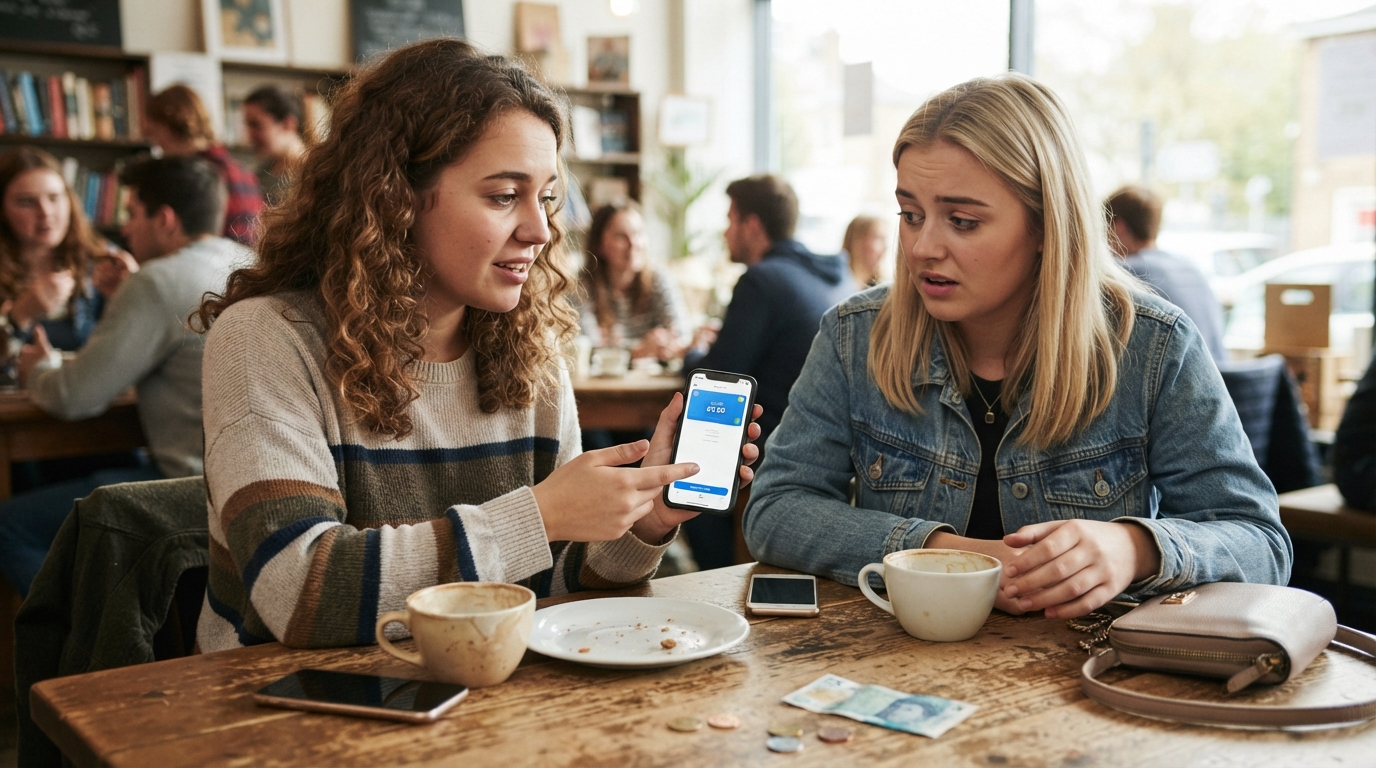
'We're all broke': Would you chase a friend for £5?
You might cover the cost of dinner, pay for a taxi home, or buy a friend’s coffee with the understanding that they’ll reimburse you later, only for days to pass and the money never to show up.
So when do you bring it up again, and how little is too little to pursue?
For some people, $5 (£3.70) is enough to warrant a reminder, while for others, asking a friend to repay anything below $20 (£15) feels more uncomfortable than just absorbing the loss.
Henry Payne says he has "sent a request for $8.50, but I wouldn't go lower than $8".
The 21-year-old New Yorker says he would follow up once, but "two requests is insane".
"I would rather swallow the $8.50 than send another request."
He does admit that he is sometimes on the other side of the exchange and can be forgetful himself.
"For everyone that I haven't sent back money to, I just forgot, feel free to double request me."
Kaz Jahanbini, 19, says having to ask to be repaid in the first place can be irritating.
"If someone bought me something, I'm immediately paying them back. So then I'm thinking for them, what's the delay?"
His guideline for handling friendship and money is to "keep your wallet close but your friends closer".
His friend Nouria agrees, saying that as a student "every extra dollar counts", but she would generally only ask a friend for money back if it was more than $10.
Betsie believes there is a cultural difference between Brits and Americans
For British student Betsie Brooke-Taylor, 19, the point at which she would ask for money back is a fiver, because, as she says, "every little helps".
She thinks there is a cultural difference between the UK and the US and says that even though "we are all broke, I think Americans are a bit more generous".
Betsie also believes technology makes settling small debts easier in the US, where payment apps like Venmo are widely used.
Venmo allows users to send and request money through an app, including the option to send a reminder if someone has not paid.
"In the UK you have to ask for the account number and sort code, and not everyone has that on hand," she says.
For 19-year-old Annika Violet, the amount she would ask back from a friend depends on whether she is regularly paying for them.
"I prefer to do something where I get them this time and they get me next time but if I'm consistently paying and you're not, then I will request the $5."
Unlike many people, Annika does not find money conversations awkward.
"I am so confrontational, I do not find it awkward. If you're my friend, you would pay me back."
Annika's friend Hanako Stepper says she finds it awkward to ask for money but wishes she did not.
"I've never chased anyone - I'm just sad if I don't get paid back."
Annika's advice for people who struggle to ask is to "be brave and bold".
"If they are going to give you flak about it, maybe it's a sign they are not a good friend."
Money expert Laura Pomfret says many people feel embarrassed about asking to be repaid, and Britons in particular can find it awkward.
"We're often very British about asking for money back," she says, adding that people may worry about being seen as a "cheapskate".
Her top tips for asking friends to pay up are:
She adds that you should not persuade yourself that a debt is too small to ask for, because "if you want the money paid back then the amount shouldn't matter".
And if the same friend repeatedly does not pay, Pomfret suggests remembering that the next time you are about to pay for them and thinking twice.
Several people the BBC spoke to said the amount itself mattered less when someone repeatedly failed to pay.
New York student Ella Feuille, 21, says $15 is roughly the point at which she would consider asking for money.
If a substantial amount were owed, Ella says she would ask about three times before giving up, but would not necessarily forget about it.
"I have friends who I know now it has to go on their card because they're not going to pay me back."
Her friend Katrina Dimingot agrees and says she much prefers a system where "we don't pay each other back, we just take it in turns to get things for each other".