

"Violence is a question of power and control." Irina Matvienko on how to recognize violence.
Victims of violence are often accused of remaining silent. Isolation, financial and digital control, threats, and manipulation can deprive a person of the ability to resist. This was stated by Irina Matvienko, founder of the Nemolchi.uz project, at a lecture at Human House. Gazeta is publishing a transcript of the talk.
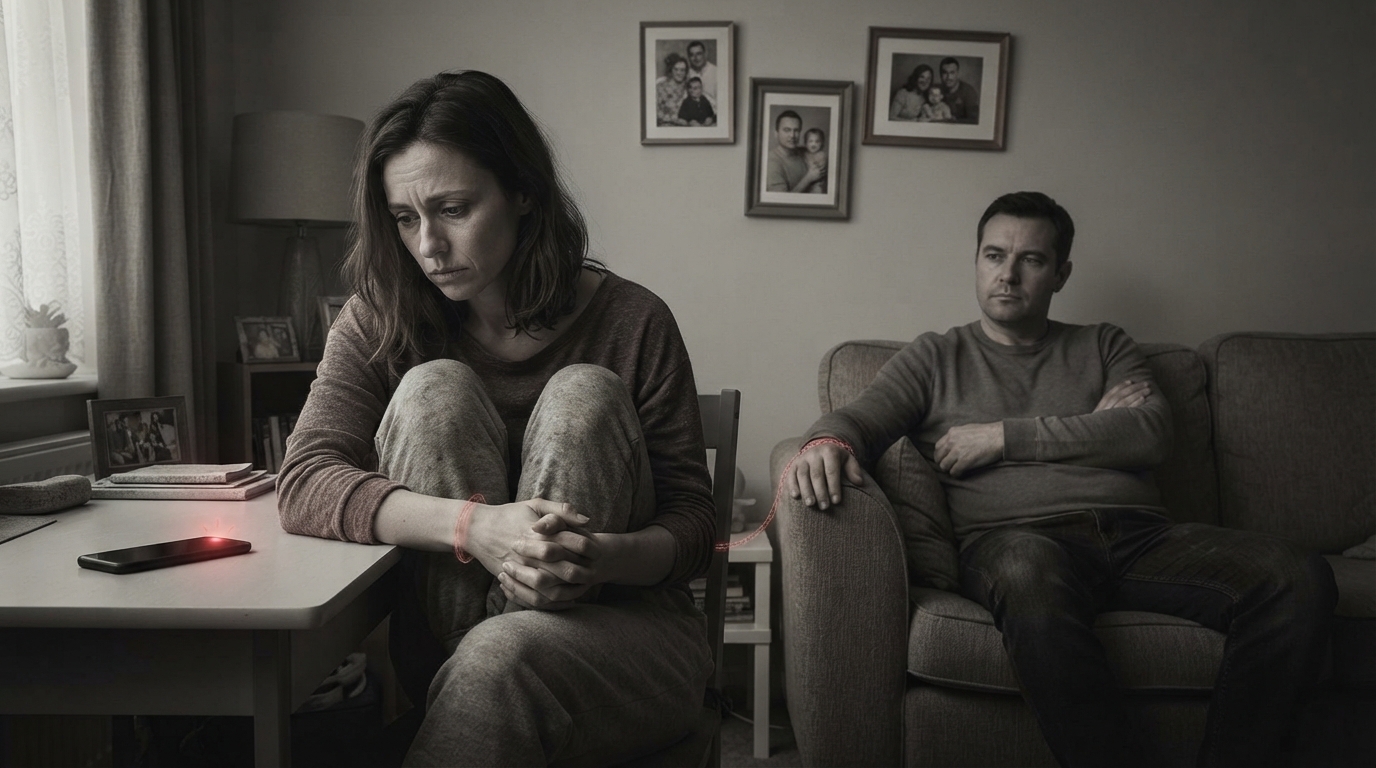
"Violence is a question of power and control." Irina Matvienko on how to recognize violence
Irina Matvienko, founder of the Nemolchi.uz project dedicated to combating gender-based violence, gave a lecture at the Human House gallery. She discussed various forms of violence, both overt and covert, as well as ways to recognize them and access to help. Gazeta presents the main points of her speech.
People often associate violence solely with physical manifestations, such as bruises or beatings. It's assumed that if there are blows, it's violence. However, physical violence is the culmination. It is preceded by warning signs in the form of psychological and financial pressure, which can last for months or even years. Sometimes these forms of violence exist without physical violence, but this does not diminish the harm inflicted on the victim. Nevertheless, they are rarely called "violence" in the moment. Fortunately, these types of violence have become more widely recognized recently.
**The abuser's goal is to psychologically suppress.**
When a woman who realizes she needs to "escape this situation" seeks help, she is often advised to file a complaint. The usual response is, "No, I'm afraid" or "He'll kill me."
In one case, an adult girl reported being abused by her father. He shaved her head and beat her with a phone charger cord, leaving long red marks on her body. Even in this situation, the girl did not report the incident to law enforcement, panicking over the possibility of retaliation.
We assumed her father was a large and strong man, but his photograph showed him to be quite slight. Her father so completely suppressed her psychological will and kept her in fear of physical punishment that she made no attempt to resist.
Most abusers, when a complaint is filed against them, begin to repent, "shed crocodile tears," remember their families, ask the court for a lighter sentence, and promise to "never do it again." Women believe and forgive, but in most cases, the violence continues. Sometimes, going public can even escalate the conflict and abuse.
That story ended happily. The woman ran away from her family, moved to another country, found work, and settled down.
Consider a situation where a husband asks his wife to lose weight "for her health." This phrase alone doesn't definitively indicate abuse. The context sets key points: it makes a big difference if the phrase is said two months after giving birth or when the woman has been overweight for a long time and has related problems. However, it's important to remember that abusers often make such statements not out of concern for their health, but to **instill a sense of insecurity, self-dissatisfaction, and increase their control over the victim.**
Besides the context, the spouse's actions accompanying such a request are important. Does he accompany her to doctor appointments, does he buy the appropriate groceries, does he try to eliminate sources of stress, does he prepare special meals, does he give her a gym membership? Or does he throw out something like, "Just eat less and walk around the block 20,000 steps a day"? Any doctor will tell you that this "formula" isn't universal, and the reasons for weight fluctuations can be very different.
Manipulation with concern can manifest itself in small but constant words that "drip" every day: "Shorts don't suit you," "Try not to laugh too loudly, you look vulgar," "I care about your health, so you'll only eat celery."
It seems he's not forcing or forbidding, but the woman feels pressured and senses that something is wrong.
Concern can be conveyed by phrases like, "You know, I love you so much, but I don't like that you have an open Instagram account. Why don't you close it?"
Some people might not care at all. And then there are those for whom a social media page is a way to keep in touch with friends, learn interesting news, and share their own. This control expands. After a while, the proposal might evolve to: "How about you delete Instagram?" Then the circle narrows to: "Give me your account password, and I'll read your Telegram messages."
A husband may ask his wife to share his geolocation with him. In some situations, this happens by mutual consent. Here, it's important to consider who actually has a say in the family and how independent the other partner's consent really is. Can the wife refuse such an offer without consequences? For example, she might say, "I don't want to share my geolocation with you," and her husband replies, "Okay, whatever you say." Will they continue to live without remembering this situation?
It also happens that a woman in a relationship cannot refuse, even if she doesn't like it. She may say "no," but she knows she'll face consequences, so she prefers to comply with her partner's demands—it's safer for her. This, too, is violence, even if it appears otherwise.
Even if the wife earns as much as her husband, there can be unhealthy financial control in the family. Sometimes, the woman is forced to account for every expense, or even has her credit card confiscated. In this case, the wife receives as much as her husband deems appropriate, and she must "justify" every purchase.
In traditional families, this type of control can be exercised by both the husband and the mother-in-law. This doesn't apply to expensive purchases like the latest phone or a trip to the Maldives, but rather to more mundane requests.
In practice, women most often spend money on children. This can include groceries, stationery, clothing, toys, and personal hygiene items. Every expense must be explained. In some cases, it even gets to the point where the woman begs for money to buy underwear because her old ones are no longer usable. Men, however, are more likely to meet up with friends, go to cafes, or go out of town together. However, they don't have to justify such expenses to anyone.
Isolation begins with prohibitions. For example, not meeting up with friends. We had a subscriber tell us about a guy who intentionally went with his girlfriend to her friend's get-togethers and always caused a scene. Eventually, her friends started getting together without her because they came to have a good time, see each other, and chat, not listen to him yell at them.
That woman was afraid to disobey her partner because he made a scene over every little thing, even at her work, which led to her being fired from several jobs. It got to the point where she was afraid to answer his phone, lest he show up at his new job, cause a scene, and fire her. He also damaged his relationship with her relatives to the point that they blocked her.
When we communicated, she deleted our messages because her phone was being tracked. Now imagine: she's left in complete isolation, frightened, mentally shattered, and lacking self-confidence. In such a situation, it's very difficult to break free from the cycle of violence and seek help.
Why does an abuser isolate? It's so the woman **can't get support from anyone if needed.** Then, if a difficult situation arises, she's trapped.
Gaslighting—when a manipulator makes the victim doubt their memory, sanity, and perception of reality—is, in my opinion, one of the most terrifying things.
The name comes from a 1944 film. In the story, a husband abused his wife, adjusting the gas lamps and rearranging things and furniture. When she pointed this out, he denied it and said, "You imagined it."
A person living in such a situation **sooner or later loses confidence in themselves.** For example, a woman comes to us and says, "I don't understand if this is abuse or not?" And there it is, a list of everything, as if she opened a manual on abuse and copied it.
The woman lives in a situation of violence, but no longer understands it, doesn't trust herself, doesn't trust her feelings or what she sees.
The abuser has achieved his goal of dominating the victim's psyche: an insecure person won't complain, will obediently do everything, and follow the manipulator's orders.
There are situations where partners don't speak to each other for 24 hours after an argument. Or one partner stops talking to the other, and the other is at a loss: what happened, what was done wrong. Women who live with this form of violence say they don't know why their husband was offended, but feel guilty and constantly try to guess what he didn't like. This is extremely stressful. At the same time, they often use the same tactic themselves: remaining silent, so their partner will figure it out.
This situation needs to be considered from the perspective of dependency—who holds power in the relationship? Very often, a woman who is subjected to psychological and financial abuse has only one tool left: to demonstrate that she has been hurt, but she "has no right" to throw tantrums. It's safer for her to express resentment, dissatisfaction, and disagreement through silence, because any other approach will worsen her situation.
In Uzbekistan, legislation takes into account threats to life and health (however, proving them is difficult). Another, most common manipulation is the threat to take the children away in the event of a divorce. This is especially true in families where the woman is economically dependent on her partner.
She often believes that if her husband has money and housing, and she is a housewife, the court will grant the children to him. However, courts often grant custody of the children to the mother, considering the child's best interests, including their psychological well-being. A woman can file for alimony even while married, as well as for her own maintenance while the child is young.
Economic dependence is often linked to questions like, "Where will I go? What will happen to me?" This is especially true if a woman was married at 18, with no education or work experience. The woman fears being left homeless and unable to provide for her children. Moreover, by this time, she often has three or four children, who suddenly become "hers" alone, even though they were created by two.
It's important to remember that violence is a matter of power and control. Commenters sometimes write, "You're talking about women's violence against men, but wives can also nag." Yes, such situations exist, but this doesn't mean the wife has power or control over resources. Often, this is the only way a woman can express dissatisfaction, while she doesn't make key decisions in the family, submitting to her husband's will.
When it comes to mothers-in-law who commit violence against their daughters-in-law, it's important to remember that they are also victims of patriarchy. Researcher Denise Candioti coined the term "patriarchal bargain" for this phenomenon back in 1988.
In a patriarchal hierarchy, a woman is usually deprived of any resources, and if she is a young bride, a kelin, she is the most vulnerable and helpless in this system. Her only chance of achieving any status is to give birth to a son and then control his wife, who will take over the family where she once was.
This doesn't mean the mother-in-law has become an equal member of the family, or that she has the same influence over resource distribution as the father-in-law. It means that she has been given the illusion of power over another woman so that she can avoid making demands for more. All of this supports patriarchal hierarchies, in which men are the default beneficiaries.
Women come to us after experiencing psychological abuse. We ask them, among other things, "What do you want?" All their desires are related to their partner or children, but not to their dreams. They don't have any. This is the result of years of psychological abuse, when a person loses their identity. And it's very difficult to pull someone out of it.
Abusive relationships often follow cycles: **tension - flare-up - reconciliation.**
After the flare-up, relief usually sets in, which can feel like love. Then the nagging resumes, anxiety grows, irritation intensifies, which escalates into yelling, humiliation, threats, and physical violence. And then there's the final phase, consisting of apologies, gifts, and promises that "it won't happen again"—this is called the "honeymoon phase."
In a cycle of abuse, the abuse phase becomes longer over time, and the "honeymoon phase" shortens.
Because the cycle repeats, it's difficult to leave the first time. Women believe he won't do it again, that he'll change, that he promised. They believe in him next time because they see how good he can be. With each passing time, they increasingly doubt themselves, their actions, their intelligence, and their ability to be independent and self-sufficient.
However, at the very beginning of a relationship, red flags may appear, such as jealousy, attempts to isolate them from loved ones, criticism disguised as care, digital control, and outbursts of anger followed by apologies. The situation will escalate over time.
If a woman experiences domestic violence, she can call the **helpline" 1146.** If the victim files a complaint, she can be temporarily placed in a state rehabilitation center with psychologists, lawyers, and social workers. These centers are managed by the National Agency for Social Protection. She can stay there for up to six months.
She can be sent to short-term courses and trained in vocational skills, helped with employment, and helped with the paperwork for alimony payments. The state is indeed trying to provide support to the best of its ability. Those facing the situations described above can seek free psychological and legal assistance from the Nemolchi.uz project.
If you see someone you know experiencing violence, the most important thing is not to judge them. You can show them that you are there for them and will always be there. Women often do nothing, waiting for someone to come and save them. It's important for relatives, friends, and loved ones not to play the role of "rescuer." If they try to take action on behalf of the victims, they must be prepared for the fact that they will have to save them for the rest of their lives.
You can provide them with contact information for various support services and encourage them to contact law enforcement, but don't pressure them or demand immediate solutions. Remember that they have also experienced psychological violence and may be deprived of a foothold. It takes time for them to develop the resources to act independently and take the first step toward resolving the situation.