

Violence breaks out in Ceuta as migrant crisis continues
A group of migrants is accused of throwing stones at a military vehicle, while some locals set fire to their camps on the beach.
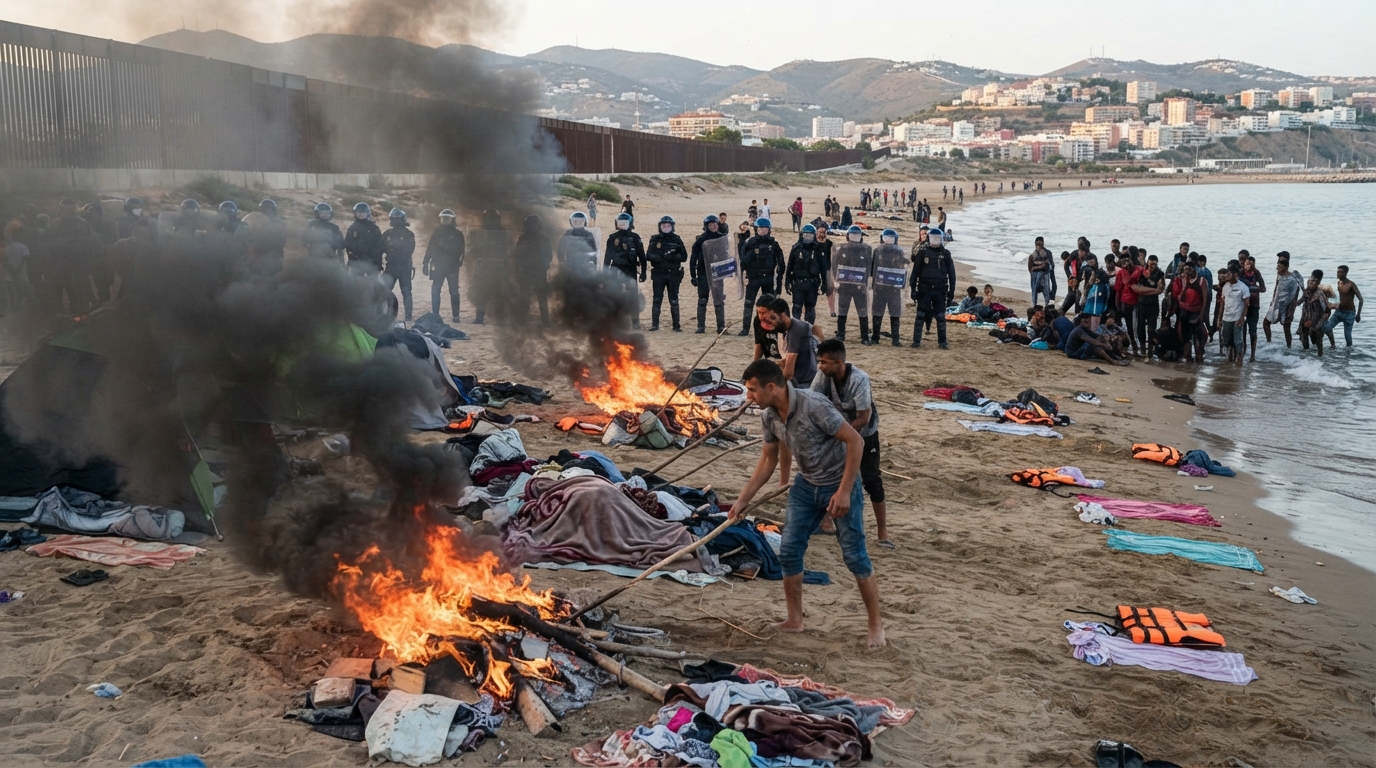
Ceuta, a Spanish exclave in North Africa, is experiencing a surge in violence as tensions escalate between local residents and newly arrived migrants. This unrest follows a mass influx of tens of thousands of migrants into the city a month prior.
Protesters in Ceuta have resorted to setting fire to migrants' belongings on the beach, and clashes have been reported. Opposition parties have criticized the Spanish government for its perceived inability to effectively manage the ongoing crisis. Residents of Ceuta have voiced concerns about their safety and the strain on public services.
On July 30 and 31, at least 72,000 migrants crossed from Morocco into Ceuta, primarily by swimming around a border fence. The mayor of Ceuta reported that at least 100 individuals died during this mass crossing. While the majority of migrants returned to Morocco within hours, several thousand, many of them children, remain in Ceuta, often sleeping on beaches or streets.
Earlier anti-migrant demonstrations were largely peaceful, but recent days have seen an increase in violence. On Thursday, dozens of locals obstructed Red Cross personnel from distributing food and water to migrants. Subsequently, some individuals set fire to migrant camps on Trampolín beach, a primary sleeping area, leading to confrontations with the police.
These incidents occurred hours after the arrest of 12 migrants accused of throwing stones at a military vehicle, breaking its windows, and injuring the four occupants. Reports also emerged that morning of vigilante groups pursuing migrants through the streets. Journalists and film crews have also reported receiving threats.
Juan Jesús Vivas, the conservative mayor of Ceuta, told Antena 3 television that the city, which has been "under pressure," has "the right to normality." He added, "The dignity of Spain is a stake right now in Ceuta."
The socialist-led government of Pedro Sánchez has called for calm and accused Vivas's People's Party (PP) and the far-right Vox of fueling the tensions. José María Figaredo, a Vox member of Congress, is under investigation for a potential hate crime after suggesting, shortly after the migrants' arrival, that they should be "hunted down, one by one."
Interior Minister Fernando Grande-Marlaska stated to a congressional committee, "We have heard during these weeks rhetoric and comments that contribute to the stigmatisation of immigrants and which feed social division at a moment when what we need is responsibility and statesmanship."
Javier Celaya, who represents Ceuta in Congress for the PP, accused the government of treating "the invaders as victims when the real victims are us, the people of Ceuta."
On Friday, all parties in the Ceuta local assembly signed a declaration condemning violence. Earlier in the week, the government centralized management of the situation, overriding the local authority, following criticism of its slow response.
Defence Minister Margarita Robles apologized to those in Ceuta who "may have felt, or who even still feel, abandoned or not sufficiently cared," as the government unveiled plans to overhaul the country's immigration laws.
Much of the recent animosity in the city appears to stem from government plans to relocate migrants into existing public buildings, such as sports centers, to process their legal status efficiently and return those ineligible for asylum to Morocco. Many local residents, including Mayor Vivas, oppose this initiative due to concerns about moving migrants closer to residential areas.
The government is also facing questions regarding the instigators of the mass migrant crossing. Politicians on both the right and far left have accused Morocco of involvement, citing its alleged past use of the border with Spain to exert political pressure. Sánchez and his Socialist Party, however, blame people traffickers, asserting that Rabat is a reliable partner that facilitated the immediate return of most arrivals.
Nonetheless, the crisis has brought the sovereignty of Ceuta and its fellow autonomous city Melilla into focus. Morocco has a longstanding claim to these territories, which it has reiterated in recent weeks. Spain's Foreign Minister José Manuel Albares "roundly rejected" such comments by Morocco, stating to the congressional committee, "I don't speak about, nor have I spoken about, nor are we going to speak about Spain's territorial integrity with Morocco or with anyone else."