

UzNIF dividends, two state-owned company IPOs in 2027, and reforms. Interview with Marius Dan
The National Investment Fund (UzNIF) expects to conduct the first two IPOs of its portfolio companies in 2027. "Uzbektelecom" is among the candidates. Marius Dan of Franklin Templeton spoke to Gazeta about privatization, state-owned enterprise reforms, and the fund's first dividends, which are expected in 2028.
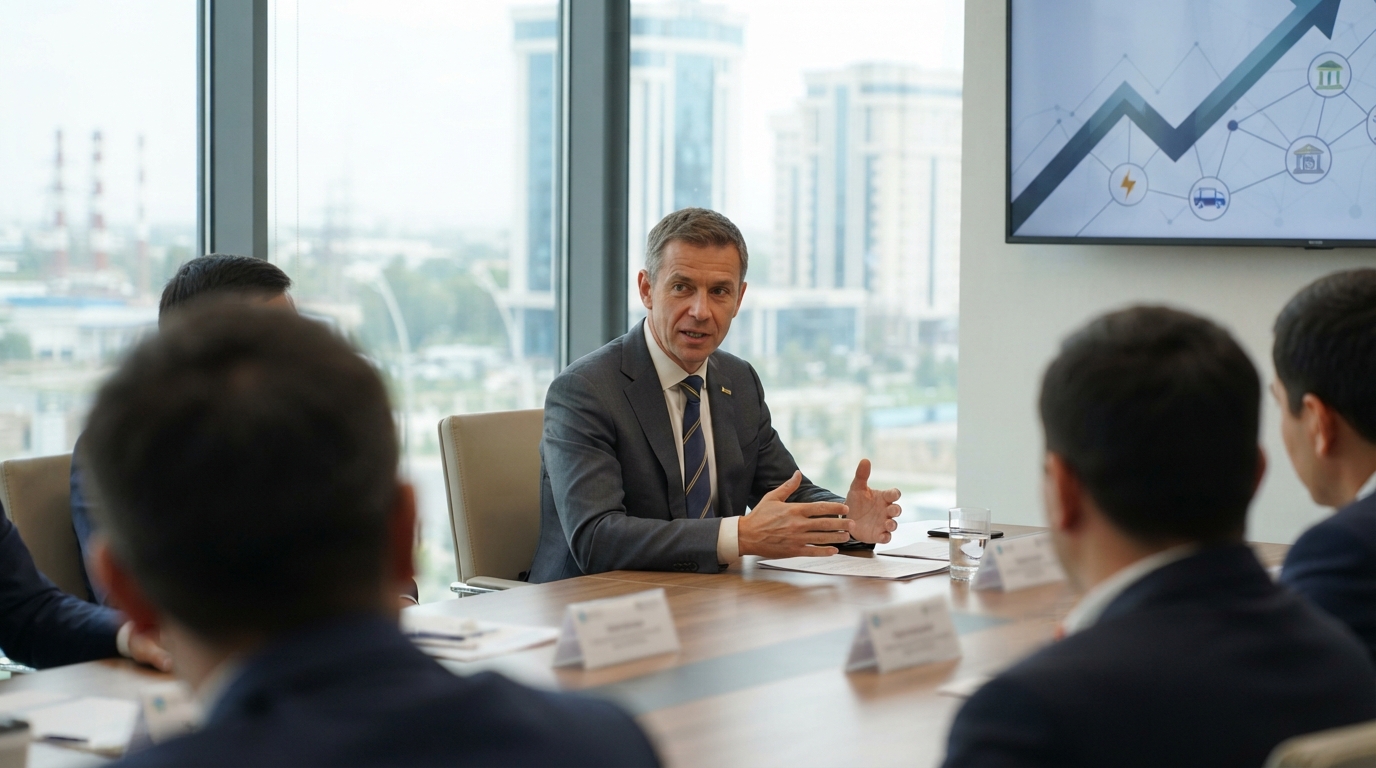
UzNIF Dividends, Two State Company IPOs in 2027, and Reforms. Interview with Marius Dan
In May 2026, the National Investment Fund of Uzbekistan (UzNIF), managed by the international investment company Franklin Templeton, held an IPO on the London and Tashkent stock exchanges. The placement brought almost 700 million dollars to the state. The fund's portfolio includes stakes in 13 state-owned companies and other assets, including Uzbekistan Airways, Uktelecom, SQB, and energy sector enterprises.
In an interview with Gazeta, Marius Dan, Managing Director for Central Asia at Templeton Global Investments, spoke about which companies might be the first to go public, what has changed since the UzNIF IPO, when shareholders will receive dividends, and why the fund supported SQB's decision to forgo dividend payments. We also discussed energy sector reforms, the role of the state in corporate management, and the prospects for further privatization.
— You previously managed state assets in Romania. What are the main differences between that experience and your work in Uzbekistan?
— First of all, in Uzbekistan, we worked jointly with the government to create the fund. We have a very interesting portfolio of 13 assets, and the market has already confirmed its attractiveness during the successful IPO of the National Investment Fund of Uzbekistan in May of this year.
We do indeed have extensive experience working in Romania. Over the past 15 years, we have been engaged in corporate restructuring and transformation, improving corporate governance, and increasing the efficiency of energy assets and oil and gas infrastructure.
The main difference I would highlight in Uzbekistan is the government's drive to carry out reforms in all key sectors of the economy. These reforms will also positively impact our portfolio companies.
We are already seeing the results of the transformations carried out over the last 8–10 years. I think that through their participation in the fund's IPO, investors demonstrated strong confidence that the pace of reform will not only be maintained but will accelerate. This will contribute to the further growth of our assets' value.
— It was the largest transaction in the history of the Tashkent Stock Exchange. It also became an important transaction for the London Stock Exchange. In particular, it was the first equity offering since 2018 to involve only one global coordinator bank.
We did a lot of work to assemble the advisory consortium and build the order book, based on which shares were allocated among investors participating in the IPO.
This is the first equity placement transaction from Uzbekistan on the international capital market.
I would also like to emphasize that UzNIF shares are currently trading at a small premium to net asset value (NAV). Looking at all closed-end public investment funds globally, we believe UzNIF currently commands the highest valuation relative to NAV.
This demonstrates investor expectations regarding the value we can create within UzNIF, as well as their confidence in the continuation of reforms.
As for the portfolio companies, above all, they all gained the opportunity to interact directly with institutional investors during the events we organized.
Company executives saw firsthand how important transparency, investor communication, a solid business strategy, and corporate governance are. All of this will help them conduct their own capital market transactions in the future.
— I think so. In some cases, the results likely even exceeded the expectations of certain investors, especially those who, for one reason or another, did not participate in the initial placement.
This applies both to institutional investors who participated in the placement via the London Stock Exchange and to numerous retail investors in Uzbekistan.
We now have nearly 10,000 shareholders. This places a great responsibility on us: the fund must continue to generate positive returns for investors.
— A significant portion of the NAV growth is linked to the combined operational performance of our portfolio companies.
We are seeing growth in the energy sector, as well as in transport and infrastructure. The banking and insurance sectors, along with the commodity exchange, are demonstrating strong results.
I believe our companies continue to show very good performance, and this has contributed to the positive dynamic of the fund's net asset value since the end of 2025.
— We are working on implementing these initiatives. The transformation measures we proposed are part of Uzbekistan Airways' development strategy.
Naturally, we want to implement as many initiatives as possible prior to the airline's potential IPO in the next few years.
Of course, the global aviation industry has faced rising fuel prices due to geopolitical events. However, Uzbekistan Airways has a major advantage in terms of its cost structure. Therefore, the impact of increased expenses on the company has been less significant than on some regional and global competitors. But we have yet to see the full-year financial results.
We expect that part of the additional fuel costs can be offset by efficiency gains and the implementation of the initiatives we proposed.
We work continuously with the management of Uzbekistan Airways and track the implementation of all these 120-plus initiatives.
However, we are still at a very early stage. There is still a lot of work ahead.
— First of all, the global market environment is currently quite challenging for airlines.
At the same time, Uzbekistan Airways stands out favorably due to its cost structure and business growth driven by increasing demand for air travel.
However, to achieve the maximum valuation for the company and hit our targets, we need to choose the right timing for the IPO.
In addition, we need to allow time for the transformation initiatives to reflect their impact on the airline's financial results.
As for our portfolio of potential IPOs, we are focused on preparing all the transactions envisioned by the presidential decree concerning our portfolio companies.
To date, we expect the first two IPOs of companies from our portfolio to take place in 2027. One of the most promising candidates is Uktelecom.
— We have strengthened corporate governance in both companies.
With government support, independent directors were introduced to the supervisory boards of SQB and Uktelecom.
Both companies have demonstrated revenue growth and improved profitability margins. That is why we consider them very attractive candidates for an IPO.
Transformation efforts are ongoing. We still have a lot to do over the next 12 months, but we are confident that these changes will be of great importance for future capital market transactions.
— Not necessarily.
I mentioned Uktelecom as potentially the first company from our portfolio that could conduct an IPO.
However, in parallel, we will be preparing transactions for several other portfolio companies mentioned in the presidential decree.
The exact timing of these offerings will largely depend on the results of the companies' transformations and market conditions at that time.
— We highly value the level of interaction with the management and supervisory boards of all state-owned companies.
We pay special attention to Temiryo'linfrastruktura — the company created as a result of unbundling the railway holding, which owns the railway infrastructure. This is a very valuable asset.
If you look at global developments — the growth of transport links, the emergence of new and alternative routes — Uzbekistan occupies a special place as part of the Middle Corridor.
Uzbekistan is a landlocked country surrounded by double-landlocked countries. Therefore, we believe our railway infrastructure asset can become a very important regional player.
However, since the company is relatively new and emerged as a result of a corporate split, many steps still need to be taken. In particular, it is important to ensure proper tariff regulation for railway infrastructure.
A new Chief Financial Officer has already been appointed at the company. We expect greater transparency and more effective financial reporting. This will allow you and everyone else to receive more detailed information about the company's financial metrics.
We are confident that it can become a very valuable company and make a significant contribution to the growth of UzNIF's net asset value.
We work closely with company management, supervisory boards, the Ministry of Economy and Finance, and the Presidential Administration to improve operations and enhance the value of each asset.
— First of all, I would highlight Uktelecom — taking into account the company's growth, business dynamics, and the implementation of part of our transformation recommendations.
I believe Uktelecom is very well positioned to significantly improve its financial performance over the next 12 months.
Speaking of energy assets, many of which were historically loss-making, we are actively engaging with the government to change this situation. Specifically, this applies to Regional Electrical Grids, National Electrical Grids of Uzbekistan, Hududgazta'minot, Uzbekhydroenergo, and Thermal Power Plants. These companies represent a significant share of the fund's portfolio.
The commodity exchange also delivered good results.
However, there is still a lot of work ahead before the companies reach the level where we believe they should be.
— Since August, Uzbekistan has continued its work to create a more transparent and predictable regulatory framework for the energy sector, including taking further steps toward implementing RAB (Regulatory Asset Base) regulation.
Right now, the key is the consistent implementation of these mechanisms.
Investors need clear rules that allow for justified and efficient investments to be accounted for, incentivize improvements in supply reliability and operational efficiency, and provide sufficient predictability of conditions for long-term financing.
UzNIF does not determine tariff policy. Our task is to facilitate the development of portfolio companies with effective corporate governance and a sustainable financial position that will be able to invest in modernization while keeping service affordability for consumers and broader public interests in mind.
— According to the established targets, power generation in the country should reach approximately 90 billion kWh in 2026 and exceed 129 billion kWh annually by 2030.
All our energy sector companies will require investments to ensure a reliable power supply for consumers. We will focus on ensuring that capital projects receive the necessary priority and are fully funded.
Investment requirements are substantial, but they vary significantly among the energy companies in UzNIF's portfolio. They need to be assessed based on each enterprise's long-term business plans and investment programs.
We believe private capital can play a larger role in meeting these needs if investors are confident in the regulatory framework, the quality of corporate governance, and the financial sustainability of the companies.
Tariffs are one component of this system, but not the only one. Equally important are improving operational efficiency, reducing grid losses, maintaining a disciplined approach to capital allocation, and securing access to long-term financing.
From UzNIF's perspective, our goal is to help portfolio companies attract investment, modernize infrastructure, and improve supply reliability, while keeping in mind the importance of tariff affordability for consumers.
— The state is the majority shareholder of the fund itself and of all our portfolio companies, with the exception of the commodity exchange. We view this as an opportunity, as our interests are very closely aligned.
The government's goal is also to improve the position, efficiency, and profitability of all our portfolio companies.
Therefore, we work very closely with the Ministry of Economy and Finance and the Presidential Administration to achieve transformation targets.
— We have our portfolio companies independently valued by one of the Big Four accounting firms. This approach has been applied since the fund's inception.
We publish the net asset value (NAV) monthly, so investors have sufficient information and transparency to see any changes in the valuation of each individual company.
That is why listing more portfolio companies on the exchange is so important: it increases the liquidity of assets within the portfolio.
If we look at the six companies scheduled for IPOs over the next three years, this will lead to a substantial change in the fund's structure. We will transition from a portfolio dominated by private companies to one consisting predominantly of publicly traded assets.
— Looking at the numbers, more than 250 people attended our investor events.
That is approximately 50–60% more than in October of last year. At the same time, over 60% of this year's participants were being introduced to Uzbekistan for the first time.
We want investors from around the world to come to Tashkent, see our assets firsthand, observe the changes taking place in the country, and evaluate the results of recent reforms.
It is also important for them to learn directly from government officials what the authorities intend to focus on over the next few years.
I think all the announcements made yesterday were received very positively by investors. They are interested in expanding their presence in Uzbekistan.
To gauge the scale of the investors attending our events, assets under management exceeding 2 trillion dollars were represented in Tashkent.
Yesterday and today, additional one-on-one meetings are taking place between investors and the management of UzNIF and its portfolio companies.
We plan to continue hosting such events and promoting our companies, the fund, and ultimately Uzbekistan itself. Previously, we also held events in London and New York.
Although we have already managed to attract a significant number of institutional investors to the fund's IPO — more than 160 investors participated in the placement — we believe their number can grow substantially.
I think the investors who came to Uzbekistan now have a much better understanding of the investment appeal of UzNIF and its portfolio companies.
— Major transactions may lie ahead that will bring strategic investors into the country.
One must take into account the fundamental processes occurring in the economy. It is growing rapidly, reforms are yielding positive results, and the government has a clear course toward increasing the openness of various economic sectors.
I am confident that international investors are paying close attention to what is happening. I am referring specifically to strategic investors, rather than equity or debt capital market investors.
— As far as I can judge from the privatization deals conducted over the past year and a half since we began managing the fund, the process has been very transparent.
It is completely normal for the state, when selling a strategic stake, to require additional capital investments from the investor for the asset's further development.
We saw similar practices in Romania and other countries around the world. In addition, post-privatization monitoring of investment obligations is conducted.
Usually, in the case of large assets, the government monitors for several years how the buyer's initial commitments are fulfilled in practice.
Therefore, I believe the approach to privatization applied in Uzbekistan aligns well with common international practice.
— Regarding dividend yield, I will not name specific figures just yet, as we have not published a corresponding forecast.
However, regarding timing, I can say that the first dividends will be paid in the first half of 2028.
They will be based on the dividends the fund receives during 2027 based on the financial performance of portfolio companies for 2026.
Thus, the current year is very important, as its results will determine the minimum baseline for the fund's dividend income.
Based on these results, portfolio companies will prepare dividend payment recommendations in the first half of 2027.
The fund will then receive these funds. Based on our audited financial statements for 2027, the supervisory board will be able to prepare a profit distribution recommendation, obtain shareholder approval, and make the payment in the first half of 2028.
For funds of this type, there is usually a time gap of about 18 months between the end of the portfolio companies' financial year and the actual receipt of dividends into the bank accounts of the fund's shareholders.
At the same time, as we emphasized during the IPO, UzNIF's investment appeal is primarily linked to the potential growth of the fund's net asset value.
In the future, investors will pay closer attention to dividend income and dividend yield.
— We always need to strike a balance between the growth opportunities of each portfolio company and dividend payouts.
If a company retains annual profit and reinvests it, we must evaluate what potential returns those investments can generate compared to distributing the funds as dividends.
In the case of SQB, we agreed to make an exception regarding dividends for 2025, which were due to be paid in 2026, to allow the bank to continue growing and reinvesting its profits.
However, we evaluate such decisions individually, on a case-by-case basis.
Overall, we believe a dividend payout ratio of 50% strikes the right balance between the need to reinvest capital and distributing part of the profit to the fund's shareholders.
— I believe the government has already done a very good job of transforming corporate governance in the state-owned companies within the fund's portfolio.
This sent a strong signal of its commitment to attracting foreign institutional investors to the country.
Now, the key is to continue and accelerate reforms, including regulatory changes across various economic sectors. If these reforms are implemented in a timely manner, the value of UzNIF and its portfolio companies will increase significantly.
— The most important indicator is the growth of net asset value (NAV).
— Of course there are. We have internal targets set for each individual company, as well as for the net asset value of the fund as a whole.
However, I cannot comment on them publicly at this stage.