

Uzbekistan’s electricity generation rises 8.4% to 69.6 billion kWh in nine months
Uzbekistan generated 69.6 billion kWh of electricity in January–September 2026, an increase of 8.4% compared with the same period last year. Electricity exports rose by 21.4%, while imports fell by 27.2%.
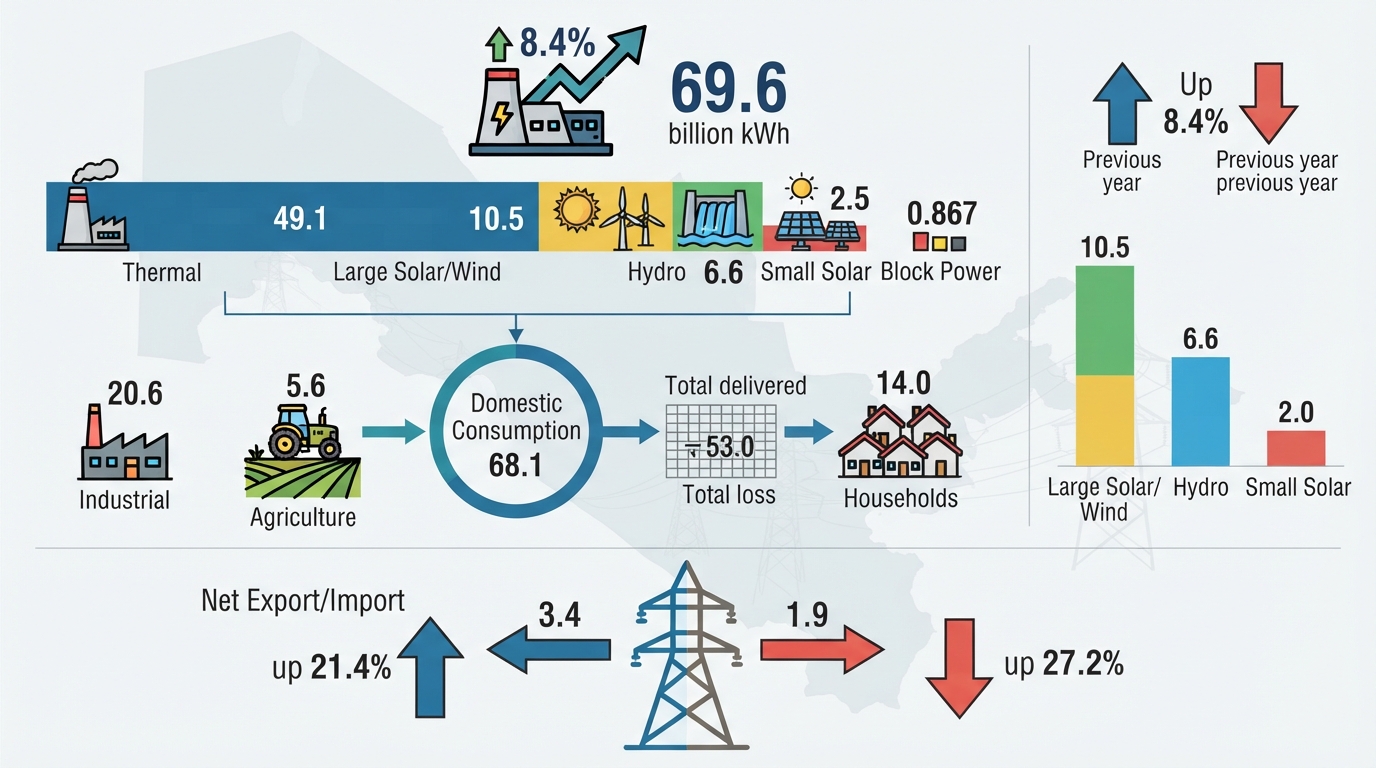
Uzbekistan’s electricity output climbed 8.4% to 69.6 billion kWh over the first nine months of the year.
Obidjon Dilmurodov, chief specialist in the Energy Ministry’s public relations department, presented the data at a briefing.
Generation rose by 5.4 billion kWh compared with the same period a year earlier. Thermal power plants produced 49.1 billion kWh, large solar and wind power plants generated 10.5 billion kWh, hydropower plants supplied 6.6 billion kWh, small solar installations produced 2.5 billion kWh, and block power plants generated 867.1 million kWh.
In the first nine months of 2026, large solar and wind power plants produced 10.5 billion kWh, equal to their total output for all of 2025. Hydropower generation also surpassed its full-year 2025 level, reaching 6.6 billion kWh versus 6.5 billion kWh. Small solar installations generated 2.5 billion kWh, up from 2 billion kWh for the whole of last year.
Domestic electricity consumption totaled 68.1 billion kWh in January–September, an increase of 4.1 billion kWh, or 6.3%, from the same period in 2025.
During the nine months, 53 billion kWh was delivered to consumers. Wholesale consumers received 39 billion kWh, while households consumed 14 billion kWh.
Industrial enterprises used 20.6 billion kWh, agriculture accounted for 5.6 billion kWh, and other wholesale consumers took 12.8 billion kWh.
Uzbekistan exported 3.4 billion kWh of electricity in the period, up 591.6 million kWh, or 21.4%, year on year.
Imports moved in the opposite direction, declining by 720.4 million kWh, or 27.2%, to 1.9 billion kWh.
For 2026, Uzbekistan plans to generate 94.6 billion kWh of electricity, which is 7.7 billion kWh, or 8.8%, more than the previous year. Annual consumption is forecast at 92.2 billion kWh, up 5.7 billion kWh, or 6.6%, from 2025.
For the rest of the year, the ministry’s priorities are to meet electricity generation and supply targets, ensure uninterrupted power to consumers and improve the efficient use of energy resources.