

Uzbekistan's Breakthrough in the Treatment of Orphan Diseases: How Women Are Changing Reality
The International Women's Public Talk "Changing the System, Changing Lives: Women in the World of Rare Diseases" was held in Tashkent. The issue of providing assistance to patients with rare genetic skin diseases in our country was raised in 2018. In 2020, on the initiative of the founder of the "Butterfly Children" Foundation, Alena Yartseva (Kuratova), the "Kapalak Bolalari" organization was created. In 2021, on the basis of the Republican Scientific and Practical Medical Center […]
Uzbekistan's Breakthrough in the Treatment of Orphan Diseases: How Women Are Changing Reality
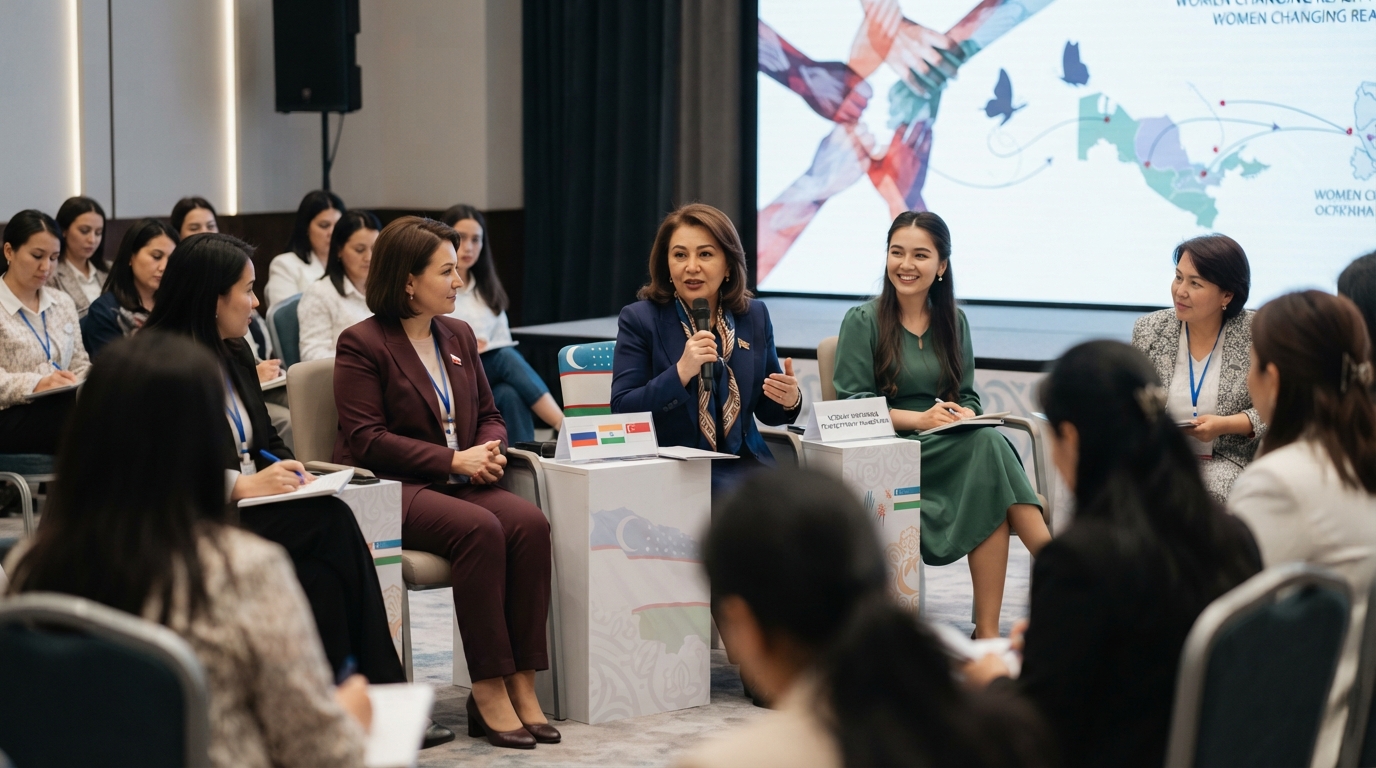
The International Women's Public Talk "Changing the System, Changing Lives: Women in the World of Rare Diseases" took place in Tashkent.
The topic of assisting patients with rare genetic skin diseases in our country was raised in 2018. In 2020, on the initiative of the founder of the "Butterfly Children" Foundation, Alyona Yartseva (Kuratova), the "Kapalak Bolalari" organization was established. In 2021, the first specialized Center for Genetic Dermatoses in Central Asia began operating on the basis of the Republican Scientific and Practical Medical Center of Dermatovenerology and Cosmetology of the Ministry of Health of the Republic of Uzbekistan. The public talk was timed to coincide with the fifth anniversary of its opening.
Female experts from Uzbekistan, Russia, Singapore, India, and Croatia discussed how mothers can become a driving force for long-term social change, as well as how the development of the system of assistance to people with rare diseases affects the opportunities for women and their families.
Each of the speakers personally faced this problem, but did not break. Seeking solutions, they came a long way. Moreover, they united in a desire to help mothers who found themselves in the same situation due to their children's illness, and became drivers of large-scale changes, including those currently taking place in Uzbekistan.
“Today I want to talk about the huge, but often invisible and undervalued contribution that women make to the healthcare system. We are talking primarily about mothers raising children with rare diseases. They differ from many other mothers in that they demonstrate incredible resilience and courage every day. I call them warrior mothers. These women experience not only pain for their children, who have to live with severe illnesses, but also guilt, anxiety about their future, and a huge emotional load. However, they direct their feelings toward creation: they try to do something useful for society, help other families, and contribute to improving the lives of children with rare diseases. For me, this is truly valuable and touching,” shared Ritu Jain, Vice President of DEBRA International and President of DEBRA Singapore.
Using the example of Uzbekistan, one can clearly see the result of the joint work of small patient organizations created by women and large international associations such as DEBRA. Working within a single country, a local organization primarily solves the problems of its community. However, when it joins forces with colleagues from other countries, it becomes obvious how much countries and regions have in common. This makes it possible to exchange experience, learn from each other, and look for joint solutions.
It was this approach that helped our country make a giant leap in addressing the problems of patients with rare skin diseases. But the foundation for the transformations carried out in the shortest possible time was state support.
In 2018, dermatologists began systematically identifying patients with hereditary skin diseases, including congenital epidermolysis bullosa and ichthyosis. One of the priority tasks was the creation of the National Registry of sick children suffering from rare (orphan) and other hereditary-genetic diseases. To date, 434 patients with congenital epidermolysis bullosa are included in the National Registry. In 2019, Presidential Resolution No. PP-4440 was adopted, providing for an annual allocation of 10.5 billion soums for the purchase of medicines and dressing materials for these patients. In November 2025, measures for 2025–2029 were provided, covering ten rare diseases instead of five.
“The expansion of the program has made it possible to increase the number of patients under medical supervision, as well as to significantly increase the amount of funding. In addition to medicines and dressing materials, payment for molecular genetic testing is provided. For certain categories of patients with epidermolysis bullosa, it is planned to provide specialized medical nutrition. Parallel to the development of medical care, the early diagnosis system is being improved. Over the past two years, work has been underway to train medical workers to recognize the symptoms of epidermolysis bullosa and properly route patients. If a family doctor identifies suspicious signs, they must know where to refer the patient for further examination. District dermatologists, in turn, organize follow-up observation and, if necessary, use telemedicine technologies for consultations and diagnosis clarification. The scope of educational work conducted with the population is also expanding. Interaction with mahallas and educational institutions can contribute to raising awareness about hereditary diseases and the importance of genetic counseling,” said Akram Rakhmatov, head of the scientific laboratory for the study of mycoses at the Republican Scientific and Practical Medical Center of Dermatovenerology and Cosmetology of the Ministry of Health of the Republic of Uzbekistan.
The Center for Genetic Dermatoses played an important role in achieving these results. It is designed for 12 patients, and its work is organized taking into account the constant turnover of hospitalized patients. Patients undergo an in-depth examination here, after which further treatment and observation tactics are determined for each individual. Laboratory diagnostics and interaction with specialized experts allow for a comprehensive assessment of the patients' condition. The Center operates as part of the republican specialized center, which ensures continuity between diagnostics, inpatient treatment, and subsequent observation.
“I have been connected with the Center for Genetic Dermatoses and the foundation for many years. Thanks to their support, I was able to open up, believe in myself, and look at life differently. In our family, there are four children and a mother. My younger brother also has epidermolysis bullosa. Today our condition is good, and for this we are grateful to everyone who supports us. Previously, getting the necessary help was very difficult. Until 2008, we were treated in regular dermatovenerological dispensaries and hospitals. Later, we were invited to the Tashkent Medical Institute, where dermatology specialists worked. Doctors from Russia came there, giving us dressing materials and teaching us proper care. After the creation of the 'Kapalak Bolalari' foundation, assistance became systematic: dressing materials are provided free of charge, and support extends to other important areas of life. Until I was eighteen, I thought I suffered from a disease that no one else had, felt lonely, and had no idea what my future might be. But now I know that I am not alone, I have gained confidence and become happier. After the treatment, I felt as if I got a second wind. I started reading books, new interests and aspirations appeared, I wanted to travel, learn more, and move forward. Despite the difficulties, I managed to get a higher education; I graduated from the Irrigation University, Faculty of Cadastre. I have been attending Arabic language courses for two years now. In the future, I want to make my own contribution to the development of science. And I also want to get married, create a strong family, give birth to children, and raise them to be worthy people,” shared Kamola Khaidarlieva, one of the patients of the Center.
Listening to such stories, getting to know people dedicated to their work, and observing how the unification of organizations and specialists for a common goal leads to changes at the state level, you understand: nothing is impossible. Especially when it comes to women who, striving to help their children, search for solutions themselves, become initiators of change, and inspire others to achieve real transformations.