

Uzbekistan to remove ‘religious extremism’ from legislation, ease liability for first offenses
The Senate has approved legislation that replaces the term “religious extremism” with “extremism” and introduces a series of changes to the country’s laws on countering extremist activity.
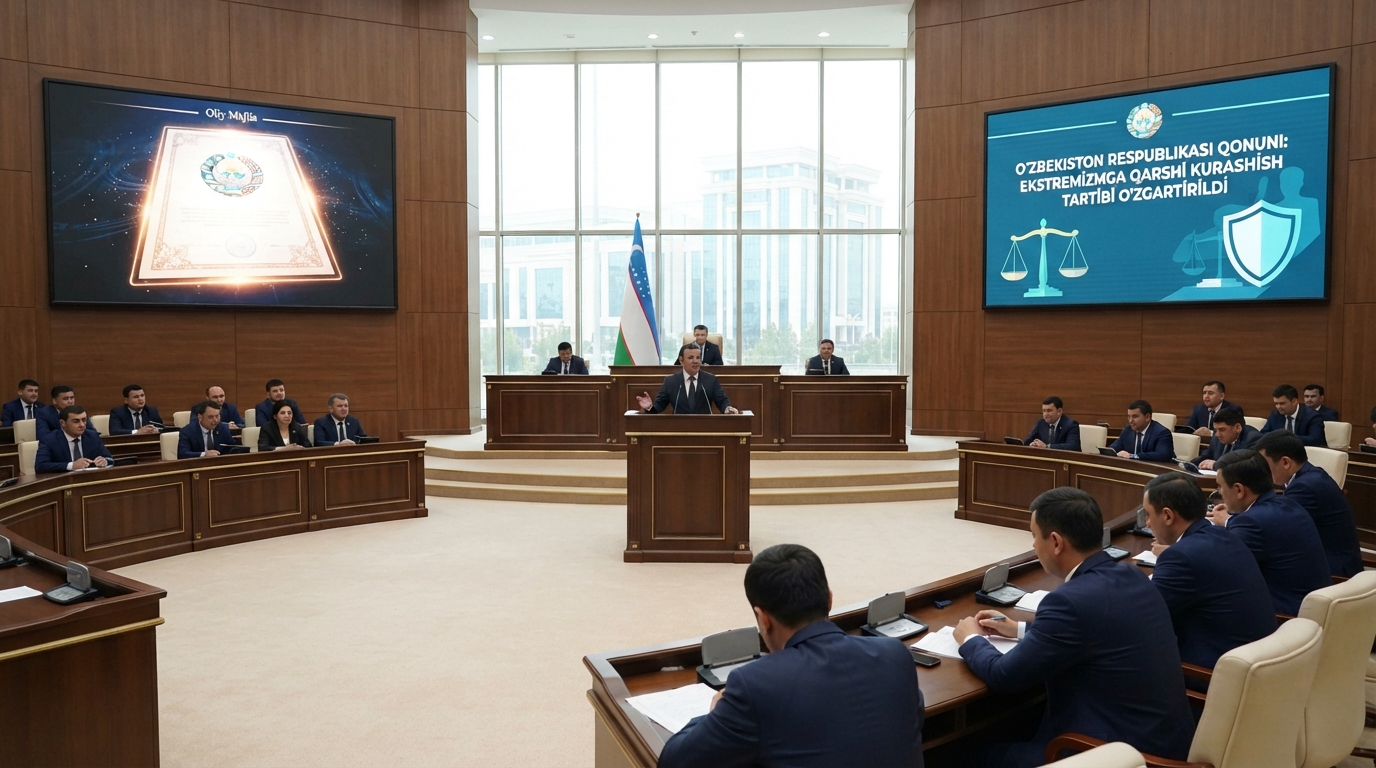
Uzbekistan is set to amend its laws to remove the term "religious extremism" and reduce the severity of penalties for first-time offenses related to extremist materials. This bill, which modifies the Criminal Code, the Code of Administrative Responsibility, and other statutes, received approval during the 18th plenary session of the Oliy Majlis Senate.
Currently, actions such as producing, possessing, or distributing extremist content can lead directly to criminal charges. The new legislation, however, will introduce administrative liability for initial offenses involving the production or possession for distribution of materials promoting extremism, separatism, or fundamentalism. This also applies to the production or possession of symbols or attributes of extremist and terrorist organizations intended for distribution or display. Criminal charges would only be pursued if the same offense is repeated after an administrative penalty has been issued.
Senators stated that this revised approach aims to safeguard the rights of individuals who have strayed, offering them a chance for rehabilitation and reintegration into society. Furthermore, individuals involved in possessing or distributing materials that threaten public safety and order could be exempt from criminal liability if they promptly inform authorities and actively assist in preventing serious consequences, provided their actions do not constitute another crime.
The bill also differentiates penalties for involvement in extremist organizations. Under existing law, establishing, leading, or participating in extremist, separatist, fundamentalist, or other prohibited organizations can all result in a uniform sentence of up to 15 years in prison. The proposed changes would introduce lighter penalties for participation, considered a less severe offense, while imposing stricter sanctions for those who establish or lead such organizations.
A significant change is the replacement of "religious extremism" with the broader term "extremism." The Senate explained that this change seeks to prevent the legal association of extremism with any specific religion and to establish a consistent legal framework. The bill also provides a more precise definition of "extremism," which has previously been subject to varied interpretations. Instead of vague wording, the concept will now be defined through eight specific types of conduct, which senators believe will prevent subjective and overly broad interpretations in law enforcement.
New mechanisms for prevention and protection are also included in the legislation. Special state programs to prevent and combat extremism will be developed and implemented, with direct approval from the President of Uzbekistan. A unified electronic register of extremist organizations and materials will be created to enhance transparency and monitoring.
Individuals who promptly report extremist activity or threats to law enforcement will have their personal information kept confidential. The legislation also establishes state protection mechanisms, including security measures, as well as material and other forms of support for those who provide such information. Additionally, the bill formalizes state support for scientific research in countering extremism, a mechanism not previously provided for in legislation.
Following discussions, the Senate approved the bill.