

Uzbekistan launches initiative to strengthen national response system to violence against women | Report
In Uzbekistan, a new initiative has been launched to strengthen the capacity of social sector specialists and improve the interagency response to violence against women. It is being implemented by the National Agency for Social Protection under the President of the Republic of Uzbekistan and the United Nations Population Fund (UNFPA), with financial support from the World Bank as part of the project "Innovative Social Protection System for the Integration of Vulnerable Populations [...]
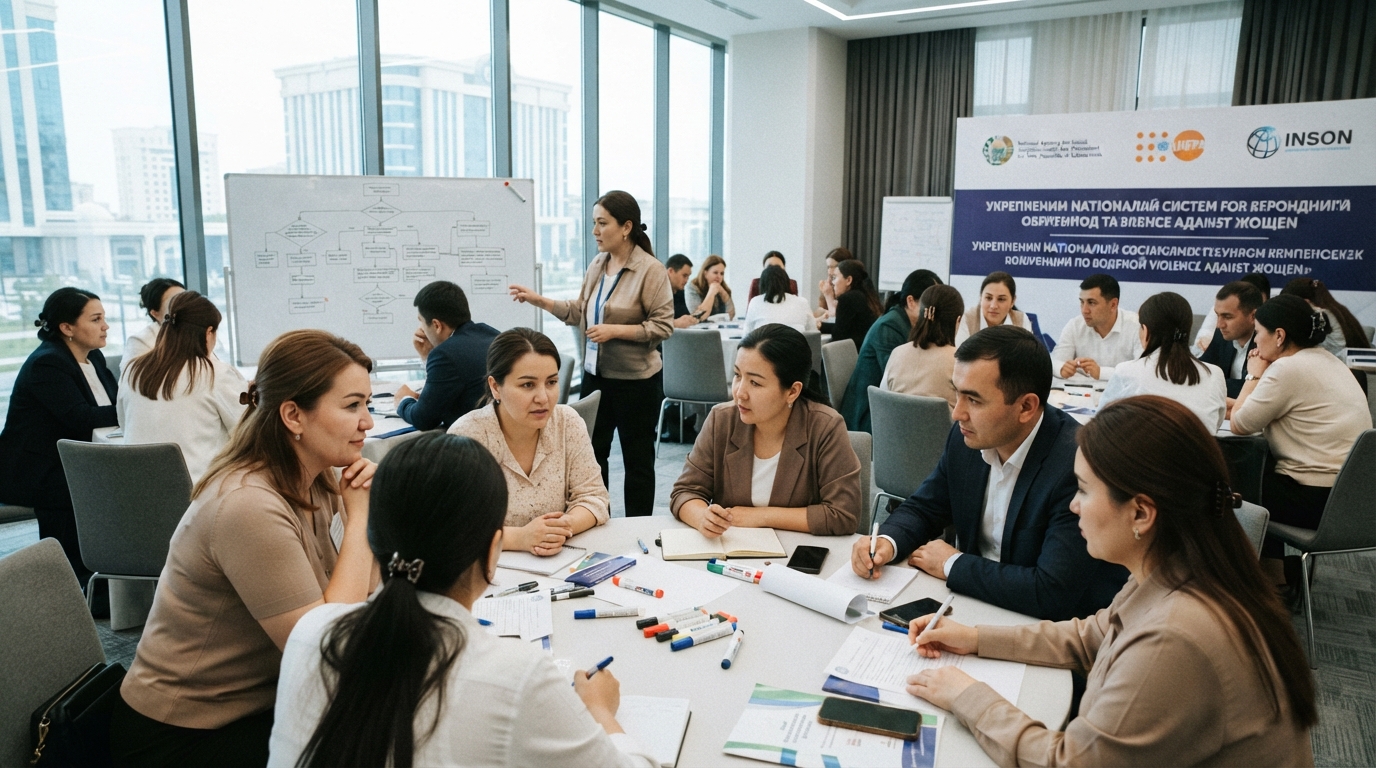
An initiative to strengthen the national response system to violence against women begins in Uzbekistan | Report
A new initiative aimed at strengthening the capacity of social sector specialists and improving the interagency response to violence against women has been launched in Uzbekistan. It is being implemented by the National Agency for Social Protection under the President of the Republic of Uzbekistan and the United Nations Population Fund (UNFPA) with financial support from the World Bank as part of the project "Innovative Social Protection System for the Integration of Vulnerable Populations (INSON)".
The initiative is designed to further improve the quality, accessibility, and coordination of services for women and girls who have survived violence, as part of the development of the national social protection and response system.
The first step will be a four-day practice-oriented Training of Trainers (ToT), taking place on September 15–18 in Tashkent. Its task is to train specialists who will then disseminate the interprofessional response model through cascade training in all 14 regions of the country, as well as during subsequent mentoring and supportive supervision by UNFPA experts.
The event brings together specialists in the fields of psychology, legal aid, social work, and interagency cooperation. The training is attended by 20 specialists who will form interprofessional teams and subsequently act as trainers for specialists of the violence response system in different regions of the country.
A special emphasis in the initiative is placed on the transition from fragmented professional actions to a coordinated interprofessional response model, where each specialist understands their role, boundaries of responsibility, and the procedure for interacting with other services.
The training program is mainly practice-oriented and includes working with real cases, role-playing exercises, professional workshops, risk assessment, safety planning, interview modeling, interagency consultations, and comprehensive simulations of the survivor's pathway from the moment a case is identified to its resolution.
During the training, participants will develop skills in applying survivor-centered and trauma-informed approaches, safe crisis communication, risk assessment and safety planning, informed consent, referral to necessary services, and interagency coordination.
Special attention will be paid to identifying psychological and economic violence, preventing victim-blaming and re-traumatization, as well as taking into account the needs of women in vulnerable situations.
The program also draws on the six service quality parameters developed by UNFPA in 2025: accessibility, quality, safety, financial and material resources, organizational and human resources, and interagency coordination.
The training is conducted by national and international UNFPA experts with professional expertise in the fields of psychological and legal assistance, social work, case management, and interagency cooperation.
"An effective response to violence requires not only the professional knowledge of each specialist, but also the ability of the system to work as a single whole. That is why the program is based on an interprofessional approach, which allows building a safe and continuous pathway of assistance for every woman and girl who has survived violence," the organizers note.
The Training of Trainers is the first stage of a larger program to strengthen the capacity of specialists in the violence response system. After completing the ToT, the trained trainers will conduct cascade training in 14 regions of Uzbekistan, covering specialists working in "Inson" centers and other structures involved in identifying, referring, and assisting survivors of violence.
To ensure the sustainability of the results, the regional stage will be accompanied by mentoring and supportive supervision by UNFPA experts. This approach will allow not only the transfer of knowledge but also the provision of practical support to specialists in applying the interprofessional model in their daily work.
It is expected that the consistent combination of trainer preparation, regional training, practical support, and interagency cooperation will contribute to the formation of a more coordinated and sustainable system of providing services to women and girls who have survived violence across the country.