

Uzbekistan intends to export only surplus electricity to Afghanistan, says Energy Minister
Uzbekistan is discussing the participation of national companies in the construction and modernization of Afghanistan's power grids and substations, Energy Minister Sherzod Khodjaev stated. Furthermore, there are plans to export surplus electricity, but only after domestic demand is fully met.
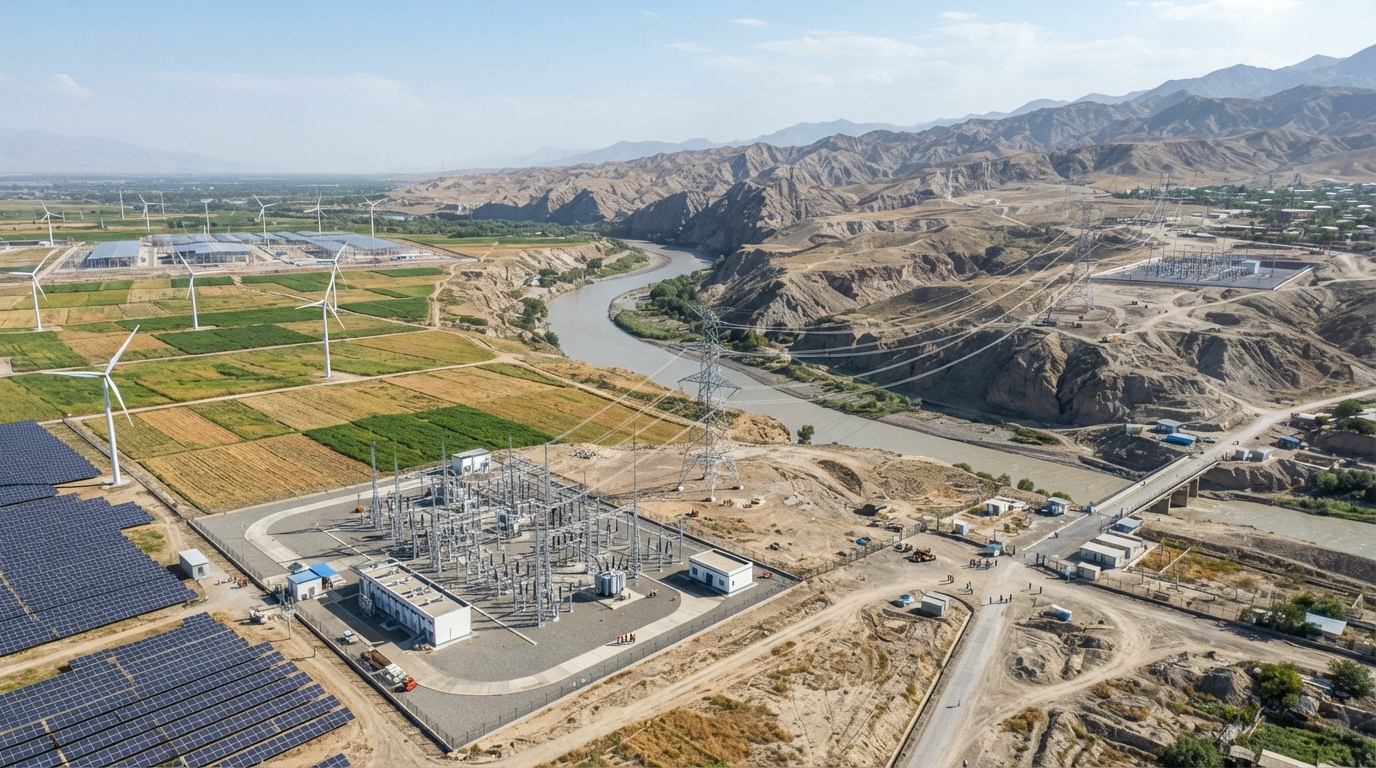
Uzbekistan intends to supply Afghanistan exclusively with surplus electricity, the Minister of Energy stated.
Uzbek companies plan to participate in projects to build and modernize power grids and substations in Afghanistan. These initiatives are being implemented at the request of the Afghan side. This was announced by Energy Minister Sherzod Khodjayev on August 13 after reporting to President Shavkat Mirziyoyev.
According to the minister, the meeting discussed issues of allowing national companies to implement these projects, their financing, and oversight.
"We also presented [to the president] issues of issuing the appropriate permits to our local and national companies to implement projects to build power grids and substations in neighboring Afghanistan, their financing, and the appropriate oversight mechanisms for these projects," Khodjayev explained.
Following the discussion, the energy sector was instructed to establish special oversight over these projects and report weekly on their progress.
The minister emphasized that the initiative to build and upgrade energy infrastructure comes from the Afghan side.
"This project, being implemented in Afghanistan, is, of course, being carried out at the Afghan side's initiative—that is, we are talking about building new power grids for them and modernizing existing ones," stated Sherzod Khodjaev.
The minister cited the opportunity to export seasonal surplus electricity from Uzbekistan as one of the economic reasons for developing energy infrastructure in the direction of Afghanistan.
"At the same time, we experience a seasonal surplus of electricity. That is, when our solar and wind power plants operate at high capacity, we can achieve greater economic benefits by exporting the resulting surplus capacity," he explained.
Khodjaev also touched on the prospects for developing power generation in the Surkhandarya region, which borders Afghanistan.
"There is another aspect: Surkhandarya is a region with very high solar potential. "The capacity of the solar power plant already operating there is sufficient to fully cover the needs of the Surkhandarya region. However, we plan to build two or three more power plants there," the minister noted.
He also emphasized that electricity supplies to Afghanistan should not harm the domestic market.
"One thing needs to be emphasized here: the volume of electricity exported to Afghanistan will be met from the portion remaining after domestic demand is fully met," stated Sherzod Khodjaev.
At the presentation to the president, the issue of accelerating the construction of the Surkhan-Puli-Khumri high-voltage transmission line, which is designed to expand energy connectivity between Uzbekistan and Afghanistan, was also discussed.
As a reminder, joint energy projects worth $250 million with Uzbekistan began in Afghanistan in September 2025. These include the construction of new power transmission lines and substations, including the 500 kV Surkhan-Puli-Khumri line and facilities in Nangarhar and Kabul. The work is scheduled to be completed by April 1, 2027.
Uzbekistan has been supplying electricity to Afghanistan since 2002. In November 2025, Uzbekistan extended the agreement to export electricity to Afghanistan until 2026. Afghanistan imports approximately 80% of its electricity from Uzbekistan, Tajikistan, Turkmenistan, and Iran, with the remainder produced domestically.