

Uzbekistan Approves Bukhara Master Plan Through 2043
Uzbekistan has approved Bukhara's master plan through 2043, outlining population growth, urban expansion, infrastructure upgrades and UNESCO coordination.
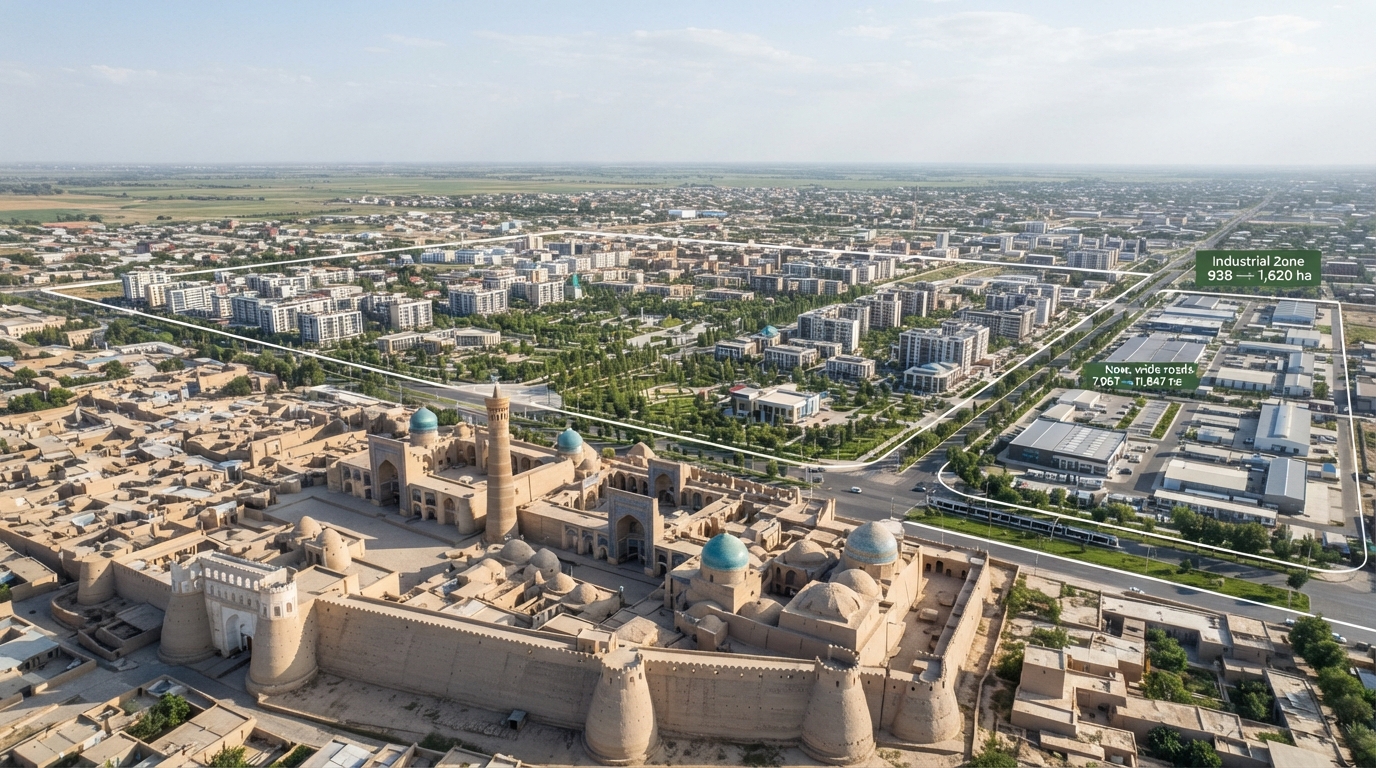
**Uzbekistan's Cabinet of Ministers Endorses Bukhara Master Plan Extending to 2043**
**Tashkent, Uzbekistan (UzDaily.uz)** — Uzbekistan's Cabinet of Ministers officially sanctioned Bukhara's comprehensive master plan, which outlines development until 2043, through a resolution enacted on July 23, 2026.
The state institution UzshaharsozlikLITI was responsible for drafting this document. Its creation aligns with a presidential decree issued on September 11, 2023, focused on enhancing public administration within urban planning. The Republican Council for Architecture and Urban Planning, operating under the Cabinet of Ministers, subsequently gave its approval.
**Demographics and Urban Footprint**
Based on the newly approved planning metrics, Bukhara's population is anticipated to grow from 289,200 to 385,000 by the year 2043. Concurrently, the city's geographical area is set to expand from 7,966.78 hectares to 11,847.06 hectares.
Despite the population increase, the density within city limits is projected to decrease from 36.3 to 32.5 people per hectare. This is attributed to the city's territory expanding at a faster rate than its population.
Demographic shifts indicate a slight reduction in the proportion of school-age children (7–17 years) from 14.3% to 13.8%, though their absolute number will rise from 41,350 to 53,130. The working-age population's share is expected to climb from 62.9% to 63.2%, with their total count increasing from 181,900 to 243,320 residents.
Employment in key city-forming sectors, including industry, science, and construction, is forecast to grow from 49,200 to 77,000 individuals. Similarly, the service sector is expected to see an increase in employment from 65,650 to 88,550 people.
**Land Utilization and Industrial Growth**
Residential land is slated for a significant expansion, from 7,028.63 hectares to 10,226.08 hectares.
Conversely, agricultural land within the city's boundaries will shrink from 1,679.68 hectares to 528.14 hectares. Non-agricultural land designated for industrial and warehouse purposes will expand from 938.15 hectares to 1,620.98 hectares.
The number of industrial enterprises is projected to increase from 13,261 to 18,000. Construction companies are expected to rise from 8,713 to 10,500, and research and design organizations from 1,323 to 1,500.
**